




As a kid, I drank raw milk. It didn't kill me. If I got sick from it, I have no idea, kids get sick from lots of things and just want to get back to playing baseball, we weren't thinking about how we got ill.
Science has come a long way since 1978, when Louise Joy Brown, the world's first successful 'test-tube baby', was born.

Despite claims that these children were somehow going to be less natural, in vitro fertilization (IVF) has instead become mainstream, along with other methods to promote successful pregnancy. An aggregation of ten international reports tracking the use of Assisted Reproductive Technologies (ART) has led the International Committee for the Monitoring of Assisted Reproductive Technology (ICMART) to estimate that there have been 5 million babies born with the help of science and technology.

The endogenous hormone dopamine, induced by joyful classics as sex, drugs and food , triggers feelings of happiness - but that is not all. It remembers the state of happiness and keeps wanting to achieve it again. Dopamine enables us to make the "right" decisions in order to experience even more moments of happiness.

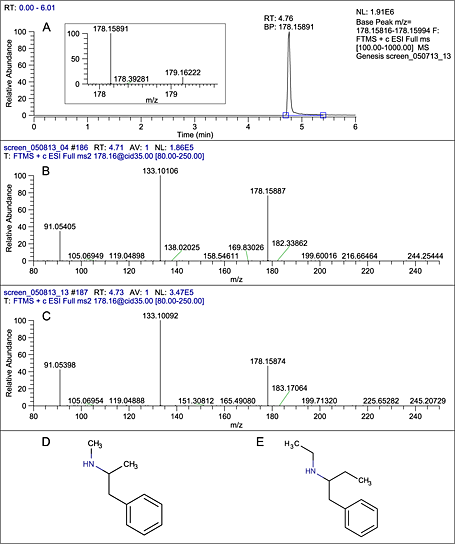
If you buy supplements, alternative medicines and advertised herbal gimmicks based on the claim that they are too progressive for the FDA, you are just lacking in judgment. If you are buying the workout supplement Craze, a product widely sold across the U.S. and online, you could be in a lot more danger.

A workout supplement marketed as a 'performance fuel', Craze is manufactured by Driven Sports, Inc. It is sold in stores across the United States and internationally via body supplement websites.

An international team of scientists have identified potentially dangerous amounts of methamphetamine analog N,α- DEPEA, which has not been safely tested for human consumption, in three samples of Craze.

Researchers have found an odd statistic; people with speech and language disorders are about 3.5 times more likely to be teachers than patients with Alzheimer's dementia. 

Speech and language disorders are typically characterized by people losing their ability to communicate; they can't find words to use in sentences, or they'll speak around a word, and they may also have trouble producing the correct sounds and articulating properly. Speech and language disorders are not the same as Alzheimer's dementia, which is characterized by the loss of memory. Progressive speech and language disorders are degenerative and ultimately lead to death anywhere from 8-10 years after diagnosis.

Children with irregular bedtimes are more likely to have behavioral difficulties. finds a study in Pediatrics, because it can disrupt natural body rhythms and cause sleep deprivation, undermining brain maturation and the ability to regulate certain conduct.

Analysing data from more than 10,000 children in the UK Millennium Cohort Study, the team collected bedtime data at three, five and seven years, as well as incorporating reports from the children's mothers and teachers on behavioral problems.

The study found a clear clinical and statistically significant link between bedtimes and behavior as irregular bedtimes affected children's behavior by disrupting circadian rhythms, leading to sleep deprivation that affects the developing brain.

These days, when I watch a good working dog hone in on scent — whether it’s a dog locating the scent of human remains or trailing someone who is still alive — I can see him trace its passage in the air until he’s drawn a clear picture with his nose. An experienced dog can distinguish the difference between scent that has lifted in the heat of the day, settled down in the ridges of rough grass, or been pulled hard toward the rushing water of a creek.

I work scent also, though I don’t run as fast or as hard. I can recog­nize urine in the muggy concrete stairwell of a parking garage, mildew liberated from under sheaves of rotted leaves, or the fishy musk of my German shepherd after a swim in the local river in August.

New research marks an important step toward new technology that, if implemented successfully, would increase the dexterity and clinical viability of robotic prosthetic limbs - touch-sensitive prosthetics that could convey real-time sensory information to amputees via a direct interface with the brain. 

“Cotton buds are commonly used to clean the ears, remove wax, in case of itching in the ear, aural toilet in discharging ears and some time as a habit.” – explain Suresh Kumar and  Shamim Ahmed  of the Department of ENT, at Liaquat University of Health Sciences, Jamshoro, Pakistan. They go on to warn that :

They supposedly represent a safe means of cleaning the ear and nose. Insertion of cotton tips is not only unnecessary but also potentially dangerous.

The conclusion of their study, which tracked cotton bud usage in 100 patients at the ENT Department, of Sir Syed Medical College& Hospital Karachi, (July 2005 to January 2007) is that

Neurons that process sensory information such as touch and vision are arranged in precise, well-characterized maps that are crucial for translating perception into understanding.  A new study finds that, in mice brains, the actual act of birth in mice causes a reduction in serotonin, triggering sensory maps to form.

