




You don't see many really old, obese people whereas you see a lot of old thin people. It is reasonable to assume, exceptions aside, that obesity kills. 

Unless you reach a certain age, it has been said. When it comes to seniors, research has reported an "obesity paradox" concluding that, at age 65 and older, having an elevated BMI won't shorten your lifespan, and may even extend it. A new study took another look at the numbers, finding the earlier research flawed. The paradox was a mirage: As obese Americans grow older, in fact, their risk of death climbs.

Most mammals, including humans, see in stereo and hear in stereo but the idea that mammals can also smell in stereo has been suspect.

A new study has found that the common mole (Scalopus aquaticus) relies on stereo sniffing to locate its prey. So there is at least one mammal that can, the researcher concludes.

How, when and where a pathogen is transmitted between two individuals in a population is crucial in understanding and predicting how a disease will spread and a new model seeks to lay the foundation for new zoonotic disease spread thinking

By outlining a predictive model of a spatial epidemic spread in a population of territorial animals and quantifying the instances of transmission events, the research team determined the propagation speed of a pathogen using parameters based on the knowledge of the demography of a species, the way animals wander and the degree of contagiousness of the disease.

Bacteria resistant to antibiotics may be the subjects of sci-fi Hollywood horror, but it is also the reality at hospitals across the country. There are ongoing complaints that feeding animal antibiotics puts us all at risk to bacteria that are resistant to these antibiotics as well other antibiotics in the same family.

Like blood vessels that supply oxygen and nutrients to normal tissue, tumor blood vessels were originally thought to do likewise to fuel tumor growth. As scientists developed strategies to kill tumors by cutting off their blood supply, they soon discovered their valiant efforts were thwarted by the tumor's ability to quickly recover.

The recovery is caused by a population of tumor-initiating cancer cells dubbed the cancer stem cells (CSCs); a population that can communicate with blood vessels via the Notch signaling pathway to drive tumor vascularization.

Myeloma treatments require a heavy artillery of novel myeloma drugs to reduce the number of cancer cells (ex: Revlimid, Velcade, or Thalomid), followed by high-dose chemotherapy to wipe out the cancer. Because the latter can completely wipe out blood-forming stem cells (a side effect that can be life-threatening to the patient), clinicians quickly learned to collect patient stem cells right before high-dose chemotherapy, and then transplanting them back into patients after treatment. The feasibility of this approach depends on the effects of myeloma drugs on patient stem cells.

Medical research is both derided and essential.  The public complains that a new experimental drug is not available due to the FDA being too conservative while also complaining that drugs have too many side effects and companies should be sued over the lack of proper testing before release. In popular television, every show that has a character who enrolls in a medical research trial develops giant boils and body tics, it is a humor standby to show that medical research is only done by the economically desperate. In research itself, scientists trust other scientists little and they trust researchers not under the government umbrella even less. Corporations are bad and pharmaceutical companies worst of all.

People lose muscle mass, and find it harder to maintain, as they age, and so researchers have ben investigating ways to delay or counteract age-related muscle loss.

A study conducted by the Exercise Metabolism Research Group at McMaster University suggests that current guidelines for meat consumption are based on the protein needed to prevent deficiency without consideration for preservation of muscle mass, particularly for older individuals who are looking to maintain their muscle as they age. 

President Obama has awarded 12 researchers the National Medal of Science. 11 inventors also received the National Medal of Technology and Innovation. Those are the highest government honors bestowed upon scientists, engineers and inventors.

This year's event marks the 50th presentation of the National Medals of Science, first awarded in 1963 by President John F. Kennedy.   The recipients received their awards at a White House ceremony.

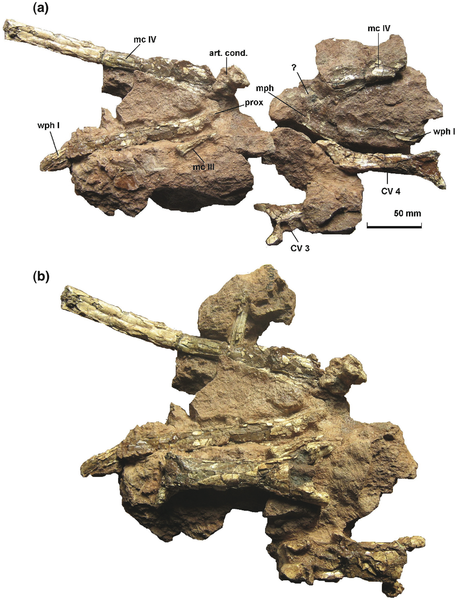
A new kind of pterosaur named Eurazhdarcho langendorfensis was a flying reptile from the time of the dinosaurs, according to scientists from the Transylvanian Museum Society in Romania, the University of Southampton in the UK and the Museau Nacional in Rio de Janiero, Brazil. 

The fossilized bones come from the Late Cretaceous rocks of Sebeş-Glod in the Transylvanian Basin, Romania, which are approximately 68 million years old. The Transylvanian Basin is known for its many Late Cretaceous fossils, including dinosaurs of many kinds, as well as fossilized mammals, turtles, lizards and ancient relatives of crocodiles.

