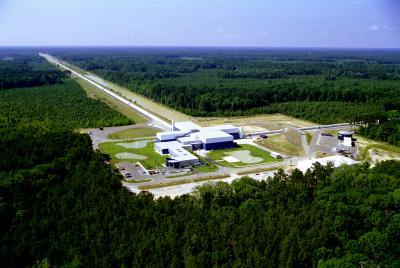
The Big Bang is believed to have created a flood of gravitational waves that still fill the universe with information about its existence immediately after the Big Bang. These waves would be observed as the "stochastic background," analogous to a superposition of many waves of different sizes and directions on the surface of a pond. The amplitude of this background is directly related to the parameters that govern the behavior of the universe during the first minute after the Big Bang.
Our teeth can withstand an enormous amount of pressure over a period of decades but tooth enamel is only about as strong as glass.
The mystery of teeth may become a solution to future aircraft design concerns, according to a a new study by Prof. Herzl Chai of Tel Aviv University's School of Mechanical Engineering and colleagues at the National Institute of Standards and Technology and George Washington University.
The automotive and aviation industries already use sophisticated materials to prevent break-up on impact. For example, airplane bodies are made from composite materials ― layers of glass or carbon fibers — held together by a brittle matrix.
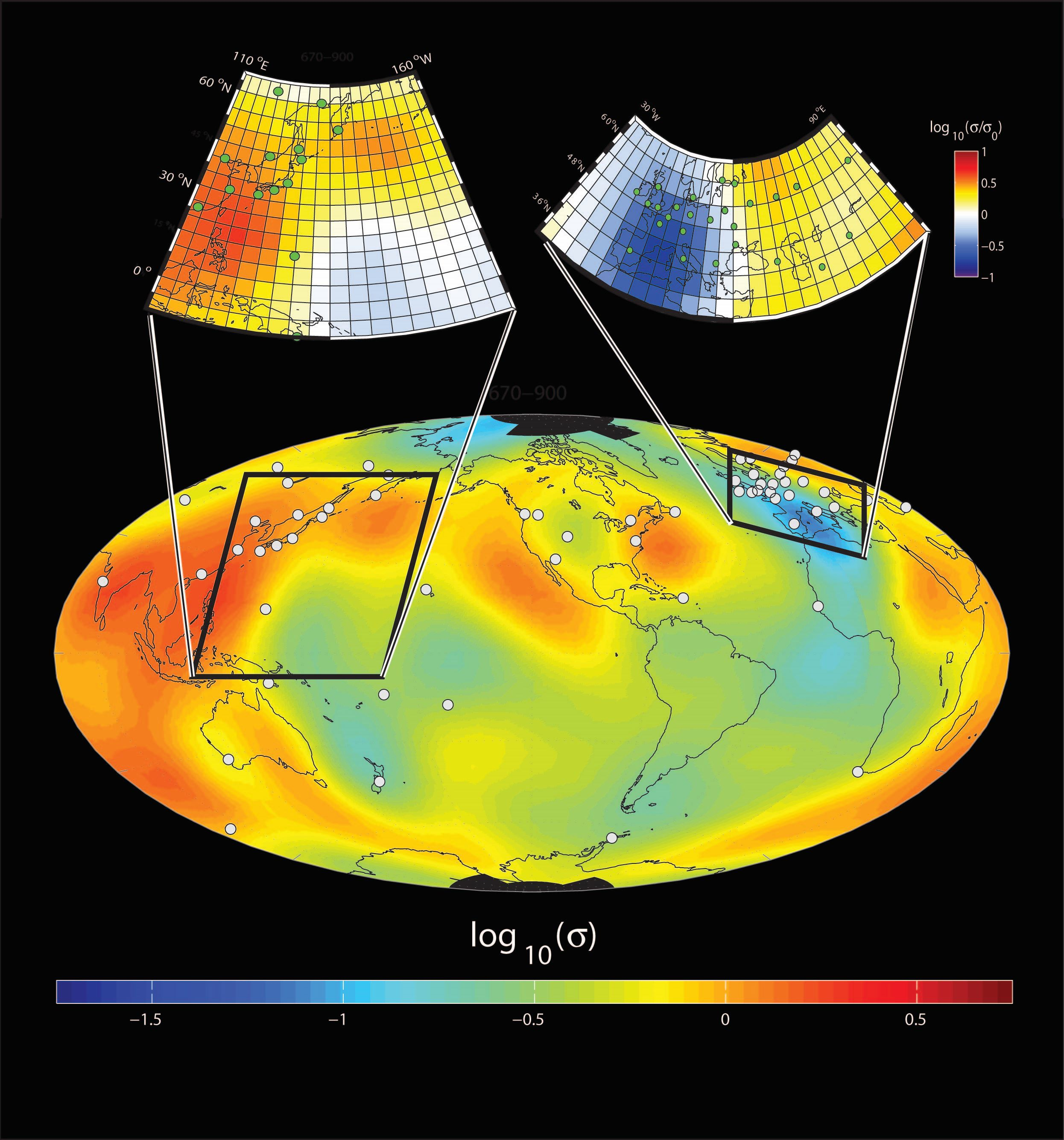
A team of scientists from Oregon State University has created the first global three-dimensional map of electrical conductivity in the Earth's mantle and their model suggests that that enhanced conductivity in certain areas of the mantle may signal the presence of water.
What is most notable, the scientists say, is those areas of high conductivity coincide with subduction zones – where tectonic plates are being subducted beneath the Earth's crust. Subducting plates are comparatively colder than surrounding mantle materials and thus should be less conductive. The answer, the researchers suggest, may be that conductivity in those areas is enhanced by water drawn downward during the subduction process.
Results of their study are being published this week in Nature.
Bernie Madoff recently got a jail sentence for promising a huge return on investment in defiance of common sense.
New research published by scientists from the UK's National Centre for Atmospheric Science (NCAS) in the Bulletin for the American Meteorological Society shows they apparently don't follow the American press because they say that investments made now can lead to as much as 10-20% improvement in climate predictions for the UK and Europe in the coming decades - and up to 20% across the rest of the globe.
When Earth was cooling from its fiery creation, the sun was faint and young, far too weak to keep the oceans of earth from freezing without some help from greenhouse gases; they kept water, essential for the creation of life, liquid on our young planet.
But what were they? A team of researchers from Tokyo Institute of Technology and University of Copenhagen's department of chemistry say ancient rocks have provided a possible answer, and they report the results in PNAS.
"The young sun was approximately 30 percent weaker than it is now, and the only way to prevent earth from turning into a massive snowball was a healthy helping of greenhouse gas," says associate Professor Matthew S. Johnson of the Department of Chemistry at University of Copenhagen.
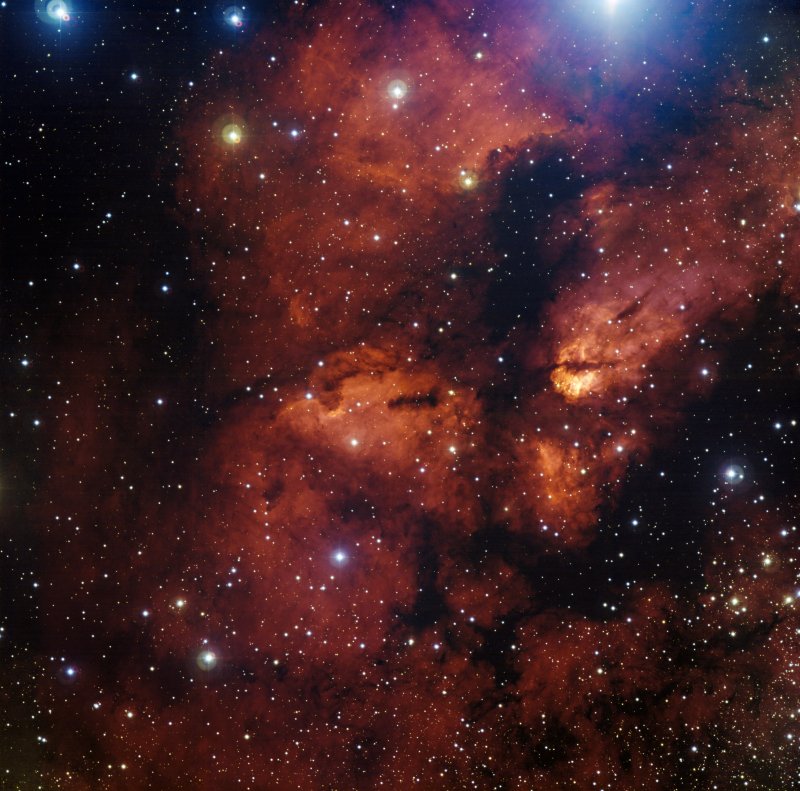
RCW 38 is a dense star cluster about 5500 light years away in the direction of the constellation Vela (the Sails). Like the
Orion Nebula Cluster, RCW 38 is an embedded cluster, in that clouds of dust and gas still envelop its stars.
Inside RCW 38, young stars bombard fledgling suns and planets with powerful winds and blazing light and some short-lived, massive stars explode as supernovae, whick sometimes cooks away the matter that would otherwise form new solar systems.
Did our own solar system form in that sort of hellish environment?
Not only is Hamilton's Rule not a rule, it isn't even a strong suggestion. The relationship c < rb (1), doesn't begin to qualify as a meaningful description of anything.
The first problem one encounters is that all the variables are highly subjective. It is also problematic in describing what a cost and benefit actually is in a quantifiable way. In a book describing the research of white-fronted bee-eaters, this helpful piece of information was provided:
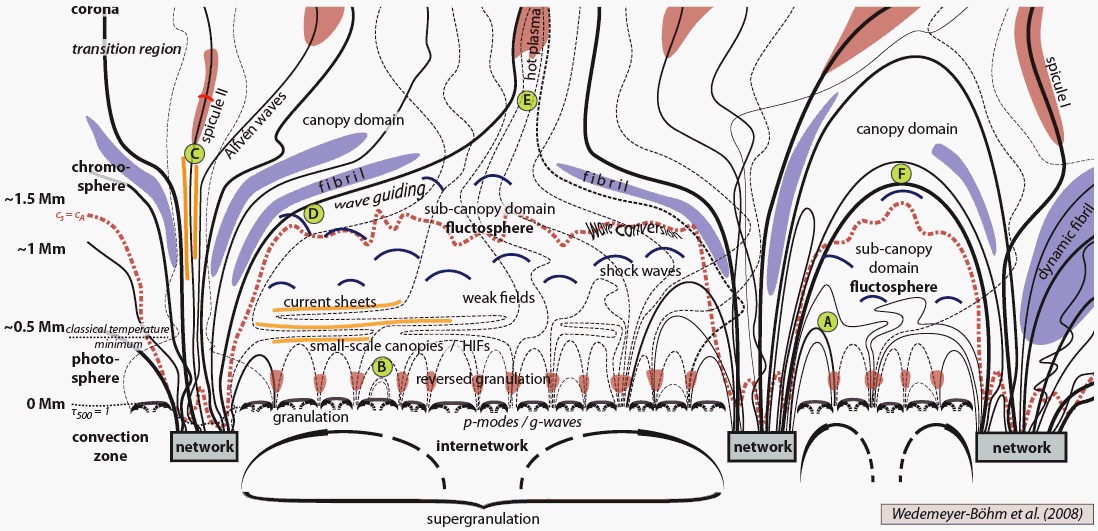
The mystery of the solar corona may be resolved.
ScientificBlogging has covered this, as did
space.com,
Space Fellowship, and other sites. Two of them couldn't resist the same money quote, too:
"Why is the sun's corona so darned hot?" said study member
James Klimchuk of NASA's Goddard Space Flight Center in Greenbelt, MD.
Why is this useful?
A few days ago a local skeptic group here in Brooklyn organized a roundtable discussion on the concept of the paranormal. We thought this was going to be a chat about what people mean by that term, how one goes about investigating alleged cases of paranormal happenings, and so on.
We were in for a surprise. Turns out that a couple of real believers in the ghosts and the afterlife showed up, a somewhat rare opportunity to sit down with “the other side” and have a probing conversation to find out about what brings people to believe weird things.
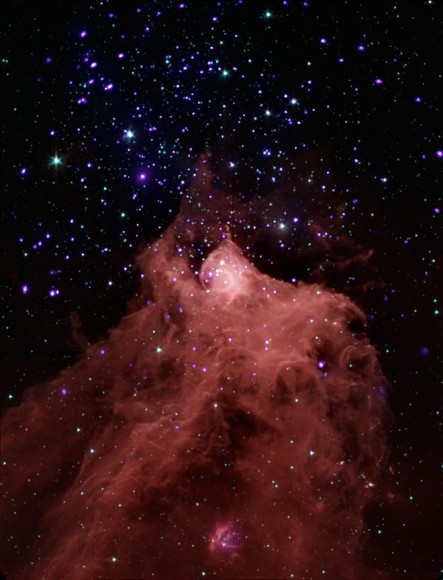
Ptolemy's 20 century-old constellation, Cepheus, seems to have been reserved for long hours of star gazing by astronomers with all levels of experience - especially after it was declared the best yet model for studying the star formation process. Its close, its exciting, its inspiring, and its forming (the last one's most important: a star is forming).
The Cepheus B region, lying in the Cepheus constellation in the Cave Nebula (aka Caldwell 9) near the M52 galaxy, has apparently begun a star-formation process owing to - much to the schock of many astronomers - a radiation nudge (if I may call it so) by a massive star just outside the region's molecular cloud.