


LONDON and MOSCOW, June 4 /PRNewswire/ --

IntraLinks, the leading provider of critical information exchange solutions, today announced the formation of a strategic alliance with Redocs, which offers document management services to financial and legal professionals in Russia and the Commonwealth of Independent States (CIS).

IntraLinks(R) Exchanges(TM) will enable Redocs' clients to securely and efficiently share business-critical documents during sensitive financial transactions, including mergers and acquisitions. Clients will leverage IntraLinks to instantly share information with colleagues, advisers and outside counsel in global locations through a SAS 70 Type II certified-safe environment.

LONDON, June 4 /PRNewswire/ --

O2 ranks highest in customer satisfaction with pre-pay mobile phone service, and Virgin Mobile ranks highest among pay-monthly mobile phone customers, according to the J.D. Power and Associates 2009 UK Mobile Phone Customer Satisfaction Study(SM) released today.

(Logo: http://www.newscom.com/cgi-bin/prnh/20050527/LAF028LOGO-a)

LONDON, June 4 /PRNewswire/ --

The market for solar thermal systems (STS) in Europe has witnessed significant developments at all levels in the last four years. Policy makers, market participants and end users have shown a keen interest in STS, ensuring a high growth potential. Due to its tremendous long-term growth prospects, this market has attracted several new participants that are playing a central role in promoting the industry.

(Logo: http://www.newscom.com/cgi-bin/prnh/20081117/FSLOGO)

MAIDENHEAD, England, June 4 /PRNewswire/ --

- CHMP Recommends Approval of a Continuous Dosing Regimen Option for Enbrel In Plaque Psoriasis, and a New Pre-Filled Pen Delivery Device

Today, Wyeth received positive recommendations from the European Committee for Medicinal Products for Human Use (CHMP) for two recent submissions relating to Enbrel(R) (etanercept), the tumour necrosis factor alpha inhibitor treatment for plaque psoriasis, rheumatoid arthritis and other related inflammatory conditions.

TAIPEI, Taiwan, June 4 /PRNewswire/ --

- With Photo

- Leveraging Intel and Ericsson's Sophisticated Technologies, EB Introduces a Sleek, Media-Centric MID Reference Device that Takes the Power of the PC and Makes it Pocket-able

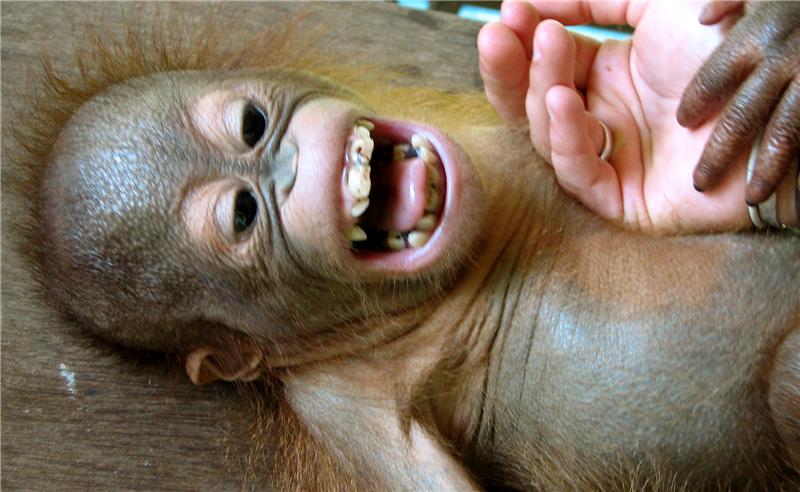
Human laughter can be traced back 10-16 million years to the last common ancestor of humans and great apes, according to new research published today.   Dr Marina Davila Ross, a primatologist of the psychology department at the University of Portsmouth, reconstructed the origins of human laughter by mapping the laughter sounds of great apes and humans on an evolutionary tree.

In Davila Ross’s reconstructed evolutionary tree, humans were closest to bonobos and chimpanzees, more distant from gorillas and most distant from orangutans.  

Biologists always love when researchers in psychology departments reconfigure the evolutionary tree for them.
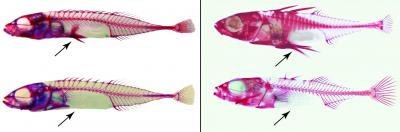
New research shows that when two species of stickleback fish evolved,  different genes in each species caused the loss of their pelvises and body armor.  Researchers say they were surprised because they expected the same genes would control the same changes in both related fish.

Thank you.  Thank you very much.
Using single-molecule manipulation, researchers at Harvard University say they have uncovered a fundamental feedback mechanism that the body uses in regulating the clotting of blood. A new physical, quantitative, and predictive model of how the body works to respond to injury could improve treatment of bleeding disorders.

It also gives insight into how bleeding disorders, such as type 2A von Willebrand disease, disrupt this regulation system, potentially leading to new avenues for treatment and diagnosis.
Dating human migration has always been something of a guess, especially without corroborating archaeological evidence.

Researchers at the University of Leeds say they have devised a more accurate method .  That's good news, because the most widely used genetic method works back to find the last common ancestor of any particular set of lineages using samples of mitochondrial DNA (mtDNA), but this method has recently been shown to be unreliable, throwing 20 years of research into doubt. 
Bats, unlike most animals, don't primarily use their voices for communication.  Instead, they use echolocation to navigate their surroundings but they can also use it, and the characteristics of other bats' voices, to recognize each other, according to a study by researchers from the University of Tuebingen, Germany and the University of Applied Sciences in Konstanz, Germany.

The study published June 5 in PLoS Computational Biology, explains how bats use echolocation for more than just spatial knowledge and it might also help explain how some bats travel at high speed, at night, in formation without interfering with each other.

