Researchers in Nevada are reporting that waste coffee grounds can provide a cheap, abundant, and environmentally friendly source of biodiesel fuel for powering cars and trucks. Their study appears in the current online issue of ACS' Journal of Agricultural and Food Chemistry, a bi-weekly publication.
In the new study, Mano Misra, Susanta Mohapatra, and Narasimharao Kondamudi note that the major barrier to wider use of biodiesel fuel is lack of a low-cost, high quality source, or feedstock, for producing that new energy source. Spent coffee grounds contain between 11 and 20 percent oil by weight. That's about as much as traditional biodiesel feedstocks such as rapeseed, palm, and soybean oil.
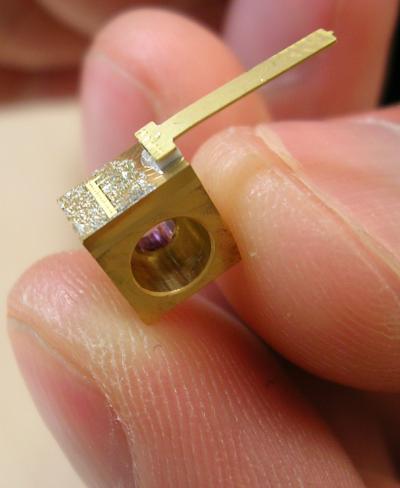
Researchers say they have discovered an entirely new mechanism for making common electronic materials emit laser beams. The finding could lead to lasers that operate more efficiently and at higher temperatures than existing devices, and find applications in environmental monitoring and medical diagnostics.
Premature infants who need intensive care or surgery are less sensitive to thermal (hot and cold) sensations later in life, according to research conducted at UCL (University College London). The study, published in the journal Pain, suggests that pain and injury related to major medical interventions in early development may alter how children respond to painful stimuli much later in life.
Even 60,000 years ago men had the wanderlust more than women. Or they left families behind until they knew what they would find.
For one reason or another, the modern humans left Africa in a migration that many believe was responsible for nearly all of the human population that exist outside Africa today didn't have men and women as equal equal partners in that exodus. By tracing variations in the X chromosome and in the non-sex chromosomes, researchers from Harvard say they have found evidence that men outnumbered women in that migration.
Research done by scientists in Italy and Switzerland has shown that carbon nanotubes may be the ideal “smart” brain material. Their results in Nature Nanotechnology are a promising step forward in the search to find ways to “bypass” faulty brain wiring.
The research shows that carbon nanotubes, which, like neurons, are highly electrically conductive, form extremely tight contacts with neuronal cell membranes. Unlike the metal electrodes that are currently used in research and clinical applications, the nanotubes can create shortcuts between the distal and proximal compartments of the neuron, resulting in enhanced neuronal excitability.
At a very early stage of human development, all cells of the embryo are identical, but unlike adult cells are very flexible and carry within them the potential to become any tissue type, whether it be muscle, skin, liver or brain.
This cell differentiation process begins at about the time that the embryo settles into the uterus. In terms of the inner workings of the cell, this involves two main control mechanisms. On the one hand, the genes that keep the embryo in their fully potent state are turned off, and at the same time, tissue-specific genes are turned on. By activating a certain set of genes, the embryo can make muscle cells. By turning on a different set, these same immature cells can become liver. Other gene sets are responsible for additional tissues.
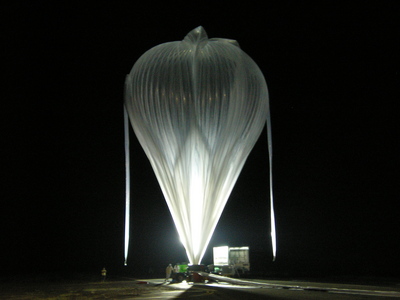
An experiment, carried out from a stratospheric balloon floating 35 km above the Brazilian jungle, to validate one of the instruments operating on the meteorological satellite MetOp was also used to support preparations for the candidate Earth Explorer TRAQ mission.
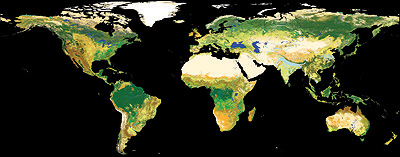
ESA’s global land cover map, which is ten times sharper than any previous global satellite map, is now available to the public online from the GlobCover website. It is the highest resolution land cover map that has been completely validated ever released.
Sixteen experts validated the map using more than 3 000 reference land cover points and showed it had an overall accuracy of 73% weighted by area for its 22 land cover classes. The map’s legend was developed using the United Nation Food and Agriculture Organisation’s (FAO) Land Cover Classification System (LCCS).
Teenage sexuality spiked in the 1970s and 1980s and then began to decline. Part of the reason is targeting alcohol, drugs and smoking. It turns out that while sexual behavior can vary considerably among teens, nonsexual risk behaviors are similar among them, according to study findings from the Journal of Adolescent Health .
Almost anything can be considered colloquially 'addictive' if you like it enough - computer games, Reese's Peant Butter Cups, reading Scientific Blogging articles and the best science blogs on the planet.
Clinical addiction is another issue, though, and Princeton University Professor Bart Hoebel and his team in the Department of Psychology and the Princeton Neuroscience Institute say they have evidence that sugar can be an addictive substance, wielding its power over the brains of lab animals in a manner similar to many drugs of abuse.
So now sugar addiction can overtake "I have a thyroid condition" as the number one excuse obese people use in America.