I’m used to some American media outlets shamelessly feeding crap to the public. Think Fox so-called News, for instance. But the Los Angeles Times? That’s supposed to be one of the most highly respectable papers in the country, on par with the New York Times, the Washington Post, the Chicago Tribune or the Boston Globe. Well, once again I was wrong. David Klinghoffer published an opinion piecein the LA Times that argued that belief in the paranormal is not just, well, normal, but actually good for you.
This week I participated in a Social Media Day at NIST. During
my talk I provided an overview of our current work in using Web2.0 tools for doing
Open Notebook Science in fields related to chemical synthesis and drug discovery.
This week I participated in a Social Media Day at NIST. During
my talk I provided an overview of our current work in using Web2.0 tools for doing
Open Notebook Science in fields related to chemical synthesis and drug discovery.
During my talks I generally try to place our work in context and give the audience a sense of where I see science evolving. I often start with the increasingly important role of openness and at some point follow up with this slide showing the shift of scientific communication from human-to-human to machine-to-machine.
So says an
article in the Sunday Telegraph, following the death of
Oliver Postgate, creator and writer of some of Britain’s most popular children’s television programmes, namely
Pingwings,
Pogles’ Wood,
Noggin the Nog,
Ivor the Engine,
Clangers and
Bagpuss, of which the last was voted in a 1999 poll to be the most popular children’s television programme of all time.
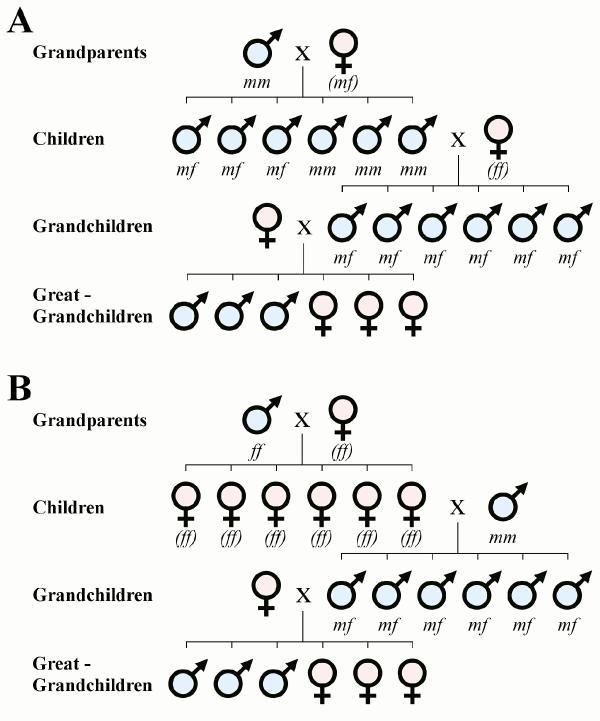
Men determine the sex of a baby depending on whether their sperm is carrying an X or Y chromosome. An X chromosome combines with the mother's X chromosome to make a baby girl (XX) and a Y chromosome will combine with the mother's to make a boy (XY).
A Newcastle University study suggests that an as-yet undiscovered gene controls whether a man's sperm contains more X or more Y chromosomes, which affects the sex of his children. On a larger scale, the number of men with more X sperm compared to the number of men with more Y sperm affects the sex ratio of children born each year.
The immune system's battle against invading bacteria reaches its peak activity at night and is lowest during the day, according to Stanford researchers who based it on experiments with Drosophila melanogaster and reveal that the specific immune response known as phagocytosis oscillates with the body's circadian rhythm. They presented their findings at the American Society for Cell Biology (ASCB) 48th Annual Meeting, Dec. 13-17, 2008 in San Francisco.
"These results suggest that immunity is stronger at night, consistent with the hypothesis that circadian proteins upregulate restorative functions such as specific immune responses during sleep, when animals are not engaged in metabolically costly activities," explains Mimi Shirasu-Hiza of Stanford University.
Is obesity all in your head? A new study says that genes that predispose people to obesity act in the brain and that perhaps some people are simply hardwired to overeat.
An international research team found six new genes that help explain body mass index and obesity, and all but one of the genes are tied to the brain rather than to metabolic functions, such as fat storage and sugar metabolism.
In addition to the six new genes, the study also confirmed the role of two other genes previously associated with obesity, said co-principal investigator Goncalo Abecasis, an associate professor at the University of Michigan School of Public Health. The study is in the journal Nature Genetics.
The first demonstration that a single
adult stem cell can self-renew in a mammal was reported at the American Society for Cell Biology (ASCB) 48th Annual Meeting, Dec. 13-17, 2008 in San Francisco. The transplanted adult stem cell and its differentiated descendants restored lost function to mice with hind limb muscle tissue damage.
Meiosis, the process of halving a germ cell’s chromosomes in preparation for egg or sperm production, has been one of the most studied areas of cell biology. But in mammals, the field has been divided over the question of whether meiosis is triggered by a signal within a cell or by a signal coming from the cell’s environment.
Now new research from the lab of Whitehead Director David Page reveals that both sets of signals are needed to initiate meiosis.
Determining the mechanisms that shape biological membranes has long been a tricky business.
Like a factory assembly line, eukaryotic cells are organized into membrane-bound, functional compartments called organelles. For instance, the nucleus is the repository of genetic information and houses the machinery that creates the messenger RNA transcripts, which direct the synthesis of new protein. Secreted proteins are synthesized in a second organelle, the endoplasmic reticulum (ER), which are exported to the cell surface by a third organelle, the Golgi complex. All membrane bound organelles are characterized by dynamic changes in membrane structure that are closely coupled to the function of these compartments.