HOUSTON, November 4 /PRNewswire/ --
Endeavour International Corporation (Amex: END) (LSE: ENDV) today reported revenues increased more than 50 percent to US$71.5 million during the third quarter of 2008 reflecting sales volumes of 8,500 barrels of oil equivalent per day. This compares to revenues of US$47.2 million for the same period in 2007. The company reported net income to common stockholders for the third quarter of 2008 of US$75.5 million or US$0.36 per diluted share as compared to a net loss of US$11.7 million or US$0.09 per diluted share for the same period in 2007. Discretionary cash flow for the period grew to US$30.1 million as compared to US$27.2 million reported in the third quarter of 2007.
Any time science terms become colloquial, it leads to problems. How often does someone make a speculation and call it a 'theory'? Cars supposedly 'evolve' if their advertising is true. And 'junk DNA' means 'useless' if you ask many outside biology.
But 'junk' DNA does not mean 'no value' and a new paper published in Genome Research on Nov. 4 reaffirm that. Scientists at the Genome Institute of Singapore (GIS) report that what was previously believed to be "junk" DNA is one of the important ingredients distinguishing humans from other species.
In Optimizing The University - Why We Need a New Educational Model For A New Century I laid out some of the issues facing post-secondary science education and how changing student demographics and modern faculty responsibilities have exacerbated the challenges of adapting science education to fill the educational demands of modern society. I also discussed how the new knowledge gained from advanced assessment techniques have shown us the extent of the shortcomings.
It seems that our brain can correct speech errors in the same way that it controls other forms of behavior, say Niels Schiller and Lesya Ganushchak, Netherlands Organisation for Scientific Research (NWO) researchers in Leiden who made this discovery while studying how the brain reacts to verbal errors. This research can contribute to improvements in the treatment of people who have problems with speaking or in understanding language.
The Instituto Madrileño de Estudios Avanzados en Nanociencia (IMDEA Nanoscience) and the University of Hamburg have collaborated on the development of composite materials based on semiconductor nanoparticles and carbon nanotubes as functional materials for efficient
light emitting diodes and photovoltaic devices.
Semiconductor nanocrystals, also called quantum dots, exhibit outstanding optical properties compared to organic dyes commonly used in research today.
In the near future it will be possible to customize the food we eat based on the genetic profile of the individual. Dutch researcher Amber Ronteltap suggests that the consumer market is not yet ready for this so-called nutrigenomics. Ronteltap concludes that many obstacles must be overcome before products based on nutrigenomics become a reality.
Nutrigenomics is a discipline that investigates the correlation between nutrients and the human genome. This area of science can contribute to public health and disease prevention by providing individuals with advice on specific adaptations in their nutrient regime. This form of personalised nutrition joins the bandwagon of broader marketing trends to develop products more tailored to the individual.
Hydrogen is an ideal solution for cars of the future. The problem remains storage. People have a range they want to go (300 miles) before an automobile enhancement can become commercially acceptable. With hydrogen, that means carrying a tank the size of the car itself or compressing the hydrogen, which has unacceptable safety risks.
Dutch-sponsored researcher Robin Gremaud has shown that an alloy of the metals magnesium, titanium and nickel is excellent at absorbing hydrogen. A hydrogen 'tank' using this alloy would have a relative weight that is sixty percent less than a battery pack. In order to find the best alloy Gremaud developed a method which enabled simultaneous testing of thousands of samples of different metals for their capacity to absorb hydrogen.
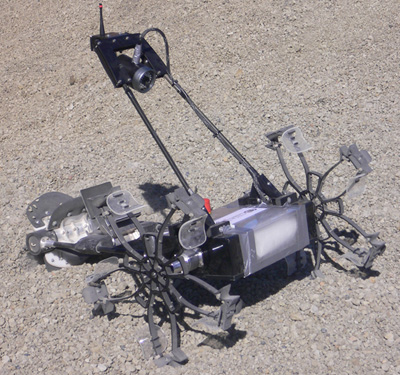
A robot rover designed by a Bremen university team has won an ESA contest to retrieve soil samples from a lunar-style terrestrial crater. Eight student teams fielded rovers during the event, their progress monitored by an advanced 3-D viewer already flight-tested in space and planned for eventual deployment on the Moon.
Craters surrounding the Moon's poles are a top 21st Century science target. Lunar researchers believe these craters may be 'cold traps', preserving ancient water ice deposits. Such ice would not only be an invaluable time capsule, it would also support manned lunar settlements. But the only way to verify the ice is there is to go fetch it, which is where rovers come in.
Researchers at the University of Virginia Health System report that a daily single oral dose of an investigational drug, MK-677, increased muscle mass in the arms and legs of healthy older adults without serious side effects, suggesting that it may prove safe and effective in reducing age-related frailty.
Published in the November 4, 2008 issue of Annals of Internal Medicine, the study showed that levels of growth hormone (GH) and of insulin-like growth factor I (IGF- I) in seniors who took MK-677 increased to those found in healthy young adults. The drug restored 20 percent of muscle mass loss associated with normal aging.
A Harvard-based study led by Drs. Gottfried Schlaug and Ellen Winner and published in PLoS ONE has found that children who study a musical instrument for at least three years outperform children with no instrumental training on tests measuring verbal ability and visual pattern completion, skills not normally associated with music, along with tests of auditory discrimination and finger dexterity, which are traditionally skills honed by the study of a musical instrument.