Does ice-cream actually taste better when it is licked from a cone than when eaten from a spoon?
Massey food technology senior lecturer Kay McMath thinks so. Although she is not aware of any specific scientific evidence to prove it, she says “there are some physical and physiological reasons why there are likely to be differences in flavour”.
“Flavour in ice cream is only released when the fat content – which carries the flavour – is warmed in the mouth to at least body temperature,” she says.
“During licking, the tongue is coated with a thin layer of ice-cream which is more quickly warmed and the flavour is detected by the large surface area of the taste buds present on the tongue.”
Some animals live longer when raised on low-calorie diets but now researchers at Washington University School of Medicine in St. Louis say that they can extend the life spans of roundworms even when the worms are well fed — it just takes a chemical that blocks their sense of smell.
Three years ago, the researchers, led by Kerry Kornfeld, M.D., Ph.D., reported they found that a class of anticonvulsant medications made the roundworm Caenorhabditis elegans live longer. But until now, they didn't quite know what the drugs did to give the worms their longevity.
The dense, hot, radioactive core of the Sun rotates significantly more slowly than the layer next to it, the radiative zone, a Stanford solar physicist has concluded. According to Peter Sturrock, professor emeritus of applied physics, the idea of a slower core has been hinted at before, but his paper published in the Astrophysical Journal provides for the first time a precise rotation rate.
- The core spins round once every 28.4 days
- The radiative zone rotates once every 26.9 days
- The surface rotates faster still-once every 25.2 days.
Sneezing, runny nose and chills? You might blame the human rhinovirus (HRV), which causes 30 to 50 percent of common colds. But in reality, it's not the virus itself but HRV's ability to manipulate your genes that is the true cause of some of the most annoying cold symptoms.
For the first time, researchers have shown that HRV hijacks many of your genes and causes an overblown immune response that ends up with your nose being overblown.
The research, published in the first issue for November of the American Thoracic Society's clinical research journal, the American Journal of Respiratory and Critical Care Medicine, is the first study to comprehensively review gene changes caused by HRV.
Learning a second language is usually difficult and often when we speak it we cannot disguise our origin or accent. However, there are important differences between individuals with regard to the degree to which a second language is mastered, even for people who have lived in a bilingual environment since childhood.
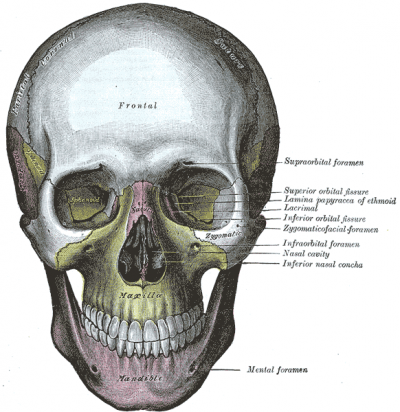
''Henry Grays Anatomy of the Human Body" - Gray's Anatomy, as it is commonly called, is among the most iconic scientific books ever published: an illustrated textbook of anatomy that is still a household name 150 years since its first edition, known for its rigorously scientific text and masterful illustrations as beautiful as they are detailed.
First published under the title "Grays Anatomy: Descriptive and Surgical" in 1858, Gray would not live to see its full impact. He contracted smallpox from his nephew and died in 1861 at the age of 34.
China's farmers and merchants should take advantage of new agricultural and business opportunities that could help mitigate some effects of the annual flooding behind the Three Gorges Dam on the Yangtze River, according to an Ohio State University wetland expert.
The level of water in the reservoir behind the dam will top off at 575 feet above sea level during the coming winter. The reservoir pool, covering abandoned cities, houses and farm fields formerly populated by an estimated 1.5 million people, will extend over 400 square miles – equivalent to the land area of Hong Kong.
Today, scientists from Procter&Gamble (P&G), the University of Calgary and the University of Virginia announced results from the first study to examine the entire human genome's response to the most common cold virus, human rhinovirus.
A wish could come true for paraplegics who play the piano and are paralyzed from the hips down: Heidelberg researcher Dr.-Ing. Rüdiger Rupp has developed a method with which a pianist can operate the right pedal of a concert grand wirelessly – a first in the world. A paraplegic pianist can thus overcome the handicap of being able to play the piano using only his arms and hands.
Dr. Rupp, director of the research department at the spinal cord injury unit of the Orthopedic Clinic of Heidelberg University Hospital (Director: Prof. Dr. Hans Jürgen Gerner), was honored for this invention with € 15,000 from the Innovation Award 2008 of the German Paraplegic Foundation (DSQ).
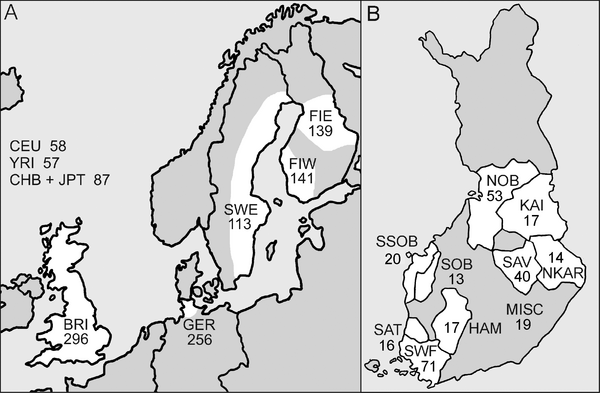
Genetically, the Germans and British are very close to each other but the genetic distances between the Swedes and Eastern and Western Finns are larger, and the diversity in these populations is lower.
A recent study shows that genetic differences in Central Europe appear smaller than between and even within North European populations. The study, led by researcher Päivi Lahermo from Institute for Molecular Medicine Finland (FIMM) and University of Helsinki, Finland, and professor Juha Kere from Karolinska Institutet, Sweden.
The understanding of genetic variation in human populations is important not only for obtaining information on population history, but also for successful studies of genetic factors behind human diseases, says Juha Kere.