






In 1911 the discovery that the earth was billions of years old changed our view of the world forever. At the end of the 19th century, many geologists still believed the age of the Earth to be a few thousand years old, as indicated by the Bible, while others considered it to be around 100 million years old, in line with calculations made by Lord Kelvin, the most prestigious physicist of his day.

Before radiometric dating there was no way of knowing.

In 1898 Marie Curie discovered the phenomenon of radioactivity and by 1904 Ernest Rutherford, a physicist working in Britain, realised that the process of radioactive decay could be harnessed to date rocks.

Global child deaths have reached a record low, falling below 10 million per year to 9.7 million, down from almost 13 million in 1990, according to UNICEF.

"This is an historic moment," said UNICEF Executive Director Ann M. Veneman. "Now we must build on this public health success to push for the achievement of the Millennium Development Goals."

Among these goals, which range from halving extreme poverty to halting the spread of HIV/AIDS, is a commitment to a two-thirds reduction in child mortality between 1990 and 2015, a result which would save an additional 5.4 million children by 2015.

However, Veneman pointed out that there is no room for complacency.

"The loss of 9.7 million young lives each year is unacceptable.

Swedish researcher Maria Engberg has studied how the ability of the computer to combine words, images, movement, and sounds is impacting both writing and reading and she's going to defend her dissertation on the subject this week.

“The way digital poetry experiments with language raises questions and challenges conceptions of literature that were formed by printed books,” says Engberg, who has examined what this entails for literary scholarship.

She has analyzed works by English-speaking poets such as John Cayley, Stephanie Strickland, and Thomas Swiss. The focus is on space, time, movement, and word and image constructions.

Emissions targets for London stand little chance of being achieved unless the Greater London Authority (GLA) takes radical steps, one of which could be the removal of all cars from both inner and outer London, according to a report today at London School of Hygiene & Tropical Medicine (LSHTM) to launch the Lancet Series on Energy and Health.

Climate scientists argue that rapid reductions will be needed if England to avoid dangerous climate change[2], even going beyond the GLA commitment to reducing London’s carbon dioxide emissions by 60% by 2025[1]. A team of experts from LSHTM and the Transport Studies Unit (Oxford University Centre for the Environment) will today reveal that London is on course to reduce land transport emissions by only 10%-23%[3,4].

People who experience chronically high levels of loneliness show gene-expression patterns that differ markedly from those of people who don’t feel lonely, according to a new molecular analysis.

The findings suggest that feelings of social isolation are linked to alterations in immune system activity, which result in increased inflammatory signalling within the body. This is the first study to show an alteration in genome-wide transcriptional activity linked to a social epidemiological risk factor. It provides a molecular framework for understanding why social factors are linked to an increased risk of diseases where inflammation is thought to be a factor, such as heart disease, infection and cancer.

Drug dealers found with bank notes contaminated with unusually high levels of drugs are now less likely to get away with their crimes, thanks to new evidence from a team led by the University of Bristol. The research finds that geographical location has absolutely no influence on the distribution of contamination.

Paper money is almost always tainted with some drug residue. Evidence presented at court shows how banknotes seized from a suspect may differ from banknotes in general circulation, in the form of higher contamination with drugs.

A question arising from such evidence is whether seized banknotes could have become contaminated through being in circulation in drug ‘hot spots’.

Astronomers have discovered one of the most bizarre planet-mass objects ever found.

The object’s minimum mass is only about 7 times the mass of Jupiter. But instead of orbiting a normal star, this low-mass body orbits a rapidly spinning pulsar. It orbits the pulsar every 54.7 minutes at an average distance of only about 230,000 miles (slightly less than the Earth-Moon distance).

"This object is merely the skeleton of a star," says co-discoverer Craig Markwardt of NASA’s Goddard Space Flight Center in Greenbelt, Md.

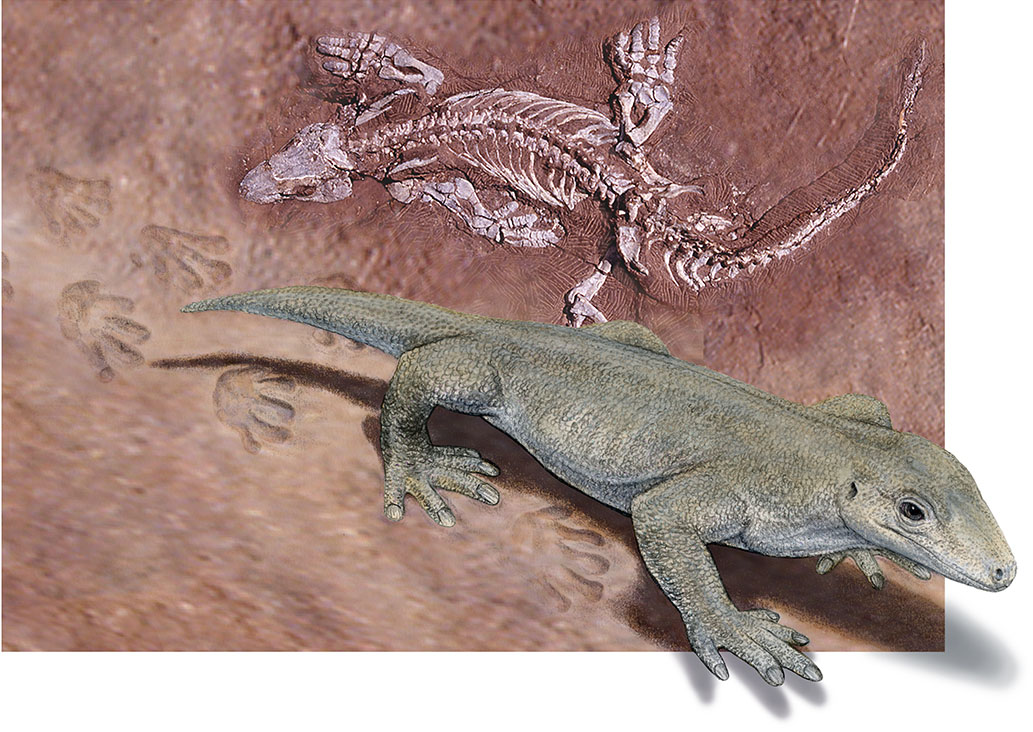
Fossilized footprints are relatively common, but figuring out exactly which ancient creature made particular tracks has been a mystery that has long stumped paleontologists. In the latest issue of the Journal of Vertebrate Paleontology, a team of researchers overcome this dilemma for the first time, and link a fossil trackway to a well-known fossil animal.

Sebastian Voigt, a trackway expert from the Institute of Geology, Freiberg University of Mining and Technology, Germany, and David Berman and Amy Henrici of the Carnegie Museum of Natural History, Pittsburgh, who study fossil skeletons, took a close look at an exceptional fossil collection from 290-million-year-old sediments of central Germany known as the Tambach Formation.

Scientists in Australia have found a way of identifying probable stem cells in the lining of women’s wombs. The finding opens up the possibility of using the stem cells for tissue engineering applications such as building up natural tissue to repair prolapsed pelvic floors. Pelvic floor prolapse is a common condition, affecting over 50% of women after childbirth; around one in ten women have surgery and a third of these women require repeated operations to correct the problem.

An international team of astronomers has announced the first discovery of a planet orbiting a star near the end of its life.

The announcement, culminating seven years of research, will be published in the Sept. 13 issue of the journal Nature.

The news provides a preliminary picture of what could be the Earth's destiny in four to five billion years. That's when the sun will exhaust its hydrogen fuel, expand enormously as a red giant and expel its outer layers in an explosive helium flash.

The planet discovered by the researchers, "V 391 Pegasi b," has survived all those changes to its sun.


This image represents planet "V 391 Pegasi b" as it survives the red giant expansion of its dying sun.

