






What killed the Neanderthals? No one can say for sure but an international study led by the University of Leeds has ruled out one of the popular recent theories, catastrophic climate change, as the most likely cause.

The bones of more than 400 Neanderthals have been found since the first discoveries were made in the early 19th century. The finds suggest the Neanderthals, named after the Neander Valley near Düsseldorf, where they were first recognized as an extinct kind of archaic humans, inhabited Europe and parts of western Asia for more than 100,000 years.

The causes of their extinction have puzzled scientists for years – with some believing it was due to competition with modern humans, while others blamed deteriorating climatic conditions.

A new study by researchers at Johns Hopkins and Princeton Universities says US healthcare workers are paid too much yet there aren't enough of them. Fewer days in hospitals are offset by more outpatient services and not enough attention is paid to chronic health issues.

Compared to the average Organization for Economic Cooperation and Development (OECD) country in 2004, the United States has fewer health resources—physicians, nurses and hospital beds—and lower utilization of these resources. Health spending for chronic health issues, such as obesity, alcohol consumption and smoking, also contributes to high health spending in the United States.

Amyotrophic lateral sclerosis (ALS) is a disease that breaks down tissues in the nervous system. ALS is a disease of the motor neurons leading to a progressive loss of the ability to move virtually any of the muscles in the body.

The ALS research team at Umeå University in Sweden details that a gene that is involved in communication between nerve cells is strongly associated with non-hereditary (sporadic) ALS.

To try to identify the pathogenic genes involved in ALS, the Umeå scientists, in collaboration with Dutch and Belgian researchers, compared DNA samples from 1,337 patients with non-hereditary ALS (sporadic ALS, SALS) with DNA samples from 1,356 healthy individuals.

The medication tamoxifen, best known as a treatment for breast cancer, dramatically reduces symptoms of the manic phase of bipolar disorder more quickly than many standard medications for the mental illness, a new study shows. Researchers at the National Institutes of Health’s National Institute of Mental Health (NIMH) who conducted the study also explained how: Tamoxifen blocks an enzyme called protein kinase C (PKC) that regulates activities in brain cells. The enzyme is thought to be over-active during the manic phase of bipolar disorder.

By pointing to PKC as a target for new medications, the study raises the possibility of developing faster-acting treatments for the manic phase of the illness.

An enriched peanut-butter mixture given at home is successfully promoting recovery in large numbers of starving children in Malawi, according to a group of researchers at Washington University School of Medicine in St. Louis.

Malnutrition affects 70 percent of all Malawian children with an estimated 13 percent of children dying from it before the age of five.

Mark J. Manary, M.D., professor of pediatrics and an emergency pediatrician at St. Louis Children's Hospital, has spent several years researching the use of the enriched peanut-butter mixture, called Ready-to-Use Therapeutic Food (RUTF) with small groups of severely and moderately malnourished young children in the sub-Saharan African country.

Attention Deficit Hyperactivity Disorder (ADHD) is a prevailing issue in the United States, with millions of children getting diagnosed every year. A new study reveals that Pycnogenol, an antioxidant plant extract from the bark of the French maritime pine tree, reduces ADHD in children. The study shows it balances stress hormones, which lowers adrenaline and dopamine, resulting in a decrease of ADHD.

“Pycnogenol’s ability to naturally treat symptoms of ADHD is what makes this extract exceptionally pleasing to parents who may be uneasy about medicating their children with stimulant medications,"said Dr. Peter Rohdewald of the Institute of Pharmaceutical Chemistry at Germany’s University of Munster and one of the authors of the study.

New Scientist has written an article stating that new quantum technology can run a routine called Shor’s algorithm and that means the most dangerous threat posed by quantum computing, the ability to break the codes that protect our personal data, is now a step closer to reality.

Worse, they report this feat has been performed by not one but two research groups, acting independently; one led by Andrew White at the University of Queensland in Brisbane, Australia, and the other by Chao-Yang Lu of the University of Science and Technology of China, in Hefei. Both teams have built laser-based quantum computers that can implement Shor’s algorithm and defeat today’s most common encryption systems.

Full article: http://www.newscientist.com

The AIDS virus (HIV) attacks immune system cells and once inside them it multiplies. In some of these immune cells, viral stocks are not very accessible to antiviral therapy. CNRS, Institut Curie and Institut Pasteur researchers investigating how HIV avoids being destroyed by immune cells have discovered that HIV alters the pH of the cellular compartments where it accumulates, thus stopping the activation of the very enzymes that would normally degrade it.

When viruses or infectious bacteria enter our body, the immune system is triggered to eliminate them, through a process involving various types of white blood cells. Some viruses target the immune system.

It’s already known that a person’s social environment can affect their health, with those who are socially isolated—that is, lonely suffering from higher mortality than people who are not. Now, in the first study of its kind, published in the current issue of the journal Genome Biology, UCLA researchers have identified a distinct pattern of gene expression in immune cells from people who experience chronically high levels of loneliness. The findings suggest that feelings of social isolation are linked to alterations in the activity of genes that drive inflammation, the first response of the immune system. The study provides a molecular framework for understanding why social factors are linked to an increased risk of heart disease, viral infections and cancer.

Why would prehistoric reptiles have needed to develop modern ears? No one can say for sure but it is certain that a new study by Johannes Müller and Linda Tsuji, paleobiologists at the Natural History Museum of the Humboldt University in Berlin, has pushed back the date of impedance-matching hearing by some 60 million years.

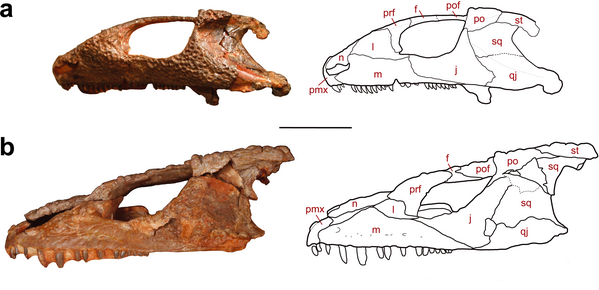
The fossil animals they studied, found in deposits of Permian age near the Mezen River in central Russia, possessed all the anatomical features typical of a vertebrate with a surprisingly modern ear.

When vertebrates had conquered land and the ancestors of modern day mammals, reptiles, and birds first began to diversify, hearing was not of high importance.

