






Eminem should be reading up on his Elvis history if he wants to stay around. Famous musicians are more than twice as likely as the rest of the population to die an early death, and within a few years of becoming famous, reveals research in the Journal of Epidemiology and Community Health.

The findings are based on more than 1050 North American and European musicians and singers who shot to fame between 1956 and 1999.

Scientists at Children's Hospital in Pittsburgh have discovered a unique population of adult stem cells derived from human muscle that could be used to treat muscle injuries and diseases such as heart attack and muscular dystrophy.

In a study using human muscle tissue, scientists in Children's Stem Cell Research Center - led by Johnny Huard, PhD, and Bruno Péault, PhD - isolated and characterized stem cells taken from blood vessels (known as myoendothelial cells) that are easily isolated using cell-sorting techniques, proliferate rapidly and can be differentiated in the laboratory into muscle, bone and cartilage cells.

Education is one of the rare industries with a powerful union, no incentive based pay and where generally the worst performers get more money yet is still regarded as not very good.

Improving education most would start with incentives for teachers, claims new findings by economics professors at the University of Missouri-Columbia and Vanderbilt University. They say that states and school districts in the United States begin developing programs that examine the effects of linking teacher pay to student achievement.

The study was a collaborative effort between Michael J. Podgursky, professor of economics at Mizzou’s College of Arts and Science, and Matthew G. Springer, research assistant professor of public policy and education at Vanderbilt’s Peabody College.

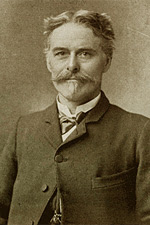
American paleontologist Edward Drinker Cope, died on 12 Apr 1897. Cope is best remembered for his rivalry with O.C. Marsh, often referred to as the Great Bone Wars. These two antagonists shared a lot in common: a fierce sense of competition, unbounded arrogance and a deep driving force that led them to unbelievable lengths to outdo each other. Cope led many great expeditions into the American West and was prolific in the naming of dinosaur species. Cope was also an ichthyologist, an evolutionist, and a founder of the Neo-Lamarckian school of thought.



But enough of the boring stuff, here's a story that really reveals the character of good old EDC:

A team of scientists from around the globe has determined that a drastic change in the climate of tropical Africa may have significantly driven early human evolution.

Among the findings: A transition from a long period of time (about 135,000 to 75,000 years ago) that included several extreme droughts to a stable, wetter climate may have stimulated the expansion and migration of early human populations.

The researchers studied lake cores from Lake Malawi, at the southern end of East Africa’s Rift Valley, and found that the megadroughts were some of tropical Africa’s driest periods in the last million years or more.

It's unclear if vitamin C supplements reduce cancer risk. They may actually increase it.

Fat in the stomach may cause vitamin C to promote, rather than prevent, the formation of certain cancer causing chemicals, reveals research published ahead of print in the journal Gut.

The researchers analysed the impact of both fat (lipid) and vitamin C (ascorbic acid) on nitrite chemistry in the upper (proximal) stomach, which is especially vulnerable to pre-cancerous changes and tumor growth.

Nitrites, which are present in human saliva, and in certain preserved foodstuffs, may be converted to cancer causing compounds called nitrosamines.

It's done - the independent sequence and assembly of the six billion base pairs from the genome of one person, Craig Venter of the J. Craig Venter Institute (JCVI), has been completed.

Two general versions of the human genome currently exist but those were a melding of DNA from various people. In the case of one version from Celera Genomics, it was a consensus assembly from five individuals, while a government-funded version was a haploid genome based on sequencing from a limited number of individuals.

It seems both versions greatly underestimated human genetic diversity.

Scientists have found monoclonal antibodies which may make a successful Hepatitis C Virus (HCV) vaccine a reality.

Hepatitis treatment is expensive and only successful in half of patients. Untreated or unresponsive patients can go on to develop cirrhosis of the liver, with life affecting consequences or the need for a transplant.

In a collaborative effort with groups across Europe and the USA, scientists from Nottingham University have recently identified antibodies that can successfully prevent infection with many diverse strains of Hepatitis C virus in laboratory models.

Nothing starts a debate in the medical community like death. Abortion, euthanasia, capital punishment, all controversial subjects; three anesthesiologists and a medical ethicist tackle the last one in a commentary and two editorials published in September's Mayo Clinic Proceedings.

In a commentary column, David Waisel, M.D., an anesthesiologist practicing at Children's Hospital Boston, Harvard Medical School, asserts that it is time to reassess the AMA's position on this issue and allow doctors to participate in state-mandated executions to help provide the condemned a more humane path to death.

Dr. Waisel cites numerous details about the technical problems associated with lethal injection, the form of capital punishment most commonly used in the United States today. Dr.

DNA is one of the most popular building blocks of nanotechnology and is commonly used to construct ordered nanoscale structures with controlled architectures. For the most part, DNA is looked upon as a promising building block for fabricating microelectronic circuits from the bottom up. Now a team of researchers at Young propose the marriage of DNA self-assembly with standard microfabrication and lithography tools to form features such as nanochannels, nanowires, and nanoscale trenches. This discovery may open up new avenues for nanofabrication at dimensions not accessible by conventional optical lithography.

