Jena (Germany) With the arrival of spring many insects leave their winter quarters. Presently swarms of the mining bee (Andrena vaga) emerge along sandy river valleys. These whitish-grey haired wild bees live in galleries and cavities in the ground. They feed on nectar and pollen mostly collected from willow trees. "Sometimes the first bees come out very early, weeks before it would actually be their time," says PD Dr Hans Pohl of the Friedrich Schiller University Jena (Germany). This usually indicates that the insects are infested by specific parasites, explains the entomologist. The native twisted-winged parasites (Strepsiptera) use the wild bees as 'incubators' for their own offspring - in a quite ruthless manner.

BUFFALO, N.Y. - Strokes, seizures, traumatic brain injury and schizophrenia: these conditions can cause persistent, widespread acidity around neurons in the brain. But exactly how that acidity affects brain function isn't well understood.

In a paper published in March in Scientific Reports, University at Buffalo researchers have begun to unravel some of the puzzle. They found that an elusive brain receptor may play an important role in the death of neurons from neurological diseases.

Downloadable photos are here.

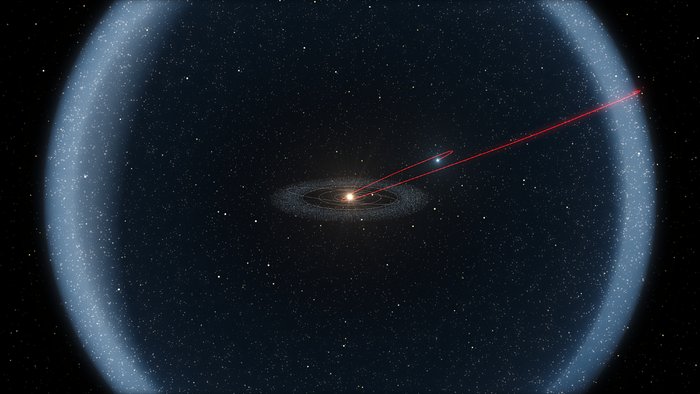
Unlike most asteroids, C/2014 S3 (PANSTARRS) was formed in the inner Solar System at the same time as the Earth itself, but was ejected at a very early stage and has not been baked by billions of years near the Sun.

Instead, it has been preserved in the best freezer there is: the Oort Cloud, a huge region surrounding the Sun like a giant, thick soap bubble. It is estimated that it contains trillions of tiny icy bodies.

C/2014 S3 (PANSTARRS) was originally identified by the Pan-STARRS1 telescope as a weakly active comet a little over twice as far from the Sun as the Earth. Its current long orbital period (around 860 years) suggests that its source is in the Oort Cloud, and it was nudged comparatively recently into an orbit that brings it closer to the Sun.

If a woman's female relatives have fraternal twins, she is more likely to give birth to twins herself, but the genes behind this phenomenon have remained a mystery. Now, researchers reporting April 28 in the American Journal of Human Genetics have nailed down two genes associated with twinning. They show genetic links between having twins and female production of, and response to, follicle-stimulating hormone, which may help predict how some women respond to infertility treatments.

Road crashes are the world's leading cause of preventable death and injury in people under 35, accounting for around 5 million casualties every year. Repeat offenders make a disproportionate contribution to these statistics - and are known for their poor response to education and prevention efforts.

But a better understanding of the subconscious and emotional processes of high-risk drivers could make a difference, according to new research from McGill University.

In a study focusing on repeat drunk driving and speeding offenders, researchers have discovered distinct behavioural, personality and neurobiological profiles behind each of these forms of dangerous driving.

A new study reveals that the sleep patterns previously thought exclusive to mammals and birds - REM and slow-wave sleep patterns - are also found in reptiles. The results shake up our understanding of the evolution of sleep. Amniotes are a group of tetrapod vertebrates comprising reptiles, birds and mammals. Because slow-wave sleep (SWS) and rapid eye movement sleep (REMS) are thought to be exclusive to mammals and birds, it's believed that these sleep states evolved twice after mammals and birds diverged from reptiles. However, results by Mark Shein-Idelson et al. now reveal SWS and REM sleep patterns in the Australian bearded dragon, Pogona vitticeps, suggesting that the sleep states may have evolved in a common ancestor of all amniotes, more than 300 million years ago.

Metal on metal hip replacements implanted since 2006 are more prone to failure and the need for further surgery, finds research looking at revision rates at one hospital trust for the DePuy Pinnacle device, and published in the online journal BMJ Open.

A higher rate of manufacturing issues since 2006, with more than a third of hips manufactured outside the stated specifications, may be to blame, suggest the researchers.

They looked specifically at the long term performance of the 36 mm Pinnacle metal on metal hip--the most commonly implanted metal hip in the world--in a bid to uncover the risk factors associated with early failure and the need for further surgery.

Studying the way that solitary hunters such as tigers, bears or sea turtles chase down their prey turns out to be very useful in understanding the interaction between individual white blood cells and colonies of bacteria. Reporting their results in the Journal of Physics A: Mathematical and Theoretical, researchers in Europe have created a numerical model that explores this behaviour in more detail.

Using mathematical expressions, the group can examine the dynamics of a single predator hunting a herd of prey. The routine splits the hunter's motion into a diffusive part and a ballistic part, which represent the search for prey and then the direct chase that follows.

Researchers have found that long-term exposure to environmental pollutants was associated with increased risk of mortality for many types of cancer in an elderly Hong Kong population.

The study between the University of Birmingham and University of Hong Kong, published in Cancer Epidemiology, Biomarkers & Prevention, a journal of the American Association for Cancer Research, adds to growing concern around the health risks of prolonged exposure to ambient fine particulate matter.

How does the image-recognition technology in a self-driving car respond to a blurred shape suddenly appearing on the road? Researchers from KU Leuven, Belgium, have shown that machines can learn to respond to unfamiliar objects like human beings would.

Imagine heading home in your self-driving car. The rain is falling in torrents and visibility is poor. All of a sudden, a blurred shape appears on the road. What would you want the car to do? Should it hit the brakes, at the risk of causing the cars behind you to crash? Or should it just keep driving?

