
Adhesion ABC

Adhesion ABC

Jan 06 2016 | comment(s)

Scientists from the Mechanobiology Institute, Singapore (MBI) at the National University of Singapore have discovered the universal building blocks that cells use to form initial connections with the surrounding environment. These early adhesions have a consistent size of 100 nanometres, are made up of a cluster of around 50 integrin proteins and are the same even when the surrounding surface is hard or soft. Deciphering the universal nature of adhesion formation may reveal how tumour cells sense and migrate on surfaces of different rigidity, which is a hallmark of metastasis, the devastating ability of cancer to spread throughout the body. This study was published in the 7 December 2015 issue of Developmental Cell.

Building blocks for cell adhesion

Even before they can read, children as young as 3 years of age are beginning to understand how a written word is different than a simple drawing -- a nuance that could provide an important early indicator for children who may need extra help with reading lessons, suggests new research from Washington University in St. Louis.

"Our results show that children have some knowledge about the fundamental properties of writing from a surprisingly early age," said study co-author Rebecca Treiman, PhD, the Burke & Elizabeth High Baker Professor of Child Developmental Psychology in Arts & Sciences.

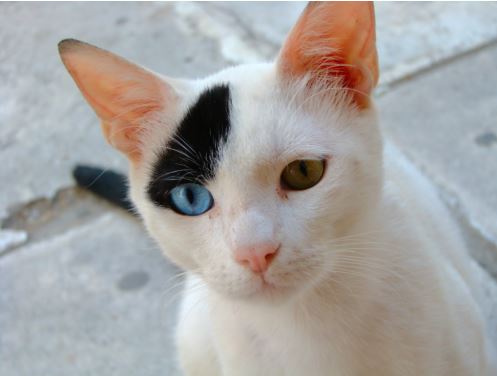
Why do the distinctive piebald patches seen in black and white cats and some horses occur? The predominant hypothesis has been that piebald patterns form on animals' coats because pigment cells move too slowly to reach all parts of the embryo before it is fully formed but a new study found otherwise.

CAMBRIDGE, MA -- By combining sophisticated RNA sequencing technology with a new device that isolates single cells and their progeny, MIT researchers can now trace detailed family histories for several generations of cells descended from one "ancestor."

This technique, which can track changes in gene expression as cells differentiate, could be particularly useful for studying how stem cells or immune cells mature. It could also shed light on how cancer develops.

Claims that sitting is bad for your health were all the rage last year - epidemiological curve matching claimed that you were in real peril if you didn't get up once an hour, while waitresses without epidemiologists surveying them disagreed that a desk job was more harmful.

It may be that emails get all of the mainstream media Scare Journalism in 2016. A new presentatin at the British Psychological Society's Division of Occupational Psychology annual conference in Nottingham by Dr Richard MacKinnon from the Future Work Centre suggests that it's not just the volume of emails that causes stress; it's our well-intentioned habits and our need to feel in control that backfires on us.

You may not think of men over 60 when you think of sex, but it happens. A lot. And when it can't happen the usual way, they are willing to pay for it - and they pay more and use less protection if they are a regular client.

Obviously the assumption, or documented medical fact, is that both parties are disease-free, but it still involves a certain amount of trust - and a certain amount more money.

The new survey in the American Journal of Men's Health asked about the habits of American men between the ages of 60 and 84 who pay for sex and found that the older they were, the more frequently they paid for sex and the more likely they were to have experienced unprotected sexual intercourse multiple times with their favorite commercial sex providers. 

Men in typically female-dominated occupations tend to value the social aspects of their career over financial rewards.

These are the findings of a study by Dr Kazia Solowiej, Dr Catharine Ross, and Professor Jan Francis-Smythe of the University of Worcester and Dr Catherine Steele of the University of Leicester. The study is presented today, Wednesday 6 January 2016, at the British Psychological Society's Division of Occupational Psychology annual conference in East Midlands Conference Centre, Nottingham.

Our skin is covered in millions of bacteria and most of them help keep us healthy. However, for patients with lymphoma, it may be a rather different story, as new research from the University of Copenhagen shows that toxins in the staphylococcus bacteria help cancer cells gain control over healthy cells. The Danish Cancer Society's Break Cancer Collection contributed DKK 3 million (US$0.5 million) to the research project.

When government pays for your health care, they get the right to tell you what behavior can be detrimental to your health - but before that they will pay for medication to help them stop smoking.

But only 10 percent are doing so. Why?

 Smoking is the leading cause of preventable disease in the United States and it puts a particularly heavy burden on Medicaid. One-third of US adults with Medicaid coverage currently smoke, a rate that is roughly twice as high as that for the general public.

Chickens that chicken out in unfamiliar surroundings may shed light on anxiety in humans, according to research published in the January issue of the journal GENETICS, a publication of the Genetics Society of America.

Domestic chickens are much less anxious than their wild cousins, the red junglefowl. The new research identifies genes that contribute to this difference and reveals that several of the genes influence similar behaviors in mice. The authors argue that these results, combined with evidence from studies in humans, demonstrate the potential of the chicken to serve as a powerful model for understanding the genetic underpinnings of human behavior.

