
UNIVERSITY PARK, Pa. -- The sweet, juicy peaches we love today might have been a popular snack long before modern humans arrived on the scene.

Scientists have found eight well-preserved fossilized peach endocarps, or pits, in southwest China dating back more than two and a half million years. Despite their age, the fossils appear nearly identical to modern peach pits.

The findings, reported last week in Scientific Reports, suggest that peaches evolved through natural selection well before humans domesticated the fruit. It's the first discovery of fossilized peaches, and it sheds new light on the evolutionary history of the fruit, which has not been well understood.

The promotion of healthy eating habits is an important issue across the United States, but research into it has largely been confined to urban areas. But one Drexel professor believes that interventions in the country can reach a significant swath of people.

Drexel University's Ana Martinez-Donate, PhD, and her fellow researchers from the University of Wisconsin-Madison developed a strategy for healthy eating intervention that showed great promise for rural communities by utilizing local supermarkets and restaurants.

Creating Waupaca Eating Smart, or WES, the research team partnered with a local nutrition-promoting coalition in Waupaca, Wisconsin, a town of roughly 6,000, to influence the foods supermarkets and restaurants made available and how they promoted them.

The levels of virus in the blood (viremia) for patients with Ebola virus disease (EVD) are strong predictors of fatality, according to a study published in PLOS Medicine this week. The study, conducted by the teams of Amadou Alpha Sall (Institut Pasteur, Dakar, Senegal) and of Simon Cauchemez (Institut Pasteur, Paris, France) and scientists from Guinea and Canada, found that in the week following symptom onset, viremia remained stable, and that the case fatality ratio (CFR, the proportion of deaths from the disease to total cases) increased with level of viremia.

What is the climate waiting for Russia and Europe in 15-20 years? Will be there weather abnormalities in the coming decades? Will some areas experience more severe winter, while the others will have hot summer? It all depends on how much the climate will be affected by the dynamics of the possible onset of minimum solar magnetic activity. The Sun's behaviour in future cycles is the main theme of a publication on the forecast and explanation of the minima of solar activity. The paper was prepared with contributions from Elena Popova from the Skobeltsyn Institute of Nuclear Physics (Lomonosov Moscow State University) and was published in Scientific Reports.

A newly discovered collection of rare dinosaur tracks is helping scientists shed light on some of the biggest animals ever to live on land.

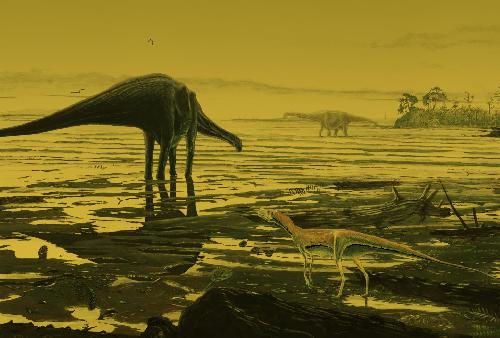
Hundreds of footprints and handprints made by plant-eating sauropods around 170 million years ago have been found on the Isle of Skye in Scotland.

The discovery - which is the biggest dinosaur site yet found in Scotland - helps fill an important gap in the evolution the huge, long-necked animals, which were the biggest of the dinosaurs.

pic

This is an artist's impression of sauropod dinosaurs on the Isle of Skye. Credit: Jon Hoad

Researchers from North Carolina State University have confirmed that blood vessel-like structures found in an 80 million-year-old hadrosaur fossil are original to the animal, and not biofilm or other contaminants. Their findings add to the growing body of evidence that structures like blood vessels and cells can persist over millions of years, and the data not only confirm earlier reports of protein sequences in dinosaurs, they represent a significant advance in methodology.

University of Groningen scientists have designed a unique experiment to study ageing in yeast cells. By following molecular processes inside ageing yeast, they discovered that an overproduction of the proteins needed to make new proteins could be the root cause of the cellular processes that eventually kill the cells. Their results have been published online in the journal eLife.

COLUMBIA, Mo. - In 2014, 75.4 million Baby Boomers lived in the United States, according to Pew Research. As this generation continues to age, dialogue will increase on how to manage concerns associated with aging, such as the decline in cognitive ability and retirement decisions. Now, a researcher at the University of Missouri has found that older individuals with lower cognitive abilities are susceptible to behavioral biases, such as being adverse to upfront costs. Michael Guillemette, an assistant professor of personal financial planning in the University of Missouri's College of Human Environmental Sciences, says that risk aversion, along with lower cognitive ability among older Americans, might explain the lack of demand for certain retirement savings products.

There are claims by some that many diseases we now get more frequently are "lifestyle" diseases, caused by decadent Western  problems like plentiful food and too much science. Instead, it has also been posited, we simply are not killed by lots of other things young (organic food, lack of medicine. unheated homes) and that makes diseases of age look like diseases of lifestyle.

A new study adds to that, using using modern imaging techniques on hearts more than 400 years old found at an archaeological site. Archaeologists with the National Institute for Preventive Archaeological Research excavating the basement of the Convent of the Jacobins in Rennes, France, unearthed several grave sites dating back to the late 16th or early 17th century. 

Machado-Josephdisease (MJD) is a hereditary neurodegenerative disorder that destroys the brainareas involved in muscle control. Although the disease is clearly caused by a mutationin the ATXN3 gene - resulting in an abnormal ataxin-3 protein that forms toxic aggregatesin the brain - the mechanism how MJD develops is unclear. And despite decadesof research no cure or treatment has been found. But now a study in the journal Brain by researchers from Universityof Coimbra in Portugal used a new approach to this old problem, and discovereda way to revert the disease’s neural damage and its symptoms in several animal models of MJD.

