




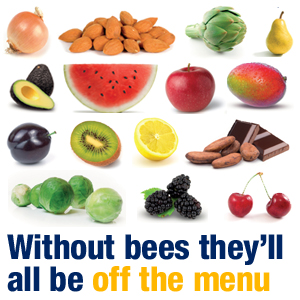
 Will the planet starve if bees disappear? Aren’t bees responsible for a significant chunk of the world’s food supply and nutrition, from one third to as much as 90 percent, depending on what advocacy group is making the claim? You hear such assertions invoked by advocacy groups, reported as truth by journalists and cited by politicians as accepted wisdom whenever the subject of pollinators comes up.

 We sympathize deeply with Sandra Lee’s ongoing travails related to her recent post-bilateral-mastectomy complications. But her decision to have bilateral mastectomies made her vulnerable, and her problems should be a cautionary tale for other women.
 Rapid eye movements (REMs) during sleep may contribute to the visual part of our dreams by acting as a switch from image to image, researchers have found. The study, which
Know Science And Want To Write?
Apply for a column: writing@science20.com
Donate or Buy SWAG
Please donate so science experts can write
for the public.
At Science 2.0, scientists are the journalists,
with no political bias or editorial control. We
can't do it alone so please make a difference.
We are a nonprofit science journalism
group operating under Section 501(c)(3)
of the Internal Revenue Code that's
educated over 300 million people.
You can help with a tax-deductible
donation today and 100 percent of your
gift will go toward our programs,
no salaries or offices.

Interesting insights from outside Science 2.0
