
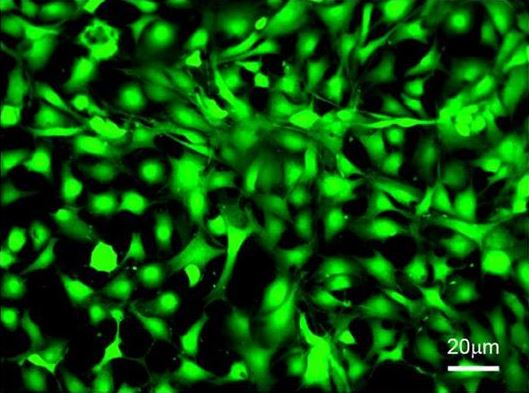


New research reveals how the algae behind red tide thoroughly disables – but doesn't kill – other species of algae. The study shows how chemical signaling between algae can trigger big changes in the marine ecosystem.

Marine algae fight other species of algae for nutrients and light, and, ultimately, survival. The algae that cause red tides, the algal blooms that color blue ocean waters red, carry an arsenal of molecules that disable some other algae. The incapacitated algae don't necessarily die, but their growth grinds to a halt. This could explain part of why blooms can be maintained despite the presence of competitors.

Fermentation Came First


Evidence mounts almost daily that beer started humans on the path to civilization even before the invention of agriculture some twelve thousand years ago. A paper in Evolutionary Anthropology says that, based on tests of artifacts, cereal grains were collected (sometimes from areas as far as sixty miles away) “for the purposes of brewing beer” to be used in feasts, which then “led to domestication...”

The nation's sewer system is aging and that means it is also wearing out with the risk of broken pipes leaking raw sewage into streets and living rooms. 

In the last few years, a technique known as Temporal Dominance of Sensations (TDS) has become popular for analyzing how consumer impressions evolve once they begin to taste a product. 

Now, researchers at the Institute of Agrochemistry and Food Technology in Valencia, Spain say they can visualize changes in coldness, creaminess or texture that we experience in the mouth while we are eating an ice cream  on a screen using colored curves, which will  help manufacturers improve product quality. They have used the technique to visualize the 'perceptions' experienced when eating an ice cream, which come together as a smooth and creamy liquid is formed when it melts in the mouth.

A gamma-ray burst of light from the enormous explosion of a star more 12.1 billion years ago — shortly after the Big Bang — recently reached Earth and was visible in the sky.

Gamma-ray bursts are believed to be the catastrophic collapse of a star at the end of its life. Farley Ferrante, a graduate student in Souther Methodist University's Department of Physics, who monitored the observations along with two astronomers in Turkey and Hawaii, says they were  first on the ground to observe the burst and to capture an image, using the McDonald Observatory in the Davis Mountains of West Texas.

Recorded as GRB 140419A by NASA's Gamma-ray Coordinates Network, the burst was spotted at 11 p.m. April 19 by SMU's robotic telescope, ROTSE-IIIB.

Essential oils have boomed in popularity as alternatives for synthetic cleaning products, anti-mosquito sprays and even medicines.

Why not use them to preserve food in a way that will appeal to the natural medicine crowd? 

Essential oils have been used therapeutically for centuries, mostly for mood altering and also for preservation. Today, they are being studied by tobacco companies, the cosmetics industry and, of course, food chemists. A study in the Journal of Agricultural and Food Chemistry reports the development of new edible films containing oils from clove and oregano that preserve bread longer than commercial additives.

E-cigarettes are a potential smoking cessation aid and they may also be able to lower the risk of nicotine dependency in high-risk groups. A systematic literature search for data on e-cigarettes' mechanism of action, their emissions, how they are seen by groups of potential users, their efficacy in smoking cessation, and their addiction potential finds that more studies will have to be done to know for sure. 

Long-lost paintings have been discovered on the walls of Cambodia's ancient Angkor Wat temple, thanks to the keen observations of an Australian National University (ANU) researcher.

The ancient paintings date back almost 500 years and depict deities, animals, boats and the temple itself, giving historians a new understanding of life in a relatively unknown period of Cambodia's history.

Rock art researcher Noel Hidalgo Tan discovered the hidden images while working as a volunteer at an archaeological excavation in Angkor Wat during a university break in 2010.

"I was walking through the temple on a lunch break and I saw some pigments on the wall. I took some pictures, but didn't think they would be anything special," he said.

Researchers at the Keck School of Medicine of the University of Southern California say that though fructose is naturally found in numerous fruits and other products, it is not only harmful, the public is being lied to about it on labels.

High fructose corn syrup (HFCS) has long been a target for food activists. Though we live in a world where over 90% of added sugar is sucrose (table sugar), some believe HFCS in soda is causing American obesity. But it can only be American obesity, since much of the world does not use it in soda.

