(MEMPHIS, Tenn. – June 5, 2014) St. Jude Children's Research Hospital scientists have identified problems in a connection between brain structures that may predispose individuals to hearing the "voices" that are a common symptom of schizophrenia. The work appears in the June 6 issue of the journal Science.
Researchers linked the problem to a gene deletion. This leads to changes in brain chemistry that reduce the flow of information between two brain structures involved in processing auditory information.
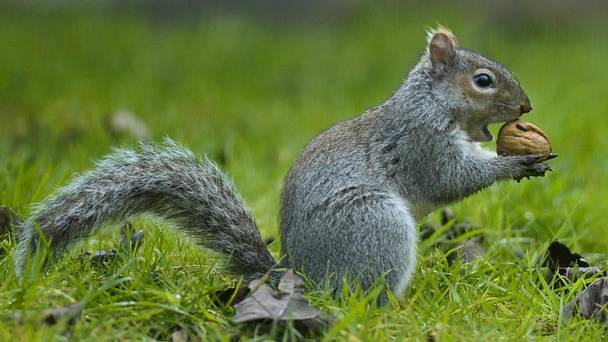
The first genotyping of grey squirrels shows a direct link between their genetic diversity and their ability to invade new environments.
Grey squirrels are an invasive species introduced from North America. While they are common throughout most of the UK and Ireland, on mainland Europe they are currently only found in Italy, where they mostly exist in discrete, but slowly expanding, populations.
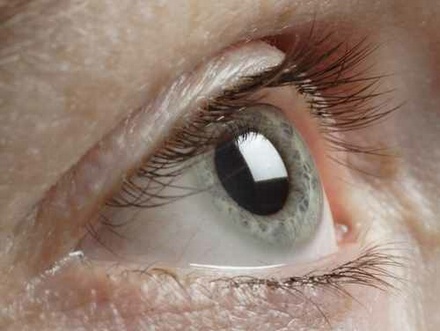
A new study says the brain, not the eye, controls the cellular process that leads to glaucoma, a finding that may help develop treatments for one of the world's leading causes of irreversible blindness.
In the paper, vision scientists and ophthalmologists describe how they performed a data and symmetry analysis of 47 patients with moderate to severe glaucoma in both eyes. In glaucoma, the loss of vision in each eye appears to be haphazard. Conversely, neural damage within the brain caused by strokes or tumors produces visual field loss that is almost identical for each eye, supporting the idea that the entire degenerative process in glaucoma must occur at random in the individual eye — without brain involvement.
Will anyone own land in space? Could an individual, company or country claim the Moon? Will we have countries in space, organized by ideas and religions, and territories just as we have on Earth? Will they go to war with each other over territories, resources or ideas as they do on Earth?
Look at this carefully, and you find that there are various things about the space environment that make a difference from the way things work on the Earth. Many of our Earth based concepts may be impossible to apply in space or may need to be radically changed.
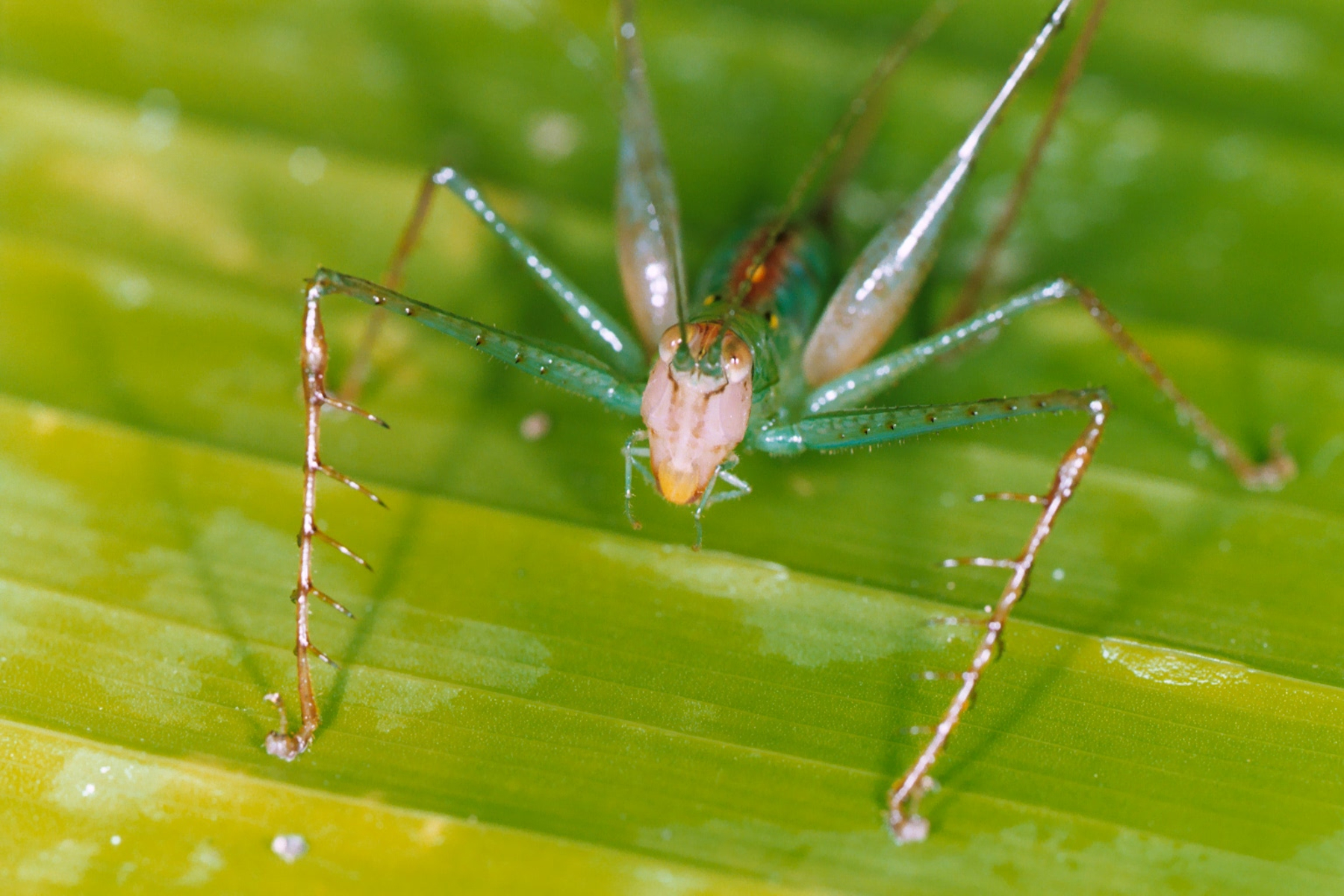
In the rainforests of South America, scientists have discovered a new genus and three new species of
katydid
with the highest ultrasonic calling songs ever recorded in the animal kingdom.
Katydids (bushcrickets) are insects known for their acoustic communication, with the male producing sound by rubbing its wings together (stridulation) to attract distant females for mating. But these newly discovered insects turn ultrasonic calling all the way up to 11 on the dial - males reach a frequency of a startling 150 kHz. For comparison, the calling frequencies used by most katydids range between 5 kHz and 30 kHz while nominal human hearing range ends at around 20 kHz.
Earlier this year, a team of students from Eindhoven went to Finland and built the world’s biggest ice dome, with a diameter of 30 meters.
Credit: Pykrete Dome team. Song: Youngblood Hawke - Stars (Hold On)
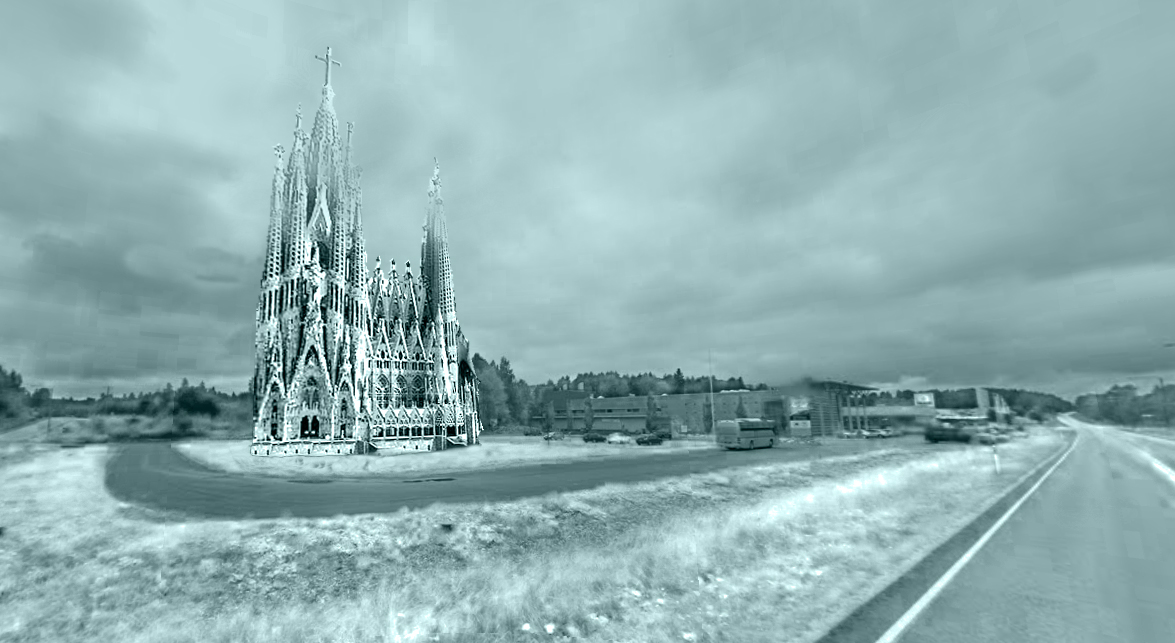
This next winter, another Eindhoven team wants to top that. They are going to make a 1:4 scale copy of Barcelona's Sagrada Familia in the town of Juuka , 40 meters high, in just three weeks.
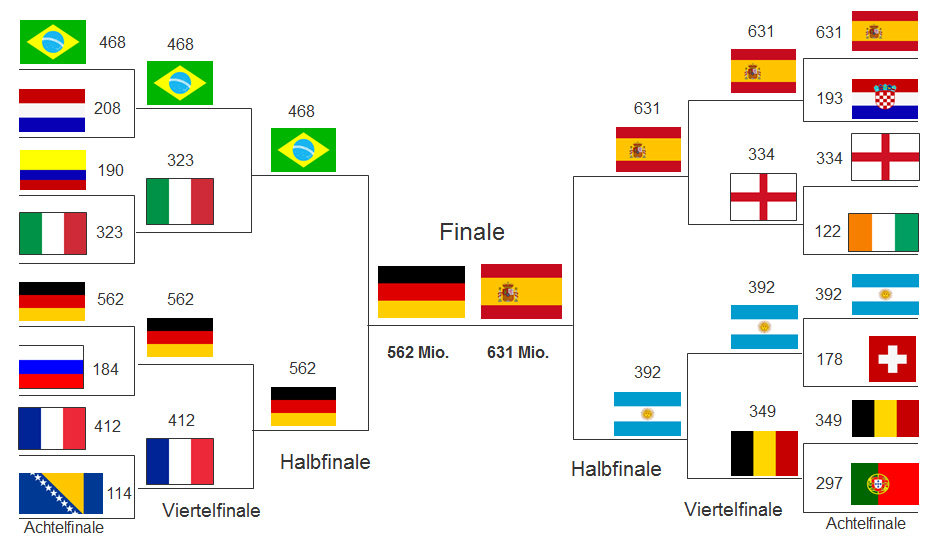
Does money buy championships? That is the prevailing theory. While it is common for a team like Chelsea, which got purchased buy a Russian billionaire who kept buying new teams until they won, to achieve success, a Swansea is less likely.
Assuming scouts and personnel managers really know what they are doing, economics should be as fine an indicator of success as anything, in that case. You might think so, in baseball, where a season is 162 games. The New York Yankees certainly did well by buying the best free agent they could get each year. But what about World Cup soccer, where after the initial round each game is sudden death? Can a national team of all-stars who have played together infrequently win more often if their players are rich?
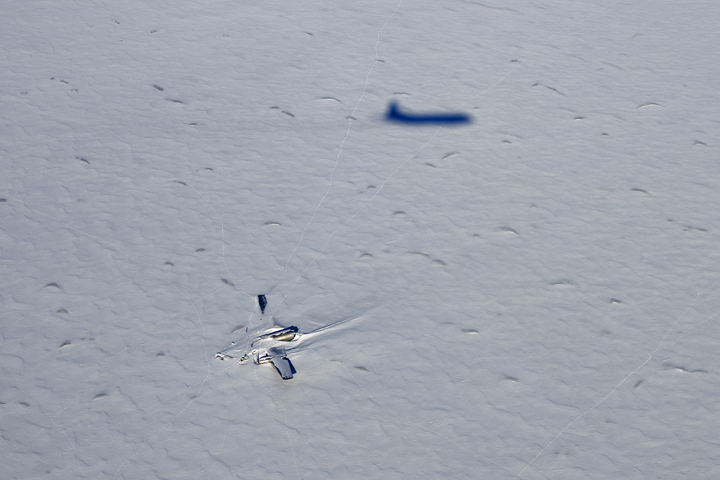
The Digital Mapping System (DMS) instrument attached to NASA’s P-3 Orion airplane for the Operation IceBridge campaign has captured an interesting image during its latest annual Operation IceBridge campaign to the Arctic and Antarctic to monitor glaciers, ice sheets, and sea ice.
The 2014 northern spring campaign ended on May 23 after eleven weeks of flights, but not before taking photos of the Kee Bird, a wrecked B-29 Superfortress that made an emergency landing on a northwest Greenland ice sheet in 1947.
Two years ago, I expressed my doubts about the existence of a
multiverse (or at least it's portrayal by some cosmologists) in a
blog post in this forum. In the meantime, last March, the announcement about the discovery of gravitational waves got us perhaps closer to a multiverse--at least to one form of it, based on inflation. And then some
problems with the Bicep data were discovered.
Conventional touchscreens often use coatings made of indium tin oxide (ITO) which are brittle, may shatter and increasingly costly to manufacture but polymer scientists have developed a transparent electrode that could make displays shatterproof.
In a recent paper, they demonstrated how a transparent layer of electrodes on a polymer surface could be extraordinarily tough and flexible, withstanding repeated scotch tape peeling and bending tests.