In high school and college, your coach told you to avoid alcohol. And for good reason; alcohol saps muscle strength and it's lingering lethargic effects aren't welcome either.
The lack of muscle strength really becomes evident when studying long-time alcoholics but it is also evidence in patients with mitochondrial disease. A new study on mitochondria that are unable to self-repair may mean a new way to diagnose mitochondrial disease, and a new drug target.
We know that around 12,000 years ago, a fundamental thing began to happen all around the world - plants were cultivated and animals were domesticated for transport, food and fiber.
The ability to program living holds tremendous potential for energy, agriculture, water remediation and medicine, and synthetic biology is on the case.
Researchers have already designed a 'tool box' of small genetic components that act as intracellular switches, logic gates, counters and oscillators but wiring those components together to form larger circuits that can function as 'genetic programs' has been difficult, because of the small number of available wires.
At the International Society for Heart and Lung Transplantation (ISHLT) 34th Annual Meeting in San Diego, TransMedics announced results of the PROCEED II heart transplant Food and Drug Administration (FDA) pivotal trial results using the Organ Care System (OCS™) platform.
PROCEED II Trial is a large international, multi-center, clinical trial designed to evaluate the ability of the OCS Heart Technology to preserve donor hearts compared with cold storage.
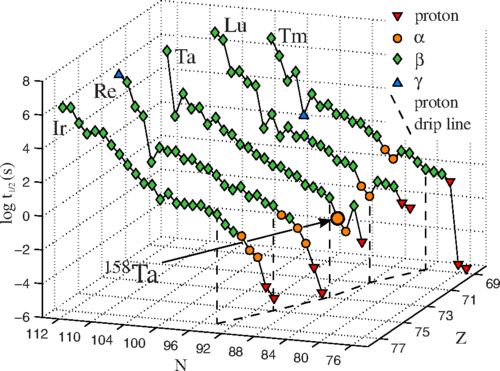
Identifying the full extent of the nuclear landscape, essentially how many isotopes exist, is vital for nuclear physics.
There is a lot left to learn. Beyond the stable nuclei that we find on Earth, there are many unstable nuclei that are formed in stellar events such as supernovae, but which are short-lived. There is a limit to how many protons and neutrons a nucleus can hold – too many and the excess will literally ‘pop out’. These limits are known as the proton and neutron ‘drip lines’.
Although these drip lines can be calculated, getting experiments to agree is another issue. Even finding them experimentally can be a difficult prospect.
A Star that seems Brighter when Eclipsed
This paradoxical phenomenon was brought to my attention by a recent article in Physics World. Quite an informative article, but like some bard of old, with legendary tales of kings and heroes, I would like to tell it as a story, in three episodes.
 1: Variable Star
ReferralPlus is a tool to match patients who disqualify for one study with others they might qualify for, using a geo-therapeutic matching algorithm with other studies, similar to how OpenTable matches people with the restaurants they are interested in by using demographic and time availability algorithms. It was created because 95% of patients who respond to a trial recruitment advertisement do not qualify and/or enroll in that study.
Most of those patients never enroll in another study.
National Oceanic and Atmospheric Administration Fisheries has decided to adopt a national recreational fishing policy, a move greeted enthusiastically by sportfishing and boating enthusiasts, who have been urging efforts by the National Marine Fisheries Service to advance and protect saltwater recreational fishing.
Small, independent businesspeople want more centralized, remote decision-making? Absolutely, when the alternative is up different states all being lobbied by activists.
The National Space Biomedical Research Institute (NSBRI), based at Baylor College of Medicine, is a consortium of biomedical institutions that study the health risks related to long-duration spaceflight and developing the technologies and countermeasures needed for human space exploration missions.
The EyeBoxCNS, a diagnostic device developed to assess brain health through tracking eye movement, and eFormulations, software enabled therapeutics which combine prescription medicines with customized software apps for brain-related conditions, have both been funded for further development by NSBRI.
Some
genetic diseases caused by an abnormal repeat in the DNA are known to become
more severe with each new generation - this dreadful trait is called anticipation.
Now a study by Portuguese researchers from Porto University has proved for the first time the existence of anticipation
in diseases caused by a different type of errors that not a DNA repeat, in this case in the fatal neurodegenerative
disorder Familial Amyloid Polyneuropathy
(FAP).






.jpg "When Bad News Is Good News For Neurodegenerative Diseases")

