White tiger In response to inquiries after a previous blog entry, Macrocosmos and Microcosmos, this article discusses white tiger breeding and their conservational value.

For bees, anyway. People are out of luck.

A research team led by the University of Illinois has identified an odorant receptor that allows male drones to find a queen in flight. The receptor, on the male antennae, can detect an available queen up to 60 meters away. This is the first time an odorant receptor has been linked to a specific pheromone in honey bees.

The “queen substance,” or “queen retinue pheromone,” was first identified decades ago, but scientists have only recently begun to understand its structure and role in the hive. The pheromone is a primary source of the queen’s authority. It is made up of eight components, one of which, 9-oxo-2-decenoic acid (9-ODA), attracts the drones during mating flights.

Only about a fifth of the genes in a cell are switched on at any given time but environmental changes such as smoking lead to changes in that genetic activity.

According to a Canadian team led by Wan L. Lam and Stephen Lam from the British Columbia Cancer Research Centre, smoking introduces some changes that are irreversible. Reversible changes were in xenobiotic functions( managing chemicals not produced in the body ), nucleotide metabolism and mucus secretion but some genes, such as GSK3B that are important in cell survival, are irreversibly damaged by smoking, and smoking also switched off genes that help combat lung cancer development.

The researchers took samples from the lungs of 24 current and former smoker, as well as from non-smokers who have never smoked.

Ivermectin, the standard drug for treating river blindness (onchocerciasis), is causing genetic changes in the parasite that causes the disease, according to a new study by Roger Prichard (McGill University, Canada) and colleagues, published on August 30, 2007 in the open-access journal PLoS Neglected Tropical Diseases. These genetic changes have previously been linked with parasites becoming resistant to ivermectin.

In studying how neurotransmitters travel between cells -- by analysis of events in the dimensions of nanometers -- Cornell researchers have discovered that an electrical current thought to be present during that process does not, in fact, exist.

These results were reported July 22 in the online edition of the journal Nature Cell Biology by Cornell researchers Liang-Wei Gong and Manfred Lindau, applied and engineering physics, as well as their colleague Guillermo Alvarez de Toledo at the University of Seville, Spain.

Researchers have made synthetic lipids called pseudoceramides that are involved in skin cell growth and could be used in treating skin diseases in which skin cells grow abnormally.

Ceramides are lipids found in the outermost skin layer called the stratum corneum, which is made of dead skin cells and mainly serves as a physical barrier. Ceramides' main biological function is to control how skin cells grow and differentiate - a process through which skin cells become specialized.

In obese individuals, fat cells are bloated and inflamed because they receive too many nutrients, including lipids. In these cells, various components cannot work properly anymore and, instead, they activate new proteins to cope with the situation. One of the most challenged organelles in obese fat cells is a maze-like compartment called the endoplasmic reticulum (ER) that makes proteins and lipid droplets and senses the amount of nutrients that enter the cell.

Margaret F. Gregor and Gokhan S. Hotamisligil review current knowledge about how the ER works in fat cells and is modified in obesity. They show that when a fat cell receives too many nutrients, the ER is overwhelmed and triggers a process called the unfolded protein response (UPR).

Scientists have discovered that a lipid known to protect the heart from inflammation and to cause skin allergic reactions also reduces inflammation of the kidneys. The discovery could help devise new ways of treating inflammatory kidney diseases.

The lipid, called sphingosylphosphorylcholine (SPC), has been shown to cause an increase in urine production in the kidneys and an abnormal accumulation of salt in the urine. But how SPC works in the kidneys is not completely understood.

Andrea Huwiler and colleagues examined the various proteins activated by SPC in kidney cells and showed for the first time that SPC triggers proteins known to reduce inflammation.

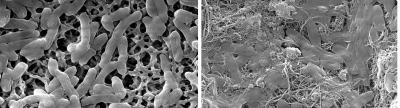
Single-walled carbon nanotubes (SWCNTs) can kill bacteria like the common pathogen E. coli by severely damaging their cell walls, according to a recent report from Yale researchers in the American Chemical Society (ACS) journal Langmuir.

“We began the study out of concerns for the possible toxicity of nanotubes in aquatic environments and their presence in the food chain,” said Menachem Elimelech, professor and chair of chemical and environmental engineering at Yale and senior author on the paper.

Engineers at the University of Washington are working with Harborview doctors to create new emergency treatments right out of Star Trek: a tricorder type device using high-intensity focused ultrasound rays. This summer, researchers published the first experiment using ultrasound to seal punctured lungs.

"No one has ever looked at treating lungs with ultrasound," said Shahram Vaezy, a UW associate professor of bioengineering. Physicists were skeptical it would work because a lung is essentially a collection of air sacs, and air blocks transmission of ultrasound. But the new experiments show that punctures on the lung's surface, where injuries usually occur, heal with ultrasound therapy.

"The results are really impressive," Vaezy said.