







DEARBORN, Michigan, April 13 /PRNewswire/ --

- Hundreds of SEIU Staff Bused in to Smash Into Meeting to Attack RNs and Break Up Conference on Union Democracy

The California Nurses Association/National Nurses Organizing Committee tonight condemned a brutal assault by busloads of purple cloaked staff of the Service Employees International Union who smashed into a conference of union members Saturday night in Dearborn, Mi. and physically assaulted women and union members who stood in their path.

"I am deeply concerned about this heightened attack on women and nurses, directed by SEIU President Andrew Stern," said CNA/NNOC Executive Director Rose Ann DeMoro, who was scheduled to speak about the campaign for genuine healthcare reform at the banquet.

LONDON, April 14 /PRNewswire/ --

- "Coronary Artery Disease Can be Silent, Like a Volcano Lying Dormant. Now we are Able to Accurately Predict a Coronary Eruption."

DUBAI, United Arab Emirates, April 13 /PRNewswire/ -- The Dubai School of Government is hosting tomorrow April 14, together with Business Week and in cooperation with DNM Strategies, the third annual "State of the Region" Forum. The theme of this year's Forum was "Leveraging Opportunity, Managing Risk."

The Forum, sponsored by the Commercial Bank of Dubai (CBD), Sama Dubai and Etisalat, connects representatives from both the public and private sectors in the UAE and neighbouring countries. The event provides a unique opportunity to examine and analyze key trends and critical developments affecting the Arab world and to devise strategies to mold the future of the region.

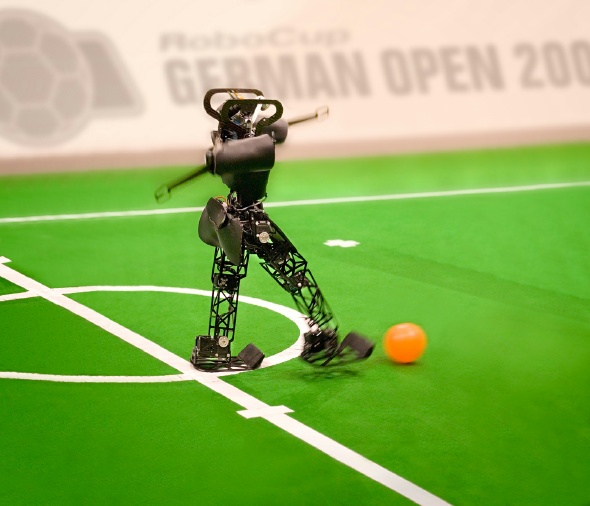
Robot soccer is an ambitious high-tech competition for universities, research institutes and industry. Several major tournaments are planned for 2008, the biggest of which is the ‘RoboCup German Open.’

From April 21-25, over 80 teams of researchers from more than 15 countries are expected to face off in Hall 25 at the Hannover Messe. In a series of soccer matches in several leagues, they will be putting the latest technologies on display. The tournament is being organized and carried out by the Fraunhofer Institute for Intelligent Analysis and Information Systems IAIS in Sankt Augustin.

UK astronomers have produced the most sensitive infrared map of the distant Universe ever undertaken. Combining data over a period of three years, they have produced an image containing over 100,000 galaxies over an area four times the size of the full Moon. Some of the first results from the project were presented by Dr Sebastien Foucaud from the University of Nottingham at the RAS National Astronomy Meeting in Belfast.

Due to the finite speed of light, these observations allow astronomers to look back in time over 10 billion years, producing images of galaxies in the Universe's infancy. The image is so large and so deep that thousands of galaxies can be studied at these early epochs for the first time. By observing in the infrared, astronomers can now peer further back in time, since light from the most distant galaxies is shifted towards redder wavelengths as it travels through the expanding Universe.

In research published in Nature, researchers at Rockefeller University and the University of Tokyo state that insects have adopted a strategy to detect odors that is radically different from those of other organisms -- an unexpected and controversial finding that may dissolve a dominant ideology in the field.

They state that insects use fast-acting ion channels to smell odors, a major break with current ideology, and that this means Darwin's tree of life will need to be redrawn.

Since 1991, researchers assumed that all vertebrates and invertebrates smell odors by using a complicated biological apparatus much like a Rube Goldberg device. For instance, someone pushing a doorbell would set off a series of elaborate, somewhat wacky, steps that culminate in the rather simple task of opening the door.

LONDON, April 13 /PRNewswire/ -- A major international exercise using advanced new technology to help European nations improve their response to massive coastal flooding was held throughout Europe last week. Emergency command centres in the UK, Sweden, Holland and Ireland worked together to coordinate a joined-up response to flooding from a simulated tsunami in another EU member state. The exercise was of particular relevance in the light of the major tidal surge that nearly overwhelmed flood defences in the eastern United Kingdom, Germany and Holland in November 2007, and the growing threat from rising sea levels caused by climate change.

The amount of oxygen available to a baby in the womb can affect their susceptibility to developing particular diseases later in life. Research presented at the annual Society for Endocrinology BES meeting in Harrogate shows that your risk of developing cardiovascular disease can be predetermined before birth, not only by your genes, but also by their interaction with the quality of the environment you experience in the womb.

Researchers at the University of Cambridge, led by Dr Dino Giussani, examined the role that oxygen availability in the womb plays in programming your susceptibility to different diseases. His group found that babies that don’t receive enough oxygen in the womb (e.g. due to pre-eclampsia or placental insufficiency) are more likely to suffer from cardiovascular disease when they are adult.

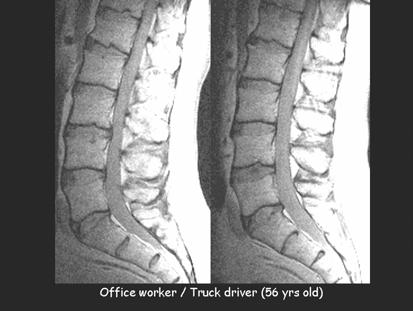
What do you learn by looking at the spines of hundreds of Finnish twins? If you are the international team of researchers behind the Twin Spine Study, you find compelling proof that back pain problems may be more a matter of genetics than physical strain.

The findings of the Twin Spine Study, an ongoing research program started in 1991, have led to a dramatic paradigm shift in the way disc degeneration is understood. Last month a paper presenting an overview of the Twin Spine Study’s multidisciplinary investigation into the root causes of disc degeneration received a Kappa Delta Award from the American Academy of Orthopaedic Surgeons, arguably the most prestigious annual award in musculoskeletal research.

Prostate tumors grew more quickly in mice who exercised than in those who did not, leading to speculation that exercise may increase blood flow to tumors, according to a new study by researchers in the Duke Comprehensive Cancer Center (DCCC) and the Duke Prostate Center.

“Our study showed that exercise led to significantly greater tumor growth than a more sedentary lifestyle did, in this mouse model,” said Lee Jones, Ph.D., a researcher in the DCCC and senior investigator on this study. “Our thought is that we may, in the future, be able to use this finding to design better drug delivery models to more effectively treat prostate cancer patients, and those with other types of cancer as well.”

