




There is a particular narrative about science that science journalists love to write about, and Americans love to hear. I call it the 'oppressed underdog' narrative, and it would be great except for the fact that it's usually wrong.

The narrative goes like this:

1. The famous, brilliant scientist So-and-so hypothesized that X was true.

2. X, forever after, became dogma among scientists, simply by virtue of the brilliance and fame of Dr. So-and-so.

3. This dogmatic assent continues unchallenged until an intrepid, underdog scientist comes forward with a dramatic new theory, completely overturning X, in spite of sustained, hostile opposition by the dogmatic scientific establishment.

We love stories like this; in our culture we love the underdog, who sticks to his or her guns, in spite of heavy opposition. In this narrative, we have heroes, villains, and a famous, brilliant scientist proven wrong.

Although it's been a half century since America entered the space age, the basic propulsion concepts used to push Explorer I into space will be the same type of propulsion that the nation will use to begin the next half century of space exploration.

It was January 31, 1958 when a Redstone-Jupiter C rocket developed in Huntsville, Ala., lifted the 30-pound artificial satellite into space.

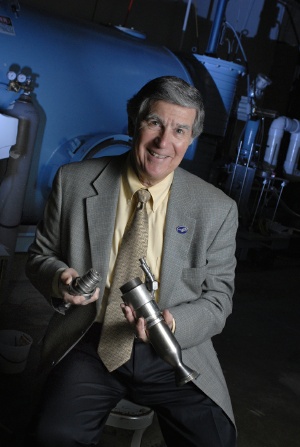
Clark Hawk, director of the Propulsion Research Center at The University of Alabama in Huntsville (UAHuntsville) has seen most of the advances that have taken place in rocket propulsion. He has spent 50 years conducting research in the field.


Dr.

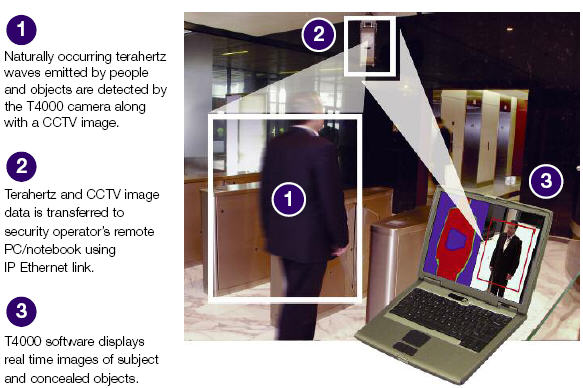
An interesting security imaging technology that can 'see' explosives, liquids, narcotics, weapons, plastics and ceramics hidden under clothing from 25 meters away is due to be unveiled at the Home Office Scientific Development Branch (HOSDB) Exhibition next week.

When you think 'green' in March, maybe you think of leprechauns or four-leaf clovers. Or maybe you think about Al Gore and hybrid vehicles clogging up the HOV lanes during rush hour.

But let's not forget the original 'green' mindset, say nutrition, experts, and it involves diet.

Here’s a sampling of some green foods UT Southwestern dietitians recommend for March which, along with being a chance to drink green beer, is also National Nutrition Month (no, the green beer does not count as nutrition):

Researchers at Johns Hopkins have discovered that two clinically different inherited syndromes are in fact variations of the same disorder. The team suggests that at least for this class of disorders, the total number and “strength” of genetic alterations an individual carries throughout the genome can generate a range of symptoms wide enough to appear like different conditions.

“We’re finally beginning to blur the boundaries encompassing some of these diseases by showing that they share the same molecular underpinnings,” says Nicholas Katsanis, Ph.D., an associate professor of ophthalmology at the McKusick-Nathans Institute of Genetic Medicine at Hopkins. “This is important progress for several reasons. First, knowing what’s going on molecularly and being able to integrate rarer conditions under common mechanisms allows us to potentially help more people at once. Second, clinicians can finally begin to offer more accurate diagnoses based on what really matters: the state of affairs at the cellular/biochemical level. In time, this will empower genetic counseling and much improved patient management.”

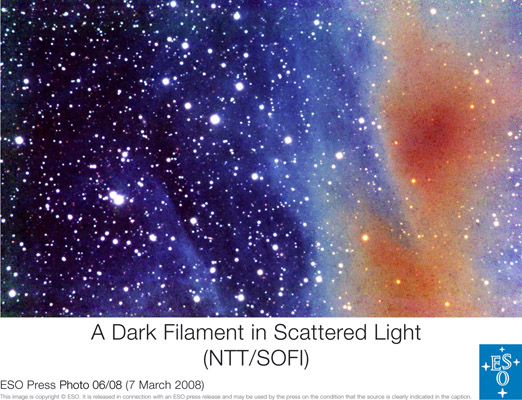
Astronomers using ESO's New Technology Telescope have measured the distribution of mass inside a dark filament in a molecular cloud with an amazing level of detail and to great depth, based on a new method that looks at the scattered near-infrared light or 'cloudshine.'

Dark clouds are feebly illuminated by nearby stars. This light is scattered by the dust contained in the clouds, an effect dubbed 'cloudshine' by Harvard astronomers Alyssa Goodman and Jonathan Foster. This effect is well known to sky lovers, as they create in visible light wonderful pieces of art called 'reflection nebulae'. The Chameleon I complex nebula is one beautiful example.

The vast expanses between stars are permeated with giant complexes of cold gas and dust opaque to visible light.

Tests on a ‘virtual physiological human’ (VPH) have simulated how well an HIV drug blocks a key protein in the lethal virus, say scientists in the UK. The method could pave the way to personalized drug treatments, such as for HIV patients developing resistance to their current regimes.

The human body is too complex to replicate using a single computer or even several computers strapped together. To fully simulate our inner workings, the VPH has to link networks of computers nation- and worldwide. With all this power assembled, scientists can then carry out studies of "supercomputing" proportions, such as the effects of a drug at the organ, tissue, cell and even molecular levels.

Medieval medicine gave great importance to the planets as influences in disease. The influence of the stars began at birth and influenced complexion. The continuous flow of celestial forces could change the course of disease.

The position of the planets was important in choosing the moment in which to begin cures or carry out a bloodletting. In "Regimen against the Plague", Siegmund Albich (1347-1427) invites readers not to think about the plague because that was sure to cause its appearance.

During the Middle Ages, the prevailing popular attitude in medicine was dictated by S. Ambrogio who declared " the garnishments of the medicine are contrary to celestial science, contemplation and prayers".

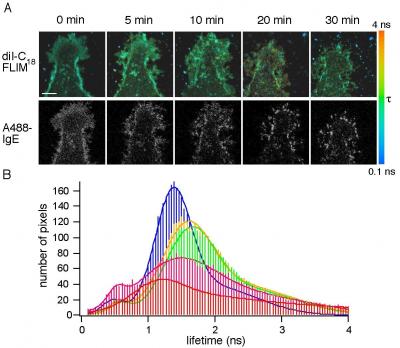
A team of Penn State University researchers is the first to demonstrate that lipid molecules in cell membranes participate in mammals' reactions to allergens in a living cell. The finding will help scientists better understand how allergy symptoms are triggered, and could contribute to the creation of improved drugs to treat them.

The team studied clusters of cholesterol-rich lipid molecules that they believe serve as platforms for the receptors that receive antibodies, the proteins that protect the body from allergens. In this case, the team examined IgE antibodies, which upon binding to their receptors initiate a cell's release of histamine--the substance that causes the unpleasant, but beneficial, mucous production, congestion, and itchiness associated with allergies.

A new interactive website – www.darwin.rcuk.ac.uk - has been launched today that people the chance to learn about Darwin’s theories of evolution and what they mean today. It shows how his ideas are influencing our broader culture as well as science, engineering, and social science and invites people to join in discussions with researchers.

The website will:

•Survey what interests or puzzles people about evolution, which will help inform the development of our engagement activities
•Showcase the contemporary application of evolutionary theory
•Provide a forum for discussing questions about evolution

Next year will see nationwide celebrations to mark the 200th anniversary of Charles Darwin’s birth and the 150th anniversary of the publication of his groundbreaking book On the Origin of Species (and we'll be hosting our own series of articles, events and retrospectives at DarwinDay2009.com - editors).

