




Oil palm (Elaeis guineensis) cultivation has expanded dramatically in recent decades and is frequently cited as a major threat to tropical biodiversity. This is because oil palm is grown in lowland tropical regions and so impacts on the most biodiverse terrestrial habitats: tropical rainforests.

Analysis of the published literature by scientists led by Edgar Turner at the University Museum of Zoology, Cambridge has revealed significant changes in the focus of oil palm research over the last 30 years.

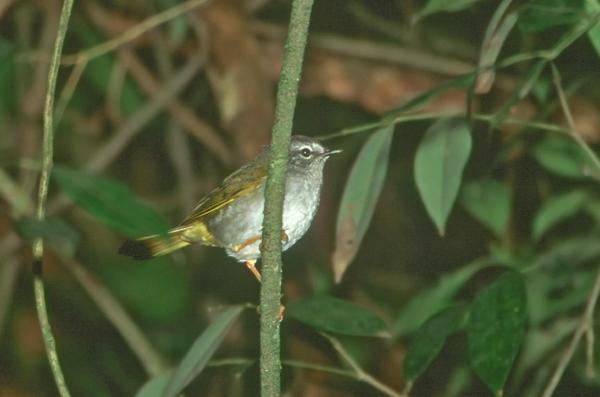
According to the Chinese proverb, a bird sings because it has a song, not because it has an answer. A team of French and Brazilian researchers, however, may have the answer as to how the song of Brazilian white-browed warbler has become so well-adapted to the acoustic properties of the rainforest environment.

Understanding the evolution of acoustic communication systems in animals is a hot topic in evolutionary biology and one of the main challenges is to understand how environmental pressures drive this evolution.

The human journey from Asia to the New World was interrupted by a 20,000-year layover in Beringia, a once-habitable region that today lies submerged under the icy waters of the Bering Strait.

Furthermore, the New World was colonized by approximately 1,000 to 5,000 people — a substantially higher number than the 100 or fewer individuals of previous estimates.

The developments, reported by University of Florida Genetics Institute scientists, help shape understanding of how the Americas came to be populated — not through a single expansion event that is put forth in most theories, but in three distinct stages separated by thousands of generations.

Night-time noise from aircraft or traffic can increase a person’s blood pressure even if it does not wake them, according to a new study published today in the European Heart Journal.

Scientists from Imperial College London and other European institutions monitored 140 sleeping volunteers in their homes near London Heathrow and three other major European airports.

The researchers measured the volunteers’ blood pressure remotely at 15-minute intervals and then analysed how this related to the noise recorded in the volunteers’ bedrooms.

RALEIGH, North Carolina and WELLESLEY HILLS, Massachusetts, February 12 /PRNewswire/ --

DARA BioSciences, Inc. ("DARA") and Point Therapeutics, Inc. ("Point") (Nasdaq: POTP) announced the consummation of their merger transaction, effective as of the close of business on February 12, 2008.

LONDON, February 12 /PRNewswire/ -- NHS Choices (http://www.nhs.uk), the online 'front door' to the NHS, launches a new interactive tool aimed to help people better understand the difference between food allergies and intolerances.

Based on NHS accredited information, the food allergy symptom checker (http://www.nhs.uk/Tools/Pages/FoodTool.aspx) enables users to find out in seconds whether they have either a food allergy or intolerance, and provides them with clinically approved guidance to help them improve their health. This interactive tool is the latest addition to the NHS Choices' extensive tool library.

RICHARDSON, Texas, February 12 /PRNewswire/ --

Red Knight Learning Systems, based in Dallas, Texas, has been selected as a strategic partner in the design and development of a unique new interactive learning project for kids. "Chuggington" is an entertainment property being developed by London-based Ludorum, plc that follows the adventures of three young train engines, their human caretakers, and their fellow train friends. Chuggington is specially designed for three to six year olds, and will be rolled out in television, books, toys, and an engaging interactive virtual world in early 2009.

RICHARDSON, Texas, February 12 /PRNewswire/ --

(Logo: http://www.newscom.com/cgi-bin/prnh/20080212/LATU115LOGO)

Among the many benefits accruing from the Genetics of Anorexia Nervosa Collaborative Study funded by the NIH is the ability to study other issues related to AN. A recent paper on Suicide Attempts in Anorexia Nervosa published in Psychosomatic Medicine offers much-needed examination of an important topic.

A new species of dinosaur unearthed in Mexico is giving scientists fresh insights into the ancient history of western North America, according to an international research team led by scientists from the Utah Museum of Natural History at the University of Utah.

“To date, the dinosaur record from Mexico has been sparse,” said Terry Gates, a paleontologist with the Utah Museum of Natural History, Utah’s designated natural history museum.

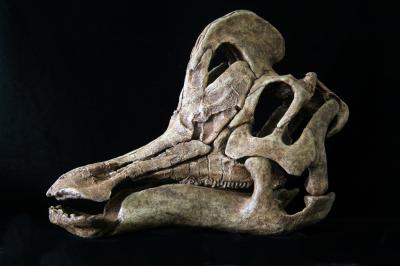
The new creature — aptly dubbed Velafrons coahuilensis — was a massive plant-eater belonging to a group of duck-billed dinosaurs, or hadrosaurs.

Johns Hopkins researchers from the Whiting School of Engineering and the School of Medicine have devised a micro-scale tool - a lab on a chip - designed to mimic the chemical complexities of the brain. The system should help scientists better understand how nerve cells in the brain work together to form the nervous system.

A report on the work appears as the cover story in the February 2008 issue of the British journal Lab on a Chip.

”The chip we’ve developed will make experiments on nerve cells more simple to conduct and to control,” says Andre Levchenko, Ph.D., associate professor of biomedical engineering at the Johns Hopkins Whiting School of Engineering and faculty affiliate of the Institute for NanoBioTechnology.

