






Drugs derived from cinchona bark, known as cinchona alkaloids, have been used in healing from ancient times. The most prominent representative of this group is quinine, a bitter substance contained in beverages such as tonic water and used in modern medicine to combat malaria.

As early as 1945, Robert Burns Woodward and William von Eggers Doering (Harvard University) described how to synthesize quinine in the laboratory. The last step of this “formal” total synthesis, a three-step reaction procedure previously described by Paul Rabe and Karl Kindler in 1918, has continued to be the subject of much controversy to this day.

Had they done it or not? That has been the question for decades. Woodward and Doering published the synthesis of d-quinotoxine in 1944. Based on the conversion of d-quinotoxine into quinine described by Rabe and Kindler in 1918, they claimed to have derived the total synthesis of quinine, though they had not actually completed this last step themselves before publishing. Their “formal” total synthesis was strongly challenged and was even dismissed as a “myth” by Gilbert Stork (Columbia University) in 2001.

REDMOND, Washington, February 3 /PRNewswire/ --

The combination of Microsoft and Yahoo! will create a more competitive marketplace by establishing a compelling number two competitor for Internet search and online advertising. The alternative scenarios only lead to less competition on the Internet.

Today, Google is the dominant search engine and advertising company on the Web. Google has amassed about 75 percent of paid search revenues worldwide and its share continues to grow. According to published reports, Google currently has more than 65 percent search query share in the U.S. and more than 85 percent in Europe. Microsoft and Yahoo! on the other hand have roughly 30 percent combined in the U.S. and approximately 10 percent combined in Europe.

A new approach to cleaning up digital photos has been developed by researchers in the UK and Jordan - they use a computer algorithm known as PSO (Particle Swarm Optimization) to intelligently boost contrast and detail in images without distorting the underlying features.

Malik Braik and Alaa Sheta Al-Balqa Applied University, in Salt, Jordan, working with Aladdin Ayesh at De Montfort University, Leicester, UK, explain that the Particle Swarm Optimization (PSO) algorithm represents an entirely new approach to solving all kinds of optimization problems. PSO has recently been used in computer science and electrical engineering.

Continued from Part 5:
I interviewed Gary Taubes by phone a few weeks ago, shortly after he gave a talk about the main ideas of his new book — Good Calories, Bad Calories — at UC Berkeley. The interview lasted about 2 hours. This is part 6.

SETH: When I started your book, I already kind of believed all of your main points. Not all of them, but I was sympathetic. I knew where it was going. I thought “Oh, good. More evidence. This is interesting, and that’s an interesting way to tell that story”.

Honestly, did you even known there was a Department of Pedagogy anywhere? Well, there is. They teach about the science of teaching. And apparently cartoons.

Pilar Casares García is a teacher in the Department of Pedagogy at the University of Granada but instead of teaching about teaching, she researches male chauvinism. In cartoons.

This was apparently once a real problem once but she says it's better now; women are as intelligent, agile, attractive, strong, and heroic as their male counterparts ... or more.

A Columbia University Medical Center research team has uncovered how stimulation of a particular brain region can help stave off the deficits in working memory associated with extended sleep deprivation.

Working memory is a specific form of short-term memory that relates to the ability to store task-specific information for a limited timeframe, e.g., where your car is parked in a huge mall lot or remembering a phone number for few seconds before writing it down. It has long been established that cognitive performance, such as working memory, declines with sleep deprivation.

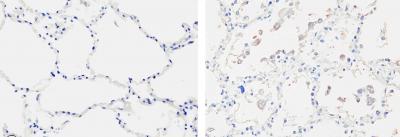
Researchers have uncovered the mechanism that contributes to the buildup of fibrous lung tissue in patients with severe acute respiratory syndrome (SARS), finding that a SARS viral protein important for replication can enhance pulmonary fibrosis by inhibiting the activity of the enzyme that breaks down connective tissue. The results offer up a new pathway to treat the pulmonary damage of SARS.

Infection with the SARS virus can lead to severe inflammation in the lungs, which can lead to respiratory distress, fibrosis, and eventually lung failure.

The Potomac Institute for Policy Studies has just released a new monograph that presents an alternative view of the character of warfare in the 21st Century. This new model argues that future conflicts will blur the distinction between war and peace, combatants and non-combatants.

Rather than distinct modes of war, we will face “Hybrid Wars” that are a combination of traditional warfare mixed with terrorism and insurgency.

Conflict in the 21st Century: The Rise of Hybrid Wars, by Research Fellow Frank Hoffman, summarizes the background and analysis of the changing character of warfare in our time. Examining the debate over the past decade about the evolution of modern warfare in the post Cold-war world, several thinkers have claimed that we were in the midst of a “Revolution in Warfare.”

Researchers at Yale School of Medicine have found that the gene ENPP1 is linked to preterm birth and low birth weight among Hispanic women.

Errol Norwitz, M.D., associate professor in the Department of Obstetrics, Gynecology & Reproductive Sciences at Yale, will present preliminary results from this research at the Society for Maternal Fetal Medicine Annual Meeting on February 2 in Dallas, Texas.

One out of eight babies in the United States is born prematurely—delivery prior to 37 weeks gestation. These babies don’t fare as well as their full-term counterparts, especially if they are born prior to 28 weeks gestation.

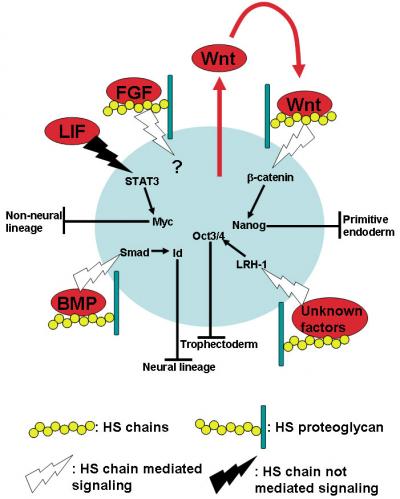
Heparan sulfate, a carbohydrate molecule that coats certain proteins on the cell surface, is critical for the proper proliferation and potency of embryonic stem cells, researchers report.

Stem cells’ tremendous therapeutic potential arises from their ability to continually self-renew and turn into any adult cell type. Researchers have long been trying to uncover the basis of these abilities, but while several proteins and growth factors are known to play a role both inside and outside the cell, the molecular mechanisms remain largely unknown.

Many of the stem-cell associated can attach to heparan sulfate molecules, so Shoko Nishihara and colleagues examined what would happen to mouse stem cells in cell culture if heparan sulfate production was reduced or blocked.

