



Until recently, a student solving a calculus problem, a physicist modeling a galaxy or a mathematician studying a complex equation had to use powerful computer programs that cost hundreds or thousands of dollars. But an open-source tool based at the University of Washington won first prize in the scientific software division of Les Trophées du Libre, an international competition for free software.

The tool, called Sage, faced initial skepticism from the mathematics and education communities.

"I've had a surprisingly large number of people tell me that something like Sage couldn't be done – that it just wasn't possible," said William Stein, associate professor of mathematics and lead developer of the tool. "I'm hearing that less now."

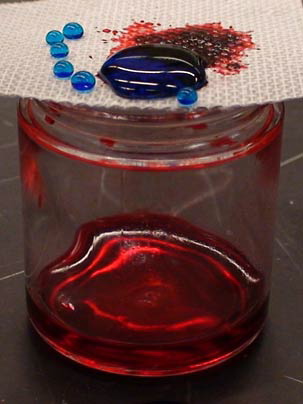
Creating a strongly oil-repelling, or “oleophobic” material, has been a long-standing challenge for scientists since there are no natural examples of such a material.

“Nature has developed a lot of methods for waterproofing, but not so much oil-proofing,” said Gareth McKinley, MIT School of Engineering Professor of Teaching Innovation in the Department of Mechanical Engineering and a member of the research team that have designed the first simple process for manufacturing materials that strongly repel oils. “The conventional wisdom was that it couldn't be done on a large scale without very special lithographic processes.”

Yet the MIT team has done it.

Described as a hotspot of botanical diversity, there are more than 20,000 indigenous plant species in South Africa. Several thousand of them are used by traditional healers every day in that country for treating a range of problems from the common cold to serious diseases such as AIDS.

How safe and effective these treatments are will be the focus of The International Center for Indigenous Phytotherapy Studies (TICIPS), a collaborative research effort between the University of Missouri-Columbia and the University of the Western Cape, South Africa.

It’s a rare case of all light and no heat: A new study reports that a laser can be used to switch a film of vanadium dioxide back and forth between reflective and transparent states without heating or cooling it.

It is one of the first cases that scientists have found where light can directly produce such a physical transition without changing the material’s temperature.

It is also among the most recent examples of “coherent control,” the use of coherent radiation like laser light to affect the behavior of atomic, molecular or electronic systems. The technique has been used to control photosynthesis and is being used in efforts to create quantum computers and other novel electronic and optical devices.

Esquire magazine scribe Tom Junod recently wrote something that made me question my judgment and his sanity - namely that Franziska Michor Is the Isaac Newton of Biology

Now, the last time someone compared themselves to Isaac Newton it was ... well, okay it was me, but even I can't be serious about comparing myself to Isaac Newton. Isaac Newton is a serious guy in physics. A giant. Maybe the giant. It's one thing to make comparisons for dramatic effect, which a keen writer like Junod can do better than anyone, but another to make a serious case.

Violence is a frequent occurrence in television shows and movies, but can watching it make you behave differently?

Although research has shown some correlation between exposure to media violence and real-life violent behavior, there has been little direct neuroscientific support for this theory until now.

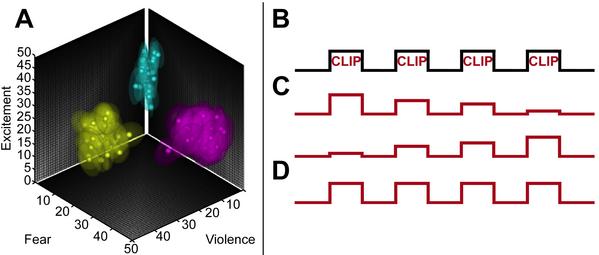
Researchers at Columbia University Medical Center’s Functional Magnetic Resonance Imaging (fMRI) Research Center have shown that watching violent programs can cause parts of your brain that suppress aggressive behaviors to become less active.


(A) Each of the eighty-four clips was rated for violence, fear, and excitement on continuous visual analogue scales (n = 6 subjects).

Are those inclined towards generosity genetically programmed to behave that way? A team of researchers believes this to be true based on their latest study.

Through an online task involving making a choice whether or not to give away money, the researchers found that those who chose to give away some or all of their money differed genetically from those involved in the exercise who chose not to give their money away.

The scientists conducted the experiment with 203 online "players". Each player could choose to keep the equivalent of $12 he was allocated, or to give all or part of it to an anonymous other player.

Scientists exploring one of the largest remaining blocks of tropical forest in Western Africa discovered significant populations of new, rare and threatened species underscoring the area’s high biological diversity and value.

The findings from a 2006 expedition to Ghana’s Atewa Range Forest Reserve (Atewa) led by Conservation International’s Rapid Assessment Program (RAP) are presented in a report made public today.

Climate scientists warned the United Nations Climate Conference in Bali of the need to act immediately to cut greenhouse gas emissions, with a window of only 10-15 years for global emissions to peak and decline, and a goal of at least a 50 per cent reduction by 2050.

They stated that if immediate action is not taken, millions of people will be at risk from extreme events such as heat waves, drought, floods and storms, with coasts and cities threatened by rising sea levels, and many ecosystems, plants and animal species in serious danger of extinction.

The researchers have issued a ‘Bali Climate Declaration by Scientists’ in which they call on government negotiators from the 180 nations represented at the meeting to recognize the urgency of taking action now.

A new species of bacteria discovered living in one of the most extreme environments on Earth could yield a tool in the fight against global warming.

In a paper published in Nature, University of Calgary biology professor Peter Dunfield and colleagues describe the methane-eating microorganism they found in the geothermal field known as Hell’s Gate, near the city of Rotorua in New Zealand.

It is the hardiest “methanotrophic” bacterium yet discovered, which makes it a likely candidate for use in reducing methane gas emissions from landfills, mines, industrial wastes, geothermal power plants and other sources.

