EPFL and UNIGE scientists have developed a microchip using graphene that could help wireless telecommunications share data at a rate that is ten times faster than currently possible. The results are published today in Nature Communications.

"Our graphene based microchip is an essential building block for faster wireless telecommunications in frequency bands that current mobile devices cannot access," says EPFL scientist Michele Tamagnone.

Graphene acts like polarized sunglasses

VANCOUVER, British Columbia (April 6, 2016) -- A pioneering technique significantly reduces phantom limb pain--chronic pain emanating from the site of amputated limbs--according to findings presented at the Society of Interventional Radiology's 2016 Annual Scientific Meeting.

The study indicates that interventional radiologists applying cryoablation therapy, a minimally invasive targeted treatment using cold blasts, show promise in improving the quality of life for patients suffering phantom limb pain.

Benjamin Franklin, Socrates, Martin Luther King Jr., Mother Teresa: All well-recognized names. In a recent study from Personality and Social Psychology Bulletin, researchers studying Americans and Canadians found preferences for practical wisdom when people were asked to name important figures and tell stories about their wisdom.

Psychologists Nic Weststrate and Michel Ferrari (University of Toronto) along with Sociologist Monika Ardelt (University of Florida) studied average people to determine how everyday people understand wisdom and uncovered a set of characteristics shared across North America that shape today's prototypical vision of "wisdom."

Increasing temperatures will enlarge Europe's seasonal window for the potential spread of mosquito-borne viral disease, expanding the geographic areas at risk for a dengue epidemic to include much of Europe. The findings by researchers at Umeå University in Sweden are published in the journal EBioMedicine.

Researchers at Umeå University's Unit for Global Health have calculated the risk for dengue outbreaks in Europe based on a set of different climate change predictions. Climate change-related temperature variations and overall warmer mean temperatures both have profound growth impacts on the ability of vectors - Aedes aegypti and Aedes albopicturs - to transmit dengue. The Aedes mosquitos, especially Aedes aegypti, are associated with most major dengue epidemics.

A very unusual exchange is about to take place over the Atlantic. The UK is sending some 700 kilograms of highly enriched uranium to be disposed of in the US, the largest amount that has ever been moved out of the country. In return, the US is sending other kinds of enriched uranium to Europe to help diagnose people with cancer.

The vast majority of the UK’s waste comes from its fleet of nuclear power stations. Most of it is stored at the Sellafield site in north-west England.

Eating meals from restaurants has become routine for many American children, often contributing excess calories, solid fats, sodium, and added sugar to diets already lacking in fruit, vegetables, and dairy. 

Use of cannabis during pregnancy is linked to low birthweight and the need for intensive care, reveals an analysis of the available evidence, published in the online journal BMJ Open.

As cannabis becomes more socially acceptable, it's important that prospective mums-to-be and clinicians are fully up to speed on the potential harms of using the drug during pregnancy, caution the researchers.

Cannabis "remains the drug of choice in developed and developing countries," with up to 5% of 15-64 year olds around the world thought to use it, the researchers point out.

Untitled Document

This is one of the questions I get asked most often since I started to cover the topic of asteroid impacts. Will humans will become extinct within a decade, or within a century? And can this happen through natural disasters? For instance if you watch the movies you may think there's a chance of a giant asteroid impact which will make us extinct. But what's the real situation? 

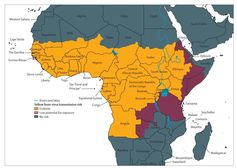
The World Health Organisation has declared the yellow fever outbreak in Angola a grade 2 emergency.This means that it can have moderate public health consequences. This requires an emergency support team run from the organizations regional office providing support. Health and medicine editor Candice Bailey spoke to Jacqueline Weyer, a senior medical scientist from the National Institute for Communicable Diseases in South Africa, to understand the latest outbreak.

How serious is the outbreak in Angola? When last did this happen?

Nearly 14 percent of veterans reported suicidal thinking at one or both phases of a two-year Veterans Affairs (VA) study.

The study, now online, is slated for publication in the June 2016 issue of the Journal of Affective Disorders.

The finding is based on a nationally representative sample of more than 2,000 U.S. veterans who were surveyed twice as part of the National Health and Resilience in Veterans Study, led by Dr. Robert Pietrzak of the Clinical Neurosciences Division of VA's National Center for PTSD. The first wave was conducted in 2011, the second in 2013.