
A team of researchers have found 38 genes and molecules that most likely cause HER2+ cancer cells to spread.

The HER2+ subtype accounts for 20 to 30 percent of early-stage breast cancer diagnoses, which are around 200,000 new diagnoses each year in the United States, leading to approximately 40,000 deaths annually. Several cancer chemotherapy drugs do work well at early stages of the disease, destroying 95 to 98 percent of the cancer cells in HER2+ tumors, but patients can develop resistance and the tumors begin to grow again. 

In the ongoing conflict between science and young Earth creationism, evolution is usually a main point of contention. The idea that all life on Earth evolved from a common ancestor is a major problem for young Earth creationists. 

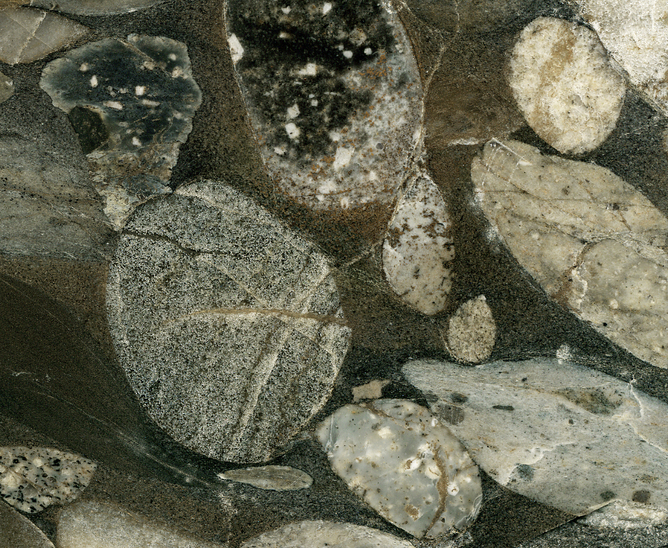
As a geologist, though, I think that the rocks beneath our feet offer even better arguments against young Earth creationism. For the young Earth creationist model doesn’t square with what you can see for yourself. And this has been known since before Darwin wrote a word about evolution.

Western Europe, the USA, Canada, Australia and New Zealand now have birth rates that are relatively close to replacement, which means that the 'decline of the West', where developed nations birth control and abort themselves out of existence, isn't happening.

It's certainly a more optimistic demographic narrative of the future of the West than we usually get, where declining birth rates and population aging will reduce Europe and the US while Asian superpowers, such as China and India, see huge populations and economies to match. 

Men just want sex more than women. I’m sure you’ve heard that one. Stephen Fry even went as far as suggesting in 2010 that straight women only went to bed with men because sex was “the price they are willing to pay for a relationship”.

The ocean sucks up heat-trapping carbon dioxide (CO2) building up in our atmosphere with help from tiny plankton.

Like plants on land, plankton convert CO2 into organic carbon via photosynthesis and then can sink into the deep ocean, carrying carbon with them. They decompose when bacteria convert their remains back into CO2.

This "biological pump," if it operated 100 percent efficiently, would mean nearly every atom of carbon drawn into the ocean would be converted to organic carbon, sink into the deep ocean, and remain sequestered from the atmosphere for millennia. But like hail stones that melt before reaching the ground, some carbon never makes it to the deep ocean, allowing CO2 to leak back into the upper ocean and ultimately exchange with the atmosphere.

The first three eggs of the rare ‘Akeke‘e have hatched under the auspices of San Diego Zoo Global conservation biologists. The newly hatched chicks represent hope for the survival of a small Hawaiian honeycreeper.

Eggs from two species of rare Hawaiian honeycreeper birds, the ‘Akikiki and ‘Akeke‘e, were collected from native habitat earlier this month as part of an effort to preserve these two bird species from extinction.

3,000 children were treated in U.S. emergency departments in 2012 for eye injuries related to paintball guns, airsoft guns, BB guns and pellet guns - but the big increase was in airsoft guns. Paintball injuries have remained minor (0.4 per million children) and for over a decade BB gun manufacturers have restricted sales and marketing to minors, so there are not many "You'll shoot your eye out" moments due to those.

Investigators from the Stanford University School of Medicine found that the rates for eye injuries from non-bullet guns increased by 511% between 2010 and 2012, reaching 8.4 per million children and the rise was almost exclusively due to air gun related injuries, which parallels their growth in popularity.

Researchers have adapted an antiviral enzyme from bacteria called Cas9 into an instrument for inhibiting hepatitis C virus in human cells. Cas9 is part of the CRISPR genetic defense system in bacteria, which scientists have been harnessing to edit DNA in animals, plants and even human cells. In this case, Emory researchers are using Cas9 to put a clamp on RNA, which hepatitis C virus uses for its genetic material, rather than change cells' DNA.

Although several effective drugs are now available to treat hepatitis C infection, the approach could have biotechnology applications.

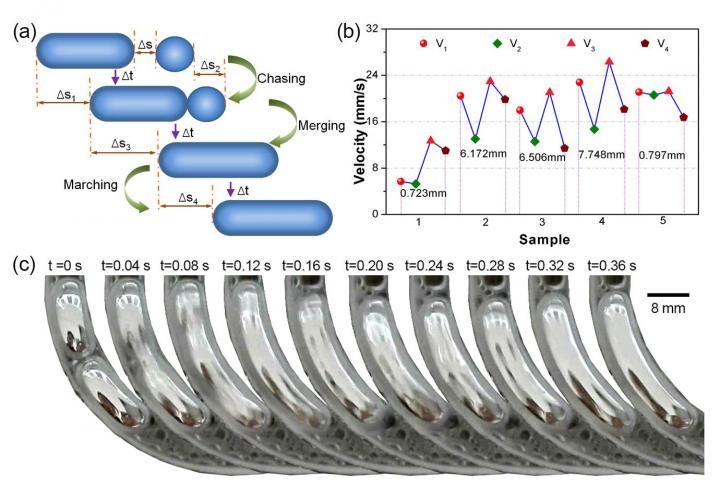
Autonomous locomotion for a macroscopic liquid metal machine has been made self-actuated when fueled with aluminum (Al) flake and now a much larger liquid metal machine has been made possible.

It can autonomously move and accelerate with an increase in temperature. When dividing a large running liquid metal vehicle into several smaller ones, each of them can still maintains its traveling state along the original track. If several dispersive vehicles moved close to each other, they can coalesce seamlessly, and then still kept moving forward.

American science-fiction cinema fans are either intrigued or horrified by this notion.

In an effort that reaches back to the 19th-century laboratories of Europe, a discovery by chemistry researchers establishes new possibilities for the semiconductor industry - chemists have been able to trap molecular species of silicon oxides.