








Ruins of a Roman temple from the second century CE have recently been unearthed in the Zippori National Park in Israel. Above the temple are foundations of a church from the Byzantine period.

The discovery indicated that Zippori, the Jewish capital of the Galilee during the Roman period, had a significant pagan population which built a temple in the heart of the city center. The central location of the temple which is positioned within a walled courtyard and its architectural relation to the surrounding buildings enhance our knowledge regarding the planning of Zippori in the Roman era.

Scientists from the Gladstone Institute of Cardiovascular Disease (GICD) and UCSF have identified a key regulatory factor that controls development of the human vascular system, the extensive network of arteries, veins, and capillaries that allow blood to reach all tissues and organs.

The research, published in the latest issue of Developmental Cell, may offer clues to potential therapeutic targets for a wide variety of diseases, such as heart disease or cancer, that are impacted by or affect the vascular system.

Researchers in laboratory of GICD Director Deepak Srivastava, MD, found that microRNA (miR-126), a tiny RNA molecule, is intimately involved in the response of blood vessels to angiogenic signals. Angiogenesis, the process of vascular development, is a tightly regulated and well-studied process.A cascade of genes orchestrate a series of events leading to formation of blood vessels in an embryo.

Researchers have discovered a central molecular switch in fruit fly embryos that opens new avenues for studying the causes of birth defects and cancer in humans. Writing about their study in the Aug. 12 Developmental Cell, scientists at Cincinnati Children's Hospital Medical Center determined the switch to be a main tuning mechanism for instructing cells whether to form sensory nerves or blood cells in different parts of the body.

How do you know when a scientific problem is finished? Biologists have been cracking open the cell and studying its molecular insides for a very long time now. How much more is there to learn? Perhaps it seems obvious that we are still missing much: we can't cure cancer very well, for example. On the other hand, one could ask, what's really keeping us from curing cancer, a lack of basic understanding or insufficiently developed technology? Nowhere is this problem of defining a scientific endpoint more obvious than in the community of scientists who are focused on some of the most basic questions in cellular and molecular biology - the community of yeast biologists. Yeast biologists now have to figure out what human biologists will be asking in the decades to come: what does it mean to solve a cell? Are there any big questions left in molecular biology?

There have been many cultural changes so far in 2008. Some of these changes are in response to the rapid increase in the price of oil and other commodities. Some of these changes have been due to technological innovations. In both cases new behavior patterns are being established that will, to some degree become permanent and will create new dynamics in certain industries. Today we take a look at some of the predictions made here last January.


Shopping

The predicted shopping trends were written with a long term view. What is interesting is that the high price of gasoline has accelerated the speed of implementation of some of the forecasts. On shopping, this column forecast:


“Shopping behavior will noticeably change……purchases will go down per capita. This will due to belt tightening but also due to the effect of the explosive growth that on-line sales will now have on off-line sales.”

Researchers at the U.S. Department of Energy's Idaho National Laboratory say they have devised an inexpensive way to produce plastic sheets containing billions of nanoantennas that collect heat energy generated by the sun and other sources.

They say this technology is the first step toward a solar energy collector that could be mass-produced on flexible materials.

Traditional solar cells rely on a chemical reaction that only works for up to 20 percent of the visible light they collect. Scientists have developed more complex solar cells with higher efficiency, but these models are too expensive for widespread use.

Neither snap judgements nor sleeping on a problem are any better than conscious thinking for making complex decisions, according to new research that the researchers say debunks a controversial 2006 research result asserting that unconscious thought is superior for complex decisions, such as buying a house or car.

If anything, the new study suggests that conscious thought leads to better choices.

Since its publication two years ago by a Dutch research team in the journal Science, the earlier finding had been used to encourage decision-makers to make "snap" decisions (for example, in the best-selling book Blink, by Malcolm Gladwell) or to leave complex choices to the powers of unconscious thought ("Sleep on it", Dijksterhuis et al., Science, 2006).

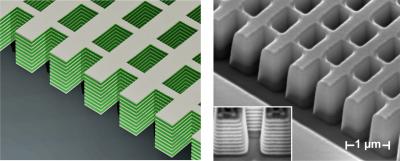
Scientists at the University of California, Berkeley, have for the first time engineered 3-D materials that can reverse the natural direction of visible and near-infrared light, a development that could help form the basis for higher resolution optical imaging, nanocircuits for high-powered computers, and, to the delight of science-fiction and fantasy buffs, cloaking devices that could render objects invisible to the human eye.

Two breakthroughs in the development of metamaterials - composite materials with extraordinary capabilities to bend electromagnetic waves - are reported separately this week in the Aug. 13 advanced online issue of Nature, and in the Aug. 15 issue of Science.

In a study on fetal alcohol syndrome, researchers were able to prevent the damage that alcohol causes to cells in a key area of the fetal brain by blocking acid sensitive potassium channels and preventing the acidic environment that alcohol produces. The cerebellum, the portion of the brain that is responsible for balance and muscle coordination, is particularly vulnerable to injury from alcohol during development.

The researchers also found that although alcohol lowers the amount of oxygen in the blood of the mother, it is not the lack of oxygen that damages the fetal cerebellum, but the drop in pH.

A study of 228 women has revealed genetic variants responsible for body shape, according to research published in BMC Genetics.

Based on work in the fruit fly Drosophila melanogaster, the study identifies natural variation in the human LAMA5 gene as a key determinant of weight.

As the prevalence of obesity and related health problems continues to increase worldwide, there is considerable effort being devoted to identify genetic mechanisms that control fat storage. Maria De Luca led a team from the University of Alabama at Birmingham, USA, who identified candidate genes using different strains of Drosophila.

