





HELSINKI, May 28 /PRNewswire/ -- Finnish software company Reaktor Innovations has been selected as the best workplace in Europe. At a gala held in London yesterday, Reaktor was announced as the European winner of the Great Place to Work study in the series for small and medium companies. 1,250 companies from 15 European countries participated in the study.

Reaktor's approach is in many ways unique. The company's business operations are based on doing everything as well as possible. The employees are expert professionals in their field and the company contributes an exceptional amount of effort into the skills and well-being of its staff.

LONDON, May 28 /PRNewswire/ --

- Woolworths customers receive online digital receipts and additional free services for their newly-purchased items

MyThings.com (http://www.mythings.com) has partnered with the successful UK retailer Woolworths to help their customers organise and protect online purchases. Woolworths (http://www.woolworths.co.uk) customers can now anonymously save their receipts for free, complete with images, descriptions, model numbers, prices, dates purchased, and warranty expiration dates.

After saving their receipts, users gain access to MyThings services, including accessories, product information, tips & tricks, manuals, downloads, warranties, insurance, and free valuation. Members can also register other belongings free of charge.

Researchers at The University of Nottingham have taken some important first steps to creating a synthetic copycat of a living cell.

Dr Cameron Alexander and PhD student George Pasparakis in the have used polymers — long-chain molecules — to construct capsule-like structures that have properties mimicking the surfaces of a real cell.

In work published as a 'VIP paper' in the journal Angewandte Chemie International Edition, they show how in the laboratory they have been able to encourage the capsules to 'talk' to natural bacteria cells and transfer molecular information.

Charlotte Eklund-Jonsson at the Department of Food Science, Chalmers University of Technology, in Sweden says the results of her doctoral dissertation could be a new vegetarian food that boosts the uptake of iron and offers a good set of proteins.

The food, called tempe, is a whole-grain product with high folate content. It is generally accepted in medicine that whole-grains reduce the risk of cardiovascular diseases, and it is also believed that it protects against age-related diabetes and certain forms of cancer.

You went to a wedding yesterday. The service was beautiful, the food and drink flowed and there was dancing all night. But people tell you that you are in hospital, that you have been in hospital for weeks, and that you didn’t go to a wedding yesterday at all.

The experience of false memories like this following neurological damage is known as confabulation. The reasons why patients experience false memories such as these has largely remained a mystery. Now a new study conducted by Dr Martha Turner and colleagues at University College London, published in the May 2008 issue of Cortex offers some clues as to what might be going on.

The authors studied 50 patients who had damage to different parts of the brain, and found that those who confabulated all shared damage to the inferior medial prefrontal cortex, a region in the centre of the front part of the brain just behind the eyes.

The world's first optical pacemaker is described in an article published today in Optics Express. A team of scientists at Osaka University in Japan show that powerful, but very short, laser pulses can help control the beating of heart muscle cells.

"If you put a large amount of laser power through these cells over a very short time period, you get a huge response," says Nicholas Smith, who led the research. The laser pulses cause the release of calcium ions within the cells, Smith explains, and this action forces the cells to contract.

This technique provides a tool for controlling heart muscle cells in the laboratory, a breakthrough that may help scientists better understand the mechanism of heart muscle contraction.

Analysis of DNA from the remains of ancient humans provides valuable insights into such important questions as the origin of genetic diseases, migration patterns of our forefathers and tribal and family patterns.

Unfortunately, severe problems connected with the retrieval and analysis of DNA from ancient organisms (like the scarcity of intact molecules) are further aggravated in the case of ancient humans. This is because of the great risk of contamination with abundant DNA from modern humans. Humans, then, are involved at all steps, from excavation to laboratory analyses. This means that many previous results have subsequently been disputed as attributed to the presence of contaminant DNA, and some researchers even claim that it is impossible to obtain reliable results with ancient human DNA.

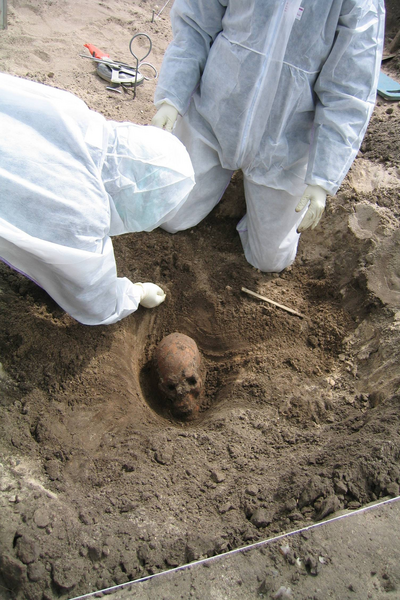
Using freshly sampled material from ten Viking skeletons from around AD 1,000, from a non-Christian burial site on the Danish island of Funen, Dissing and colleagues showed that it is indeed possible to retrieve authentic DNA from ancient humans.

MANCHESTER, England, May 28 /PRNewswire/ --

The British public are being urged to get their hands dirty, if they are unhappy with the state of the environments in which they live and work.

The British Cleaning Council (BCC), organisers of the Clean Britain awards, is calling on the UK's urban and rural dwellers to play a part in shaping their own neighbourhoods.

Steve Wright, Chairman of BCC said: "The aim of the Clean Britain Awards is to recognise and reward the organisations in Britain who toil to keep the streets clean and tidy.

NEW YORK, May 27 /PRNewswire/ --

- ASW to Feature Specially Designed Interactive Homepage to Promote Charitable Event

ASMALLWORLD (ASW), the leading private global online community announces a first-ever special event in support of Cartier Love Day on June 19, 2008. This one-day event on the ASW site will feature a variety of interactive features, as well as a link to the Cartier Love collection of products, where portions of all proceeds generated from ASW members will be donated to various charity organizations including Action Against Hunger/Action Contre la Faim (ACF).

New research into gigantic flying reptiles has found that they weren’t all gull-like predators grabbing fish from the water but that some were strongly adapted for life on the ground.

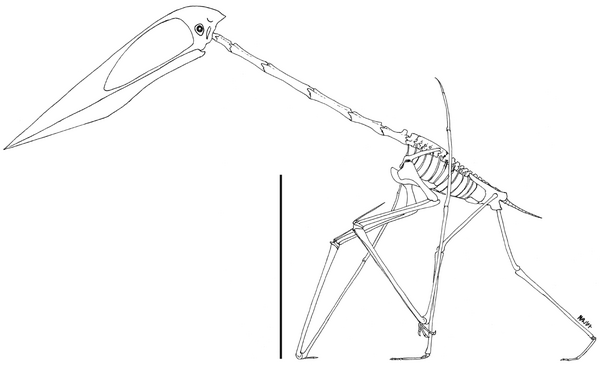
Pterosaurs lived during the age of dinosaurs 230 to 65 million years ago. A new study by researchers at the University of Portsmouth on one particular type of pterosaur, the azhdarchids, claims they were more likely to stalk animals on foot than to fly.

Until now virtually all pterosaurs have been imagined by palaeontologists to have lived like modern seabirds: as gull- or pelican-like predators that flew over lakes and oceans, grabbing fish from the water. But a study of azhdarchid anatomy, footprints and the distribution of their fossils by Mark Witton and Dr Darren Naish shows that this stereotype does not apply to all flying reptiles and some were strongly adapted for terrestrial life.

