



University of Minnesota researchers have created a beating heart in the laboratory.

By using a process called whole organ decellularization, scientists from the University of Minnesota Center for Cardiovascular Repair grew functioning heart tissue by taking dead rat and pig hearts and reseeding them with a mixture of live cells.

“The idea would be to develop transplantable blood vessels or whole organs that are made from your own cells,” said Doris Taylor, Ph.D., director of the Center for Cardiovascular Repair, Medtronic Bakken professor of medicine and physiology, and principal investigator of the research.

Nearly 5 million people live with heart failure, and about 550,000 new cases are diagnosed each year in the United States.

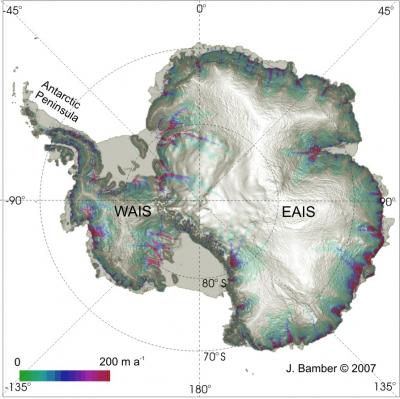
Increasing amounts of ice mass have been lost from West Antarctica and the Antarctic peninsula over the past ten years, according to research from the University of Bristol and published online this week in Nature Geoscience.

Meanwhile the ice mass in East Antarctica has been roughly stable, with neither loss nor accumulation over the past decade.

Professor Jonathan Bamber at the University of Bristol and colleagues estimated the flux of ice from the ice sheet into the ocean from satellite data that cover 85% of Antarctica's coastline, which they compared with simulations of snow accumulation over the same period, obtained using a regional climate model.

In studies involving more than 35,000 people and a survey across the entire human genome, an international team supported in part by the National Institutes of Health (NIH) has found evidence that common genetic variants recently linked to osteoarthritis may also play a minor role in human height. The findings were released in Nature Genetics.

The variants most strongly associated with height in the new genome-wide association study lie in a region of the human genome thought to influence expression of a gene for growth differentiation factor 5 (GDF5), which is a protein involved in the development of cartilage in the legs and other long bones.

One of the most common human parasites, Toxoplasma gondii, uses a hormone lifted from the plant world to decide when to increase its numbers and when to remain dormant, researchers at Washington University School of Medicine in St. Louis have found.

The scientists report this week in Nature that they successfully blocked production of the molecule, known as abscisic acid (ABA), with a plant herbicide. Low doses of the herbicide prevented fatal T. gondii infection in mice.

"As a target for drug development, this pathway is very attractive for several reasons," says author L. David Sibley, Ph.D., professor of molecular microbiology. "For example, because of its many roles in plant biology, we already have several inhibitors for it.

Many researchers have tried to create a mathematical model of how cells pack together to form tissue, but most models have many different complicated factors, and no model is universal.

Researchers at Northwestern University have now created a functional equation -- using only two parameters -- to show how cells pack together to create the eyes of Drosophila, better known as the fruit fly. They hope that the pared-down equation can be applied to different kinds of tissues, leading to advances in regenerative medicine.

Sascha Hilgenfeldt, associate professor of engineering sciences and applied mathematics and of mechanical engineering in the McCormick School of Engineering and Applied Science, teamed up with Richard W.

The new journal Evolution: Education and Outreach is now available online and free to download. My contribution to the first issue is "Evolution as fact, theory, and path". Feel free to distribute this and any other papers from the journal as widely as you like, but please link to the journal website rather than re-posting papers.

There are now several available articles that discuss this important subject:
Alzheimer's disease (AD) affects as much as 10% of the world population above 65 years of age but after years of research it is still not understood exactly how the disease appears and, even less, how to treat it. But work just published in The EMBO Journal opens the door to new ways for disease intervention by showing that lipids found throughout the brain can dissolve the large insoluble protein plaques characteristic of the disease, releasing their soluble protofibrillar components, and also that it is the soluble components and not the insoluble plaques that provoke neural death.
A recent issue of Genome Research contains a report of the cat genome sequence (Pontius et al. 2007), adding Felis catus to the rapidly growing collection of animal genome sequences. One of the reasons that the number of mammal sequences is increasing so quickly is that there have been reduced standards for sequence coverage. To wit, the cat is one of 24 mammal species approved by NHGRI for "low redundancy" sequencing, meaning that the sequence will be covered only 2-fold (vs. up to 7x coverage in dog, chimp, human, mouse, and rat).
Of all the 'Greatest Scientific Breakthroughs' of 2007 heralded in the pages of various newspapers and magazines this past month, perhaps the most unsung one is the entrance of next-generation DNA sequencing onto the stage of serious research. Prior to this year, the latest sequencing technologies were limited in their usefulness and accessibility due to their cost and a steep technical learning curve. That's now changing, and a group of recent research papers gives us a hint of just how powerful this new technology is going to be. Not only will next-generation sequencing be the biggest change in genomics since the advent of microarray technology, but it may also prove to be the first genome-scale technology to become part of every-day medical practice.

Recently there has been some discussion in the blogosphere about student-advisor relationships in science.

