



Just as additives help gasoline burn cleaner, a research report published in the January 2008 print issue of The FASEB Journal shows that the food industry could take a similar approach toward reducing health risks associated with fatty foods.

These “meal additives” would be based on work of Israeli researchers who discovered that consuming polyphenols (natural compounds in red wine, fruits, and vegetables) simultaneously with high-fat foods may reduce health risks associated with these foods.

“We suggest a new hypothesis to explain polyphenols,” said Joseph Kanner, senior author of the report. “For the first time, these compounds were demonstrated to prevent significantly the appearance of toxic food derivative compounds in human plasma.”

The January 2008 issue of BioScience includes an article by biologist Edward O. Wilson that argues for a new perspective on the evolution of advanced social organization in some ants, bees, and wasps (Hymenoptera).

Wilson’s article surveys recent evidence that the high level of social organization called “eusociality,” found in some Hymenoptera (and rarely in other species), is a result of natural selection on nascent colonies of species possessing features that predispose them to colonial life. Wilson concludes that these features, principally progressive provisioning of larvae and behavioral flexibility that leads to division of labor, allow some species to evolve colonies that are maintained and defended because of their proximity to food sources.

That's the suggestion from a new UCLA study that tracked levels of cortisol, a key stress hormone, among 30 Los Angeles married couples involved in one of our age's trickiest juggling acts — raising kids when both parents work full time.

"At least as far as women are concerned, being happily married appears to bolster physiological recovery from work," said Darby E. Saxbe, the study's lead author and a UCLA graduate student in clinical psychology. "After a tough day at the office, cortisol levels dropped further among happily married women than less happily married ones.

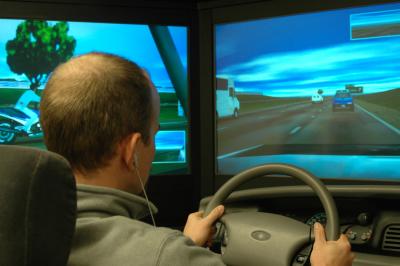
Motorists who talk on cell phones drive slower on the freeway, pass sluggish vehicles less often and take longer to complete their trips, according to a University of Utah study.

“At the end of the day, the average person’s commute is longer because of that person who is on the cell phone right in front of them,” says University of Utah psychology Professor Dave Strayer, leader of the research team. “That SOB on the cell phone is slowing you down and making you late.”

“If you talk on the phone while you’re driving, it’s going to take you longer to get from point A to point B, and it’s going to slow down everybody else on the road,” says Joel Cooper, a doctoral student in psychology.

Cooper is scheduled to present the study in Washington on Wednesday, Jan.

A particular gene variation appears to significantly increase the risk that individuals with cirrhosis of the liver will go on to develop hepatocellular carcinoma (HCC), a liver tumor that is the third leading cause of cancer death.

In the January 2 Journal of the American Medical Association, researchers from Massachusetts General Hospital (MGH) Cancer Center and colleagues in France describe finding that a single alteration in the epidermal growth factor (EFG) gene may greatly increase the risk of developing HCC.

Older men with low testosterone levels who received testosterone supplementation increased lean body mass and decreased body fat, but were no stronger and had no improvement in mobility or cognition compared with men who did not use the supplement, according to a study in the January 2 issue of JAMA.

“Male aging is associated with a gradual but progressive decline in serum levels of testosterone, occurring to a greater extent in some men than in others. Decline in testosterone is associated with many symptoms and signs of aging such as a decrease in muscle mass and muscle strength, cognitive decline, a decrease in bone mass, and an increase in (abdominal) fat mass,” the authors write.

Children with cancer have a higher prevalence of body abnormalities, such as asymmetric lower limbs and curvature of the spine, suggesting that the genetic defect responsible for the abnormality may play a role in the development of cancer, according to a study in the January 2 issue of JAMA.

Certain genetic syndromes can be associated with an increased risk for tumor and cancer development in children. Several studies have shown that developmental genes, which play a role in body plan formation during embryogenesis, are also involved in the development of cancer, according to background information in the article.

Early exposure to environmental toxins can lead to diseases much later in life. This week, Wu et al. report that primates exposed to lead as infants showed Alzheimer’s disease (AD)-like pathology years later.

From birth to 400 d of age, monkeys were exposed to lead levels that produced no obvious sign of toxicity. Although by young adulthood blood lead levels in exposed monkeys were indistinguishable from those of controls, when examined at approximately 23 years of age, the brains of lead-exposed monkeys exhibited many hallmarks of AD, including Aâ plaques and neurofibrillary tangles, as well as increased expression of Aâ precursor protein (APP) and Sp1, a transcription factor that regulates APP expression.

Many parents have said yes. David Healy, a Scottish psychiatrist, prompted by those stories, did a small experiment in which undepressed persons took anti-depressants. About 10% of them started having suicidal thoughts.

2007 was a big year for science, though it may be that we just noticed it more because it was our first year too. If you're reading this article, you're probably already a fan of our "just science" concept and it seems to be catching on everywhere.

We wanted to create a site where the best science writers, regardless of popularly or politics or ideology, could get together in one place and write about science, whenever they want on whatever topics they want. We went to top people in their fields; well-known authors, post-docs and professors in our various categories, and explained what we wanted to accomplish and the response, from writers and from the audience, has been fantastic.


