



Faint, fleeting blue flashes of radiation emitted by particles that travel faster than the speed of light through the atmosphere may help scientists solve one of the oldest mysteries in astrophysics.

For nearly a century, scientists have wondered about the origin of cosmic rays — subatomic particles of matter that stream in from outer space. “Where exactly, we don’t know,” said Scott Wakely, Assistant Professor in Physics at the University of Chicago. “They’re raining down on the atmosphere of the Earth, tens of thousands of particles per second per square meter.”

Recent results from the Pierre Auger Cosmic Ray Observatory suggest that the highest-energy cosmic rays may come from the centers of active galaxies.

MIT engineers have used ultraviolet light to sculpt three-dimensional microparticles that could have many applications in medical diagnostics and tissue engineering. For example, they could be designed to act as probes to detect certain molecules, such as DNA, or to release drugs or nutrients.

The new technique offers unprecedented control over the size, shape and texture of the particles. It also allows researchers to design particles with specific chemical properties, such as porosity (a measure of the void space in a material that can affect how fast different molecules can diffuse through the particles).

“With this method, you can rationally design particles, and precisely place chemical properties,” said Patrick Doyle, associate professor of chemical engineering.

Confused about the right planting depth for flower bulbs? You may not need to worry.

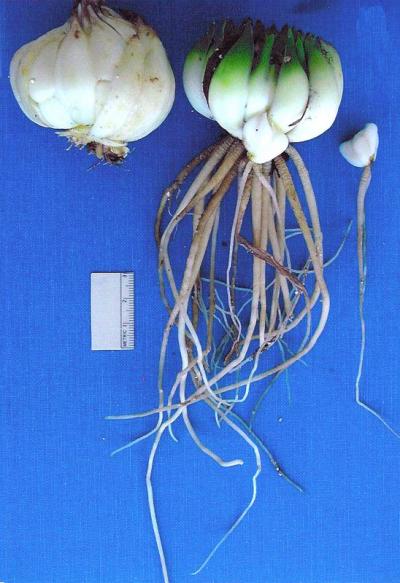
Researchers have discovered that some flower bulbs are actually "smart" enough to adjust themselves to the right planting depth. A recent study published in the Journal of the American Society for Horticultural Science proved that bulbs can adjust their planting position by moving deeper into the ground, apparently in search of moister, more conducive growing conditions.

According to Dr. A. Carl Leopold, William H. Crocker Scientist Emeritus at The Boyce Thompson Institute for Plant Research at Cornell University, when gardeners plant tulips or lilies too shallowly in their gardens, the bulbs will respond to the shallow conditions by literally "pulling" themselves down into deeper ground.

The biological pathway that powers sperm to swim long distances could be harnessed to nanotech devices, releasing drugs or performing mechanical functions inside the body, according to a presentation at the American Society for Cell Biology’s 47th Annual meeting.

The work by researchers at Cornell’s Baker Institute of Animal Health may be the first demonstration of how multistep biological pathways can be assembled and function on a human-made device.

Mammalian sperm have to delivery energy to the long, thin, whip-like tails that power their swimming. Sperm meet the challenge, in part, by onsite power generation, modifying the enzymes of glycolysis so that they can attach themselves to a solid structure running the major length of the sperm tail.

Although they look normal, people suffering from body dysmorphic disorder (BDD) perceive themselves as ugly and disfigured. New imaging research reveals that the brains of people with BDD look normal, but function abnormally when processing visual details. The report in the December Archives of General Psychiatry is the first to demonstrate a biological reason for patients’ distorted body image.

“Our discovery suggests that the BDD brain’s hardware is fine, but there’s a glitch in the operating software that prevents patients from seeing themselves as others do,” explained Dr. Jamie Feusner, assistant professor of psychiatry at UCLA’s Semel Institute.

Subjects like physics, calculus and biology are challenging for most students, but imagine tackling these topics without being able to see the graphs and figures used to teach them. A new smartpen and paper technology that works with touch and records classroom audio aims to bring these subjects to life for blind students.

“Mainstream approaches to teaching STEM (science, technology, engineering and math) courses all rely strongly on diagrams, graphs, charts and other figures, putting students with visual disabilities at a significant disadvantage,” Andy Van Schaack, lecturer in Vanderbilt University’s Peabody College of education and human development, said.

New research from a lab at Florida State University reveals that self-control takes fuel — literally. When we exercise it, resisting temptations to misbehave, our fuel tank is depleted, making subsequent efforts at self-control more difficult.

Florida State psychologist Roy F. Baumeister and his colleagues Kathleen D. Vohs, University of Minnesota, and Dianne M. Tice, Florida State, showed this with an experiment using the Stroop task, a famous way of testing strength of self-control. Participants in this task are shown color words that are printed in different-colored ink (like the word red printed in blue font), and are told to name the color of the ink, not the word.

Why does it take so long for soul mates to find each other? How does disease spread through a person’s body? When will the next computer virus attack your hard-drive?

A new theory published last month in Nature on the statistical concept of “First Passage Time,” or FPT, may provide the key to answering at least a few of these questions, says theory co-author Prof. Joseph Klafter from Tel Aviv University’s School of Chemistry. And the answers may lead to breakthroughs in medicine, mathematics, the environment, and elsewhere.

Prof.

Perhaps the first stars in the newborn universe did not shine, but instead were invisible “dark stars” 400 to 200,000 times wider than the sun and powered by the annihilation of mysterious dark matter, a University of Utah study concludes.

Young chimpanzees have an “extraordinary” ability to remember numerals that is superior to that of human adults, according to a report in the December 4th issue of Current Biology.

“There are still many people, including many biologists, who believe that humans are superior to chimpanzees in all cognitive functions,” said Tetsuro Matsuzawa of Kyoto University. “No one can imagine that chimpanzees—young chimpanzees at the age of five—have a better performance in a memory task than humans. Here we show for the first time that young chimpanzees have an extraordinary working memory capability for numerical recollection—better than that of human adults tested in the same apparatus, following the same procedure.”

