
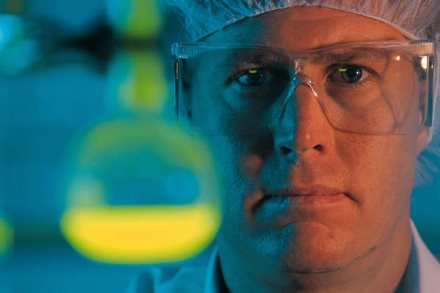



Hairy roots are a type of tumor that forms on plants infected by the soil bacterium Agrobacterium rhizogenes. By inserting a specific gene into the bacterium, researchers can integrate that gene into the host plant's DNA. Eventually, the host develops a system of fuzzy-looking roots near the site of the infection. These so-called "hairy roots" are transgenic, meaning they contain the genes of both the host plant and the bacterium.

Scientists believe they can create hairy roots that churn out the product of inserted genes with a stability and productivity not possible with most other plant cell cultures. San '78, Rice's E.D.

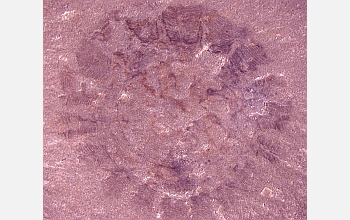
Scientists have described the oldest definitive jellyfish ever found, using recently discovered "fossil snapshots" found in rocks more than 500 million years old.

The jellyfish are unique because they push the known occurrence of jellyfish back from 300 million to 505 million years.

"This study clearly shows what paleontologists have long suspected--that jellyfish have a history that's much older than their known fossil record," said Patrick Herendeen, program director in the National Science Foundation (NSF)'s division of environmental biology, which funded the research through the Assembing the Tree of Life (AToL) program, along with NSF's division of earth sciences. "Adding some 200 million years to the age of jellyfish is quite a jump.

In a new study, mice with brain injuries experienced enhanced memory -- similar to the level found in healthy mice -- up to three months after receiving a stem cell treatment. Scientists believe the stem cells secreted proteins called neurotrophins that protected vulnerable cells from death and rescued memory. This creates hope that a drug to boost production of these proteins could be developed to restore the ability to remember in patients with neuronal loss.

“Our research provides clear evidence that stem cells can reverse memory loss,” said Frank LaFerla, professor of neurobiology and behavior at UCI.

A discovery about the genetics of coat color in dogs could help explain why humans come in different weights and vary in our abilities to cope with stress, a team led by researchers from the Stanford University School of Medicine reports.

The study, published in the Nov. 2 issue of Science, answers a longtime mystery: What determines coat color in dogs? While researchers have known since the 1900s that most mammals share the same genetic mechanism to determine coat color, by the 1950s they began to suspect that dogs were different.

Now after swabbing the inner cheeks of hundreds of dogs and analyzing the DNA in the resulting samples, a team led by genetics professor Greg Barsh, MD, PhD, has nailed the gene.

A new study in the journal Atmospheric Environment by researchers at USC and the California Air Resources Board found that the average Los Angeles driver spends about six percent (1.5 hours) of his or her day on the road, yet that period of time accounts for 33 to 45 percent of total exposure to diesel and ultrafine particles (UFP). On freeways, diesel-fueled trucks are the source of the highest concentrations of harmful pollutants.

High air exchange rates that occur when a vehicle is moving make roadways a major source of exposure. Ultrafine particles are of particular concern because, unlike larger particles, they can penetrate cell walls and disperse throughout the body, Fruin says.

Unprecedented fossilized body imprints of amphibians have been discovered in 330 million-year-old rocks from Pennsylvania. The imprints show the unmistakably webbed feet and bodies of three previously unknown, foot-long salamander-like critters that lived 100 million years before the first dinosaurs.

"Body impressions like this are wholly unheard of," said paleontologist Spencer Lucas, a curator at the New Mexico Museum of Natural History and Science. Lucas will present the discovery on Tuesday, 30 October 2007, at the annual meeting of the Geological Society of America in Denver.

A series of monumental volcanic eruptions in India may have killed the dinosaurs 65 million years ago, not a meteor impact in the Gulf of Mexico. The eruptions, which created the gigantic Deccan Traps lava beds of India, are now the prime suspect in the most famous and persistent paleontological murder mystery, say scientists who have conducted a slew of new investigations honing down eruption timing.

"It's the first time we can directly link the main phase of the Deccan Traps to the mass extinction," said Princeton University paleontologist Gerta Keller. The main phase of the Deccan eruptions spewed 80 percent of the lava which spread out for hundreds of miles.

Fame was fleeting for the 16-solar-mass black hole in the galaxy M33, announced on October 17 as the record holder for the heaviest black hole orbiting a star.

A new black hole, with a mass 24 to 33 times that of our Sun, is more massive than scientists have detected - or expected - for a black hole that formed from a dying star.

The newly discovered object belongs to the category of "stellar-mass" black holes. Formed in the death throes of massive stars, they are smaller than the monster black holes found in galactic cores.

A fuel cell converts chemically stored energy directly into electricity and is already more efficient in converting fuel to power than the internal combustion engine usually found in automobiles. However, the cost for the catalysts alone make fuel-cell vehicles out of reach of most consumers and therefore impractical for manufacturers.

If the efficiency were to get higher, the cost would come down substantially. In addition, if an auto fuel cell ran on hydrogen and air, there would be no combustion, no noise and no vibration - and the only by-product would be water. All good things.

With the average price of gasoline around $3 per gallon nationwide, fuel cell research is accelerating.

You can call it optical tweezers, microtools for chips, or even a cellular Death Star. MIT researchers have found a way to use a “tractor beam” of light to pick up, hold, and move around individual cells and other objects on the surface of a microchip.

The idea of using light beams as tweezers to manipulate cells and tiny objects has been around for at least 30 years. But the MIT researchers have found a way to combine this powerful tool for moving, controlling and measuring objects with the highly versatile world of microchip design and manufacturing.

Optical tweezers, as the technology is known, represent “one of the world's smallest microtools,” says assistant professor Matthew J. Lang. “Now, we're applying it to building [things] on a chip.”

