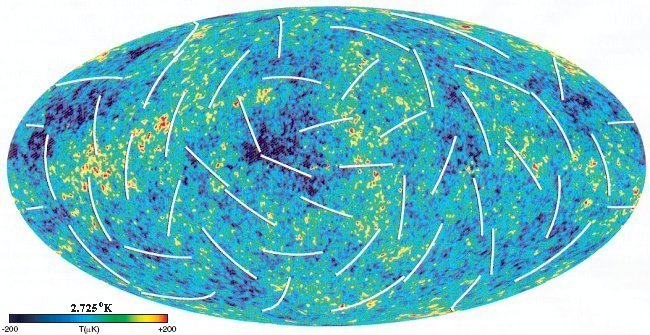





Scientists from the Institute of Physics of Cantabria (IFCA) and the University of Cambridge may have discovered an example of a cosmic defect, a remnant from the Big Bang called a texture. If confirmed, their discovery, reported today in Science, will provide dramatic new insight into how the universe evolved following the Big Bang.

Textures are defects in the structure of the vacuum left over from the hot early universe. Professor Neil Turok of Cambridge’s Department of Applied Mathematics and Theoretical Physics first showed how textures form in the 1990s, highlighting that some would survive from the Big Bang and should be visible in today’s universe.

For thousands of years, people have used clay to heal wounds, soothe indigestion, and kill intestinal worms. Though the practice has declined in modern times, the recent rise of drug-resistant germs has scientists looking more closely at these ancient remedies to learn exactly what they can do and how they do it.

A French clay that kills several kinds of disease-causing bacteria is at the forefront of new research into age-old, nearly forgotten, but surprisingly potent cures. Among the malevolent bacteria that it has been shown to fight is a "flesh-eating" bug (M.

Agricultural soil erosion is not a source of carbon dioxide to the atmosphere, according to research published in Science. The study was carried out by an international team of researchers from UC Davis, the Catholic University of Leuven in Belgium, and the University of Exeter in the U.K.

Carbon emissions are of great concern worldwide because they, and other greenhouse gases, trap heat in the Earth's atmosphere and are a major cause of global climate change.

"There is still little known about how much carbon exactly is released, versus captured, by different processes in terrestrial ecosystems," said Johan Six, a professor of agroecology at UC Davis and one of the study's authors.

It's historically been the case that fossil remains of Neanderthals paint an incomplete picture; they can't tell us about their cognitive skills or really give us details of what they looked like.

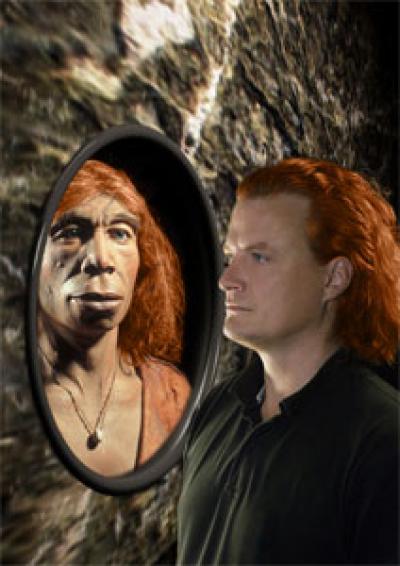
But scientists at the Max Planck Institute in Leipzig started looking into the DNA of Neanderthals and they made some astonishing discoveries. They discovered the human variant of the FOXP2 gene in our nearest relatives and an interesting detail: at least one percent of the Neanderthals in Europe may have had red hair.

Only two percent of the world's population have naturally red hair - caused by a mutation in the gene mc1r.

A new study explores the role of natural enemies, such as predators and parasites, for mixed mating, a reproductive strategy in which hermaphroditic plants and animals reproduce through both self- and cross-fertilization. The findings highlight the possible evolutionary consequences of these interactions.

Mating systems are a complex set of traits that reflect interactions among genetics, population structure, demography, and numerous environmental factors that influence mating success. These traits have profound consequences for genetic variation.


There is no question in my mind but that oil will rise to at least $100 a barrel within the next two years. It is easy to see a scenario of $125 a barrel price in the same time frame. The triple digit price of oil will become the norm. Recently it has been trading in the $80-90 range, and as it approached the upper end of that range the media began again covering the story with “sky is falling” concern about what this might mean for the economy. This reminded me of the comment that James Schlesinger, the first U.S.

The emergence of drug resistant forms of HIV often underlies the failure of current antiretroviral therapies for HIV infection. Specific mutations in the HIV genome confer resistance to individual drugs.

Recombination, a process similar to sexual reproduction in higher organisms, can accelerate the accumulation of resistance mutations by mixing the contents of distinct viral genomes and expedite the failure of therapy. The dynamics of the emergence of recombinant forms of HIV in infected individuals remains poorly understood.

Of course. He didn't. And dozens of writers you have never heard of, much less read, much less quoted in everyday conversation, have. These wrongs are corrected in an alternative universe described here. The Biology/Medicine Prize has also been fairly ridiculous, although at least Robert Gallo hasn't gotten one:

Mankind’s closest living relatives – the world’s apes, monkeys, lemurs and other primates – are under unprecedented threat from destruction of tropical forests, illegal wildlife trade and commercial bushmeat hunting, with 29 percent of all species in danger of going extinct, according to a new report by the Primate Specialist Group of IUCN’s Species Survival Commission (SSC) and the International Primatological Society (IPS), in collaboration with Conservation International (CI).

Titled "Primates in Peril: The World’s 25 Most Endangered Primates—2006–2008", the report compiled by 60 experts from 21 countries warns that failure to respond to the mounting threats now exacerbated by climate change will bring the first primate extinctions in more than a century.

According to a small-scale, in-office, observational study, psychiatrists and parents have significantly different perceptions of the importance of pediatric ADHD and psychiatric comorbidities, particularly regarding the patients’ most concerning behavior.

The study, which utilized accepted sociolinguistic methodologies to evaluate the tone, content and structure of in-office visits, was presented recently at the 20th annual U.S.

