




Cornell archaeologists are rewriting history with the help of tree rings from 900-year-old trees, wood found on ancient buildings and through analysis of the isotopes (especially radiocarbon dating) and chemistry they can find in that wood.

By collecting thousands of years worth of overlapping tree rings, with each ring representing a tree's annual growth, the researchers have created long-term records in the eastern Mediterranean that allow them to precisely date such seminal milestones in history as when Hammurabi, "the law-giver," reigned, when the massive Santorini volcanic eruption occurred, and the timelines of the Bronze and Iron ages, as well as many more recent events.

Researchers at the Royal Veterinary College, London, have made a significant breakthrough in their understanding of how infection of the uterus damages fertility in cows. Their findings, which show that common uterine infections can damage the ovaries, may provide insights into how to treat infections such as Chlamydia in humans.

Funded by the Wellcome Trust and the Biotechnology and Biological Sciences Research Council, researchers led by Professor Martin Sheldon studied the effect that uterine disease has on the reproductive system in cows.

New images taken with NASA’s Hubble Space Telescope have revealed the wild side of an elliptical galaxy, nearly two billion light-years away, that previously had been considered mild-mannered.

The Hubble photos show shells of stars around a bright quasar, known as MC2 1635+119, which dominates the center of the galaxy. The presence of the shells is an indication of a titanic clash with another galaxy in the relatively recent past.

The collision, which is funneling gas into the galaxy’s center, is feeding a supermassive black hole. The accretion onto the black hole is the quasar’s energy-source.

Questions about human migration from Asia to the Americas have perplexed anthropologists for decades, but as scenarios about the peopling of the New World come and go, the big questions have remained. Do the ancestors of Native Americans derive from only a small number of “founders” who trekked to the Americas via the Bering land bridge? How did their migration to the New World proceed?

A team of 21 researchers, led by Ripan Malhi, a geneticist in the department of anthropology at the University of Illinois, has a new set of ideas.

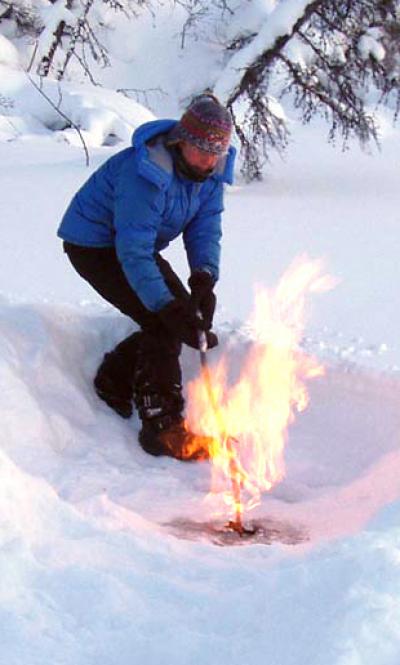
A team of scientists led by a researcher at the University of Alaska Fairbanks has identified a new likely source of a spike in atmospheric methane coming out of the North during the end of the last ice age.

Methane bubbling from arctic lakes could have been responsible for up to 87 percent of that methane spike, said UAF researcher Katey Walter, lead author of a report printed in the Oct. 26 issue of Science magazine. The findings could help scientists understand how current warming might affect atmospheric levels of methane, a gas that is thought to contribute to climate change.

“It tells us that this isn’t just something that is ongoing now. It would have been a positive feedback to climate warming then, as it is today,” said Walter.

Ancient DNA retrieved from the bones of two Neanderthals suggests that at least some of them had red hair and pale skin, scientists report this week in the journal Science.

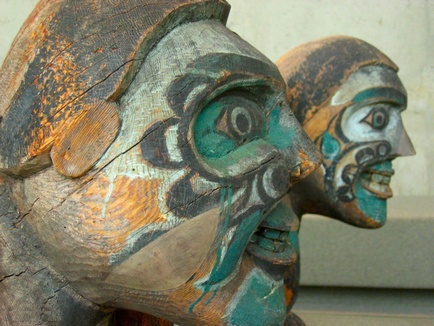
Halloween is a time for children to dress up as witches, ghouls and goblins, but historically witchcraft was serious business, according to a Duke University professor.

Though people today might view witchcraft as mere superstition, it’s evident from anthropological literature that, for some people, the practice has served a basic human need, said Anne-Maria Makhulu, an assistant professor of cultural anthropology who studies the ongoing practice of witchcraft in Africa.

"We live in a bewildering world where we don’t have a lot of control. And we can imagine doing things through magic that we can’t do as ordinary human beings," said Makhulu, who is teaching a course this semester on magic(!) and capitalism(!!).

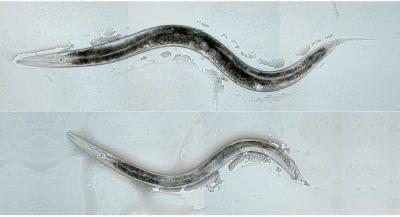
University of Utah biologists genetically manipulated nematode worms so the animals were attracted to worms of the same sex – part of a study that shows sexual orientation is wired in the creatures’ brains.

“They look like girls, but act and think like boys,” says Jamie White, a postdoctoral researcher and first author of the new study. “The [same-sex attraction] behavior is part of the nervous system.”

The study was published Thursday, Oct.

Nearly a third of the world’s 6,000 amphibian species are threatened with extinction and more than 120 species have already vanished from the planet.

Across the globe, conservation organisations and professionals are mobilising efforts to help save as many of these species as possible.

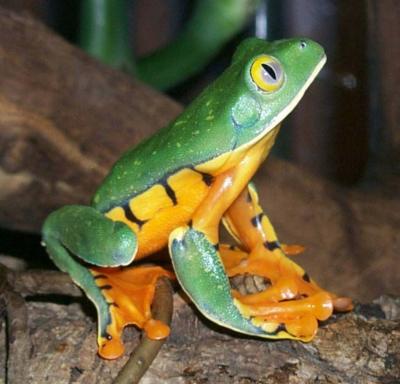
A brightly coloured tropical frog under threat of extinction is the focus of a new research project hoping to better understand how environment and diet influence its development and behavior.


Credit: University of Manchester

The shortage of islet cells limits the development of islet transplantation. One new approach was reported in the October 21 issue of the World Journal of Gastroenterology because of its great significance in enhancing the output of islet cells.

The article describes the differentiation of rat pancreatic ductal epithelial cells into insulin-producing cells by the transfection of PDX-1. In recent years, though great efforts have been made to differentiate embryonic stem cells, pancreatic ductal epithelial multipotent progenitor cells and bone marrow stem cells into islet cells, the process of cell differentiation and growth is long. Moreover, the amount of islet cells of differentiation, and the insulin released by islets, is not enough to meet the clinical needs.

