




Much of today’s conservation strategies focus on “charismatic mega fauna” such as pandas, tigers, and whales or on vascular plants such as giant redwoods and orchids. Ricardo Rozzi (University of North Texas and Universidad de Chile) and colleagues from Chile are pushing for the integration of other less conspicuous but not less important organisms in regional biological inventories.

When it comes to conservation and understanding biodiversity, a biome or regional approach to identify suitable ecosystem indicator groups can be more useful than a set of global indicator species. This, say the authors, should allow for new hotspots of biological diversity to be uncovered and conserved.

It's not just humans with a tendency for political maneuvering and nepotism. Rhesus macaques do it also, according to research by Dario Maestripieri, an expert on primate behavior and an Associate Professor in Comparative Human Development and Evolutionary Biology at the University of Chicago.

“After humans, rhesus macaques are one of the most successful primate species on our planet; our Machiavellian intelligence may be one of the reasons for our success” wrote Maestripieri in his new book "Machiavellian Intelligence: How Rhesus Macaques and Humans Have Conquered the World."

Maestripieri has been studying monkeys for more than 20 years and has written extensively on their behavior.

The use of antiepileptic drugs (AEDs) can lead to decreased fertility and increased incidence of reproductive endocrine disorders in both men and women. A new study published in Epilepsia investigates the effects of withdrawal from two common AEDs, carbamazepine (CBZ) and valproate (VPA), on the sex-hormones of male and female AED users.

The study finds that reproductive endocrine dysfunction resulting from AED use is reversible, even after years of treatment. After withdrawal from CBZ and VPA, sexual hormone levels returned to pre-treatment levels, and treatment-associated reproductive endocrine changes reversed.

Increases in serum testosterone concentration and decreases in estradiol, another sexual hormone, lead to improved sexual function for both men and women.

In the future everyone who is connected to the electric grid will be able to upload and download 'packets' of electricity to and from the network, according to one scenario by Dutch researcher Jos Meeuwsen of the Technical University Eindhoven.

He developed three scenarios for the Dutch electricity supply in the year 2050. The starting point is that in 2007, 50% of the consumption will originate from sustainable sources.

Due to the security of supply and the connection with the European market, electricity networks will always be necessary, says Meeuwsen. Further, due to an increasing demand for electricity it is important to include all possible energy options (including coal and nuclear energy) in the scenario development.

Polymer-based piezoelectric materials are currently the object of great interest in the world of industry because they enable their use in new applications in sectors such as transport and aeronautics, amongst others.

A definition of piezoelectricity – piezo being Greek for “subjected to pressure” - is the generation of the electrical polarisation of a material as a response to mechanical strain.

This phenomenon is known as direct effect or generator effect and is applied fundamentally in the manufacture of sensors (mobile phone vibrators, lighters, etc.). In these cases piezoelectric materials, also used in actuators, undergo an inverse or motor effect, i.e. a mechanical deformation due to the application of an electrical signal.

Laboratory animals are the source of major discoveries and breakthroughs in biology, not just in tackling disease but also unravelling fundamental molecular processes.

Delegates at a recent research conference organized by the European Science Foundation (ESF) and Wellcome Trust heard how technology capable of analyzing animal genes across the whole genome is yielding many benefits for agriculture and human society.

In breeding both domestic and farm animals for example, it is now possible to select individuals with a wide spectrum of desirable traits in a single generation.

It used to be dogma that the brain was shut away from the actions of the immune system, shielded from the outside forces of nature. But that’s not how it is at all. In fact, thanks to the scientific detective work of Kevin Tracey, MD, it turns out that the brain talks directly to the immune system, sending commands that control the body’s inflammatory response to infection and autoimmune diseases. Understanding the intimate relationship is leading to a novel way to treat diseases triggered by a dangerous inflammatory response.

Dr. Tracey, director and chief executive of The Feinstein Institute for Medical Research, will be giving the 2007 Stetten Lecture on Wednesday, Oct. 24, at the National Institutes of Health in Bethesda, MD.

Global temperatures predicted for the coming centuries may trigger a new ‘mass extinction event’, where over 50 per cent of animal and plant species would be wiped out, warn scientists at the Universities of York and Leeds.

The research team has, for the first time, discovered a close association between Earth climate and extinctions in a study that has examined the relationship over the past 520 million years – almost the entire fossil record available.

Matching data sets of marine and terrestrial diversity against temperature estimates, evidence shows that global biodiversity is relatively low during warm ‘greenhouse’ phases and extinctions relatively high, while the reverse is true in cooler ‘icehouse’ phases.

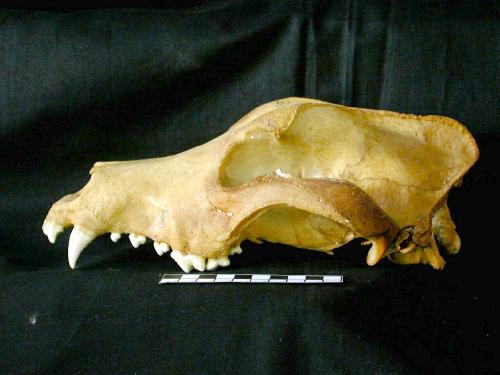
The St Bernard dog – named after the 11th century priest Bernard of Menthon – may have ironically challenged the theory of creationism, say scientists.

Biologists at The University of Manchester say that changes to the shape of the breed’s head over the years can only be explained through evolution and natural selection.

The team, led by Dr Chris Klingenberg in the Faculty of Life Sciences, examined the skulls of 47 St Bernards spanning 120 years, from modern examples to those of dogs dating back to the time when the breed standard was first defined.


St. Bernard 1892. The angle between the top of the
nose and the forehead is far less acute than the more recent dog below.

Field research has traditionally been a fundamental training element for Mammalogists; however social, institutional and bureaucratic changes that have accelerated over the past decade are threatening the ability of Mammalogists to conduct fieldwork and train the next generation.

These changes include the following five threats to Field Mammalogy:

1.The decline in natural history studies in United States Universities: Increased commercialization and for-profit activities have led to a shift from field research to laboratory-based research.

2.The increasing number and complexity of regulations: Bureaucratic regulations present a relatively small, but increasingly complex obstacle to field research.

