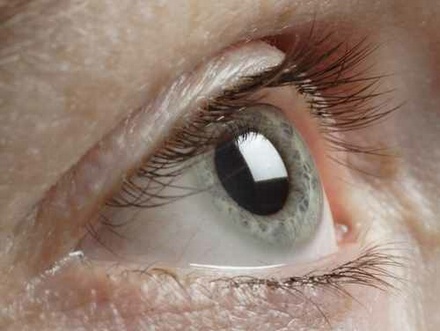




Every year, in Germany alone, around 7000 people wait for a new cornea to save their eyesight. But donor corneas are in short supply. In an EU project, researchers have developed an artificial cornea which is to be clinically tested in early 2008.

A patient whose cornea is damaged through a congenital malformation, hereditary disease or corrosion is at risk of going blind. One solution is to implant a donor cornea. The central part of the natural cornea is removed in a circular fashion, and the new cornea is inserted and sutured in place. A vast number of patients are affected: every year, 40,000 people in Europe alone hope for a donor – often in vain.

Physiotherapy ultrasound machines are commonplace in medicine and sports injury treatment but if patients are treated with the incorrect level of ultrasonic power it could not only be less helpful, it could lead to further injury.

Calibration is the answer and scientists at the National Physical Laboratory (NPL) say they have created technology that can greatly improve the accuracy of the calibration and therefore the quality of the treatment.

NPL has developed an acoustic absorber that can be retro-fitted into current calibration equipment to increase its accuracy.

Duke University Medical Center researchers believe they have discovered why the appendix exists and what purpose it serves in modern humans.

They think it is used to 'reboot' the digestive system and produce the bacteria sometimes eliminated by disease. How is it that people have them removed and live normal lives afterward?

In modern times, it is relatively unimportant. In crowded areas people can easily replace lost bacteria from contact with others but in ancient times, when isolation was more common or when diseases such as cholera or amoebic dysentery struck and eliminated the stomach's good bacteria, the appendix was likely how the human body regenerated good bacteria.

Computer and behavioral scientists at the University at Buffalo say they are working on a system to compute a numerical score that determines the likelihood that someone is about to commit a terrorist act. Their technology will track faces, voices and other biometrics against scientifically tested behavioral indicators to provide that numerical score for an individual.

“The goal is to identify the perpetrator in a security setting before he or she has the chance to carry out the attack,” said Venu Govindaraju, Ph.D., professor of computer science and engineering at the University at Buffalo School of Engineering and Applied Sciences. Govindaraju is co-principal investigator on the project with Mark G.

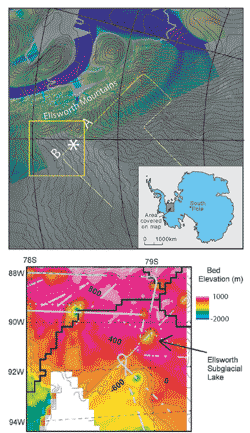
Why don't we know more about Lake Ellsworth? Because it's a frozen lake. Buried under two miles of ice. In Antarctica.

But Northumbria glaciologist Dr John Woodward, together with experts from the British Antarctic Survey and Edinburgh University, will spend five months working in sub zero conditions to unlock some of its secrets and discover what life may exist there.

More than 150 subglacial lakes have been identified in Antarctica, cut off from the outside world by thick caps of ice for tens or even hundreds of thousands of years. Any life forms will have had to adapt to complete darkness, very few nutrients, crushing water pressures and isolation from the atmosphere.


Lake Ellsworth.

Most people who have tried to install new computer software are happy to know that a common set of default options is available. For many, they will work fine and customization is only required in a few instances, which leads to less technical support, frustration and downtime.

Can that same computer software model work in health care?

In an opinion article in the September 28 issue of the New England Journal of Medicine, lead author Scott D. Halpern, M.D., a fellow in the division of Pulmonary, Allergy and Critical Care Medicine in the University of Pennsylvania Health System, and colleagues, argue that these concepts applied by marketers should also be used by the medical community to benefit patients.

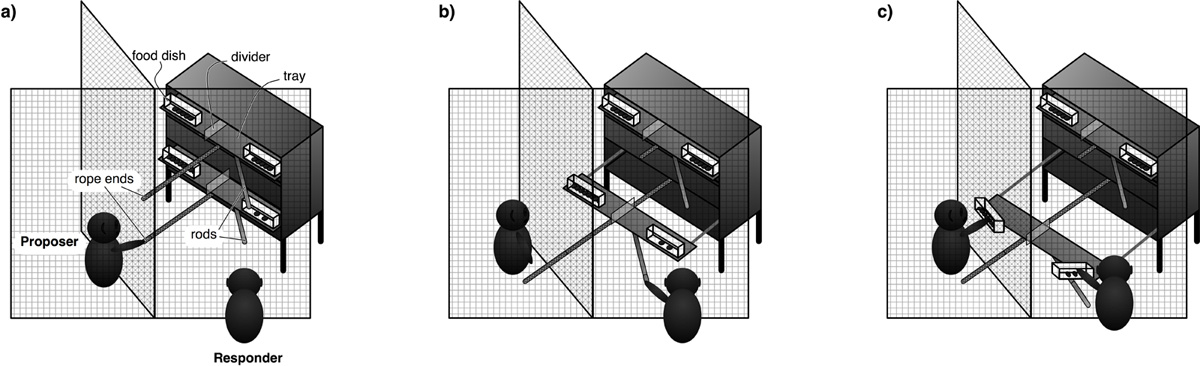
New research from the Max Planck Institute of Evolutionary Anthropology in Leipzig shows that, unlike humans, chimpanzees do not show a willingness to make fair offers and reject unfair ones. The research, conducted by Keith Jensen, Josep Call and Michael Tomasello, used a modification of one of the most widely used and accepted economic tools, the ultimatum game.

In the ultimatum game - developed by Werner Güth, now at the Max Planck Institute for Economics in Jena - one person, the proposer, is given money by an experimenter. That proposer can then divide the "mana from heaven" with a second person, the responder. The responder is not powerless - if he accepts the division, both people take home the offered amounts. But if he rejects it, both get nothing.

That question may be answered as scientists study the recently mapped genetic makeup of a fungus that spawns the worst cereal grains disease known and also can produce toxins potentially fatal to people and livestock.

The fungus, which is especially destructive to wheat and barley, has resulted in an estimated $10 billion in damage to U.S. crops over the past 10 years. The scientists who sequenced the fungus' genes said that the genome will help them discover what makes this particular pathogen so harmful, what triggers the process that spreads the fungus and why various fungi attack specific plants.

University of Utah scientists discovered a strange method of reproduction in primitive plants named cycads: The plants heat up and emit a toxic odor to drive pollen-covered insects out of male cycad cones, and then use a milder odor to draw the bugs into female cones so the plants are pollinated.

The unusual form of sexual reproduction used by some species of cycads – primeval plants known as “living fossils” – may represent an intermediate step in the evolution of plant pollination, the researchers say.

Thousands of new kinds of marine microbes have been discovered at two deep-sea hydrothermal vents off the Oregon coast by scientists at the MBL (Marine Biological Laboratory) and University of Washington’s Joint Institute for the Study of Atmosphere and Ocean. Their findings, published in the October 5 issue of the journal Science, are the result of the most comprehensive, comparative study to date of deep-sea microbial communities that are responsible for cycling carbon, nitrogen, and sulfur to help keep Earth habitable.

Using a new analytical technique called “454 tag sequencing,” the scientists surveyed one million DNA sequences of bacteria and archaea, two of the three major domains of life.

