




This is a conceptual animation showing how polar ice reflects light from the sun. As this ice begins to melt, less sunlight gets reflected into space. It is instead absorbed into the oceans and land, raising the overall temperature, and fueling further melting.


NASA/Goddard Space Flight Center Conceptual Image Lab

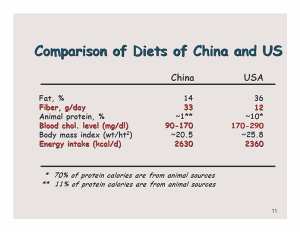
During the past two decades, China has been rapidly changing from a mostly agrarian environment of food production and consumption to a more urban environment typically found in Western industrialized societies.

This means transitioning from a simple diet mainly comprised of a few locally-produced plant-based foods to a diet comprised of significantly more animal-based foods. Such a poor-to-rich transition leads to more food variety, more food availability (i.e., more calories), more total and animal-based protein and more total fat.

As policy makers debate what levels of ozone in the air are safe for humans to breathe, studies in mice are revealing that the inhaled pollutant impairs the body’s first line of defense, making it more susceptible to subsequent foreign invaders, such as bacteria.

While it has long been known that exposure to ozone, a major component of urban air pollution, is associated with increased cardiovascular and pulmonary hospitalizations and deaths, the actual mechanisms involved remain unclear. New studies by Duke University Medical Center pulmonary researchers on the effects of ozone on the innate immune system, the body’s “tripwire” for foreign invaders, may provide part of the answer.

The work of a Kansas State University professor is challenging the assumption that genetically engineered plants are the great scientific and technological revolution in agriculture and the only efficient and cheap way to feed a growing population.

Jianming Yu, an assistant professor of agronomy, is teaming with Rex Bernardo, a professor of agronomy and plant genetics at the University of Minnesota, on research with marker-assisted selection. This agricultural technology offers a sophisticated method to greatly accelerate classical breeding through genetic analysis and selection of existing natural diversity in various crops without having to resort to alien species.

Women have multiple options for preventing pregnancy but men have only two - vasectomy, which is usually permanent, and condoms, which can become tiresome in long-term relationships. For decades, pundits have predicted new contraceptives for men within the next 5 to 10 years but new technology at the second "Future of Male Contraception" conference says new solutions may finally be close:

a) Researchers from the University of Washington used testosterone gel, which is marketed for men with low testosterone, plus a progestin shot used as a female contraceptive under the name "DepoProvera." The men got a shot once every 3 months and rubbed on a gel every day, and it worked well at knocking out sperm in 90% of them.

Cholesterol contributes to atherosclerosis – a condition that greatly increases the risk of heart attack and stroke – by suppressing the activity of a key protein that protects the heart and blood vessels, researchers at the Saint Louis University School of Medicine have found.

A pair of Beckman Institute researchers has discovered that by directing the eye movements of test subjects they were able to affect the participants’ ability to solve a problem, demonstrating that eye movement is not just a function of cognition but can actually affect our cognitive processes.

Previous research (Grant and Spivey, 2003) has shown a relationship between eye movements and problem-solving but Psychology Professor Alejandro Lleras, a member of the Human Perception and Performance group, and Ph.D. candidate Laura Thomas have taken that work in a groundbreaking direction.

Acid rain was one of the world’s worst pollution problems of the 1970s and 1980s, affecting large areas of upland Britain, as well as Europe and North America.

In Wales, more than 12,000 km of streams and rivers have been acidified, harming fish, stream insects and river birds such as the dipper.

Over the last 20 years, action has been taken across Europe to clean up acid pollutants from power generation and industry, which was widely expected to bring recovery. However, new research led by Cardiff University’s School of Biosciences shows that the expected improvements in rivers are far short of expectations.

Recent studies in Galloway, the Scottish Highlands and Wales reveal that many streams are still highly acidified.

Deluges of Biblical proportions were apparently not all that uncommon when glaciers were more prevalent in the Eurasian continent.

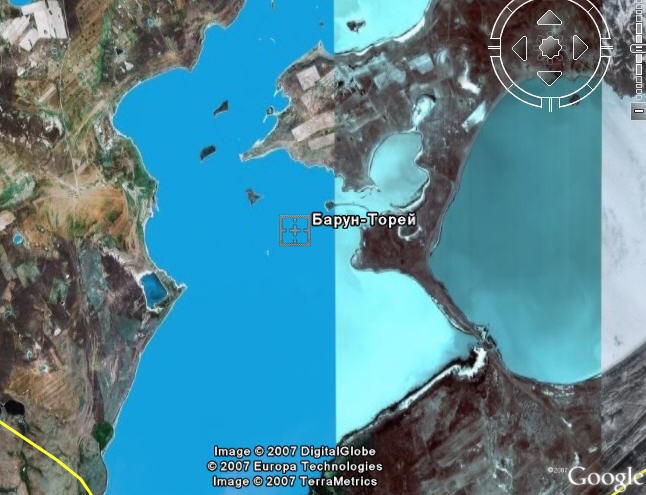
A glacier served as a natural dam for Siberian rivers and gigantic lakes were formed in northern Asia. In the mountains, glaciers formed dammed basins, which periodically burst and flooded vast territories, sending huge water and mud flows rushing out at the speed of 20 meters per second.

Researchers of the Irkutsk State University and Institutes of the Earth’s Crust and Geochemistry have recently discovered traces of a catastrophic hydrobreaking in the middle flow of the Onon river, in Tchasuchey deep (Transbaikalia).

Carnegie Mellon University’s Yang Cai is developing new technology that could revolutionize the way archeologists work. Cai, director of the Ambient Intelligence Lab at Carnegie Mellon CyLab, is developing new software to scan 200-year-old gravestones at Old St. Luke’s Church in nearby Carnegie to help its Episcopal pastor identify all the names on the cemetery’s tombstones.

“We are very excited and pleased that Professor Cai and his research team are helping us reclaim our past by identifying some of the 20 graves at our cemetery,” said Rev. Richard Davis, director of Old St. Luke’s Church at 330 Old Washington Pike.

