It is estimated that biomass covers currently up to 15% of the world energy demand, almost 1/3 of all energy consumption in the Less-Developed Countries. This rate was over the last years rather constant, with increasing overall demand bioenergy consumption increased in absolute terms.

Table 1 : World Energy Consumption pattern 1997 (ref 1)

Biomass Share

Total World 9.6 Bio TOE 1-1.5 Bio TOE 11-15%

Asia 2.3 Bio TOE 0.6-0.8 Bio TOE >30%

Africa 0.4 Bio TOE 0.2-0.27 Bio TOE >50%

Lat. America 0.4 Bio TOE
Now that we're all convinced the Humboldt squid isn't going to eat you, let's turn the question around: can you eat the Humboldt squid?

First, from the public health angle: Does it have mercury, everyone wants to know about any seafood, quickly followed by, I don't want nasty parasites.
From Oct. 9-30, the University of Guelph and Ed Video are hosting a special art exhibit entitled "This View of Life: Evolutionary Art for the Year of Darwin". It was organized by professors in four departments: Integrative Biology, Philosophy, History, and English and Theatre Studies, and was curated by Scott McGovern of Ed Video. The exhibit features art by 10 artists, all inspired by the themes of evolution, Darwin, and biodiversity.

The Gregory Lab contributed some installations as well, which are shown in this brief clip from just before the opening reception on Oct. 16 (about 200 people attended the event).
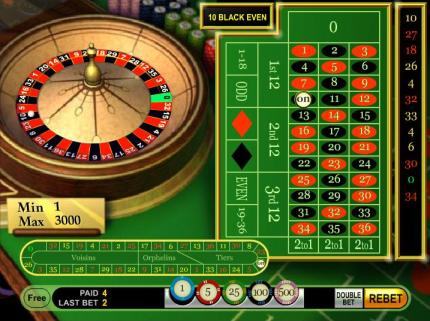
As Hank explains in a recent article, when he visits a Casino he plays the Roulette. His simple strategy consists in betting on a single colour, doubling the bet every time he loses; when he wins, he starts back with the minimum bet.
While inflammation often causes damage to the nerves of multiple sclerosis (MS) patients, a group of HBI researchers has been studying how neuroinflammation can instead be harnessed to repair the damage caused by this disease.

Dr. V.W. Yong’s laboratory set out to test whether a drug that is used to treat MS symptoms, Copaxone or glatiramer acetate (GA), could also play a role in repairing the covering of nerves that have been damaged by MS.  
Have you ever caught yourself wondering, upon observing a seemingly utterly unlikely coincidence, whether there was anything supernatural at work that made it happen ? I would guess that all of us, even the most rational thinkers, have caressed that thought for a minute, at least once. A few typical examples can be given of situations which one apparently fails to ascribe to natural causes:

1) Grandma dreams of her deceased husband spelling a sequence of numbers, and the following day she sees the same sequence coming out at Lotto. Was grandpa trying to let her win a large sum ? It will be quite hard to convince her otherwise.
I had relatives visiting from out of town and, because they had never been to Las Vegas, we took a two day, one night,  short plane trip over the mountains.   

Naturally, I won some money.   Is that because I am a mathematical genius?  No, everyone except the truly elite is going to lose money in a casino by knowing just enough probability to be dangerous while the truly stupid are going to be the foundation of any gambling town.
A Tale Of Two Cities (by Charles Dickens) was a weekly serial publication at this time 150 years ago. My tale of two feathers is about dinosaurs and modern birds with a twist on feathers.  

This is not about a Mayan 2012 apocalypse.  This is about the 9th century Mayan apocalypse, as documented by NASA.  It's also about modern global warming.  So there's plenty of doom to go around.

Let's first cover the '2012 apocalypse', a fabrication based on pseudoscience.  Modern Mayans are annoyed at the 2012 rumors.  The misinterpretation of their ancient culture-- that somehow an apocalypse is predicted for 2012-- has finally reached its nadir.  Hollywood is going to make a movie about it.  Imagine your own history being reduced to a single 90-minute special effects extravaganza.