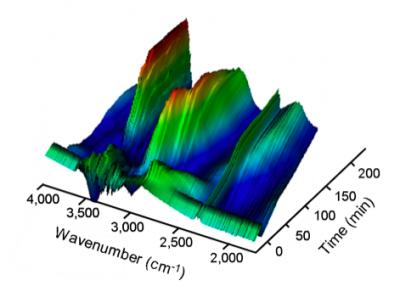
How do individual cells survive conditions that should kill them? It's long been a mystery of nature but a team of researchers recently tracked the chemical changes in Desulfovibrio vulgaris, which is a single-cell bacterium that normally can only exist in an oxygen-free environment. They exposed the cells to the most hostile of conditions — air — and watched as some cells temporarily survived by initiating a well-orchestrated sequence of chemical events.
In all the talk about using skin cells to create pluripotent stem cells that don't need human embryonic destruction, dental and tissue engineering researchers at Tufts University School of Dental Medicine and the Sackler School of Graduate Biomedical Sciences have gone the other way and used human embryonic stem cells (hESCs) to generate complex tissues that mimic human skin and the oral mucosa (the moist tissue that lines the inside of the mouth).
Their proof-of-concept study is published in Tissue Engineering Part A.
When we were kids, you could do stupid things and, if you absolutely needed them to be left behind, you moved away and never spoke to your old friends again. Now stupid things end up on YouTube. Forever.
What if you don't want your college-era rants showing up in a job interview?
University of Washington researchers say they have developed a way to make online information expire. After a set time period, electronic communications such as e-mail, Facebook posts and chat messages would automatically self-destruct, becoming irretrievable from all Web sites, inboxes, outboxes, backup sites and home computers. Not even the sender could retrieve them.
Don't get Michael Schumacher or Jeff Gordon on the phone yet but we could one day be driving on tires made from trees.
Wood science researchers at Oregon State University say they could cost less, perform better and save on fuel and energy, though has any researcher not said that exact same thing about every R&D project they are involved in?
Epidemiological studies have shown that some oral contraceptives are less effective at preventing pregnancy in obese women until an 'effective blood concentration' has been reached, meaning there is a 'window' where the contraceptive will not be effective in heavier women.
With estimates that up to 30 percent of adults in the U.S. are obese, this could be important. Fixing contraceptives is an easier path than telling people to eat less while simultaneously telling them that society's unrealistic body images should be resisted.
Netflix launched its million dollar contest—improve their movie rating prediction system by 10%—nearly three years ago, and like most computer science graduate students, I downloaded the data and got to work. The 10% mark proved a magic number for Netflix. 6% and the competition would have been over in a few months; 11% and it might never have ended. Next week (July 26, 2009), the winners will be announced.
Yesterday I wrote how
Anthony Wesley, who hails from Canberra, Australia,
grabbed this shot of a new dark spot near the south pole of Jupiter.
It's left to bigger minds (and bigger telescopes) than mine to sort out what caused it but while the blogosphere has been buzzing, JPL has been observing.
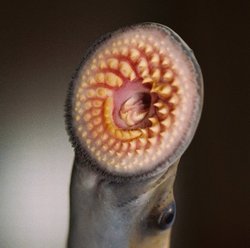
Researchers writing in Proceedings of the National Academy of Sciences say they have discovered that the sea lamprey, which emerged from jawless fish first appearing 500 million years ago, dramatically remodels its genome. Shortly after a fertilized lamprey egg divides into several cells, the growing embryo discards millions of units of its DNA - one fifth of its genome.
Mayo Clinic investigators say a proof-of-concept study has demonstrated that induced pluripotent stem (iPS) cells can be used to treat heart disease. iPS cells are stem cells converted from adult stem cells so don't involve the ethical concerns involved in using human embryonic stem cells.
In their study, the researchers reprogrammed ordinary fibroblasts, cells that contribute to scars such as those resulting from a heart attack, converting them into stem cells that fix heart damage caused by infarction.
This is the first application of iPS-based technology for heart disease therapy. Previously iPS cells have been used on only three other disease models: Parkinson's disease, sickle cell anemia and hemophilia A.
As silly as it may look, I am going to start this post by publishing for the third time in a row the same figure. That is because I want to keep the promise I made earlier that I would explain in terms as simple as possible (although not simpler) the details hidden behind the coloured curves and functions pictured there. I will also take this chance to come down a little from the level of technicality of the recent posts: after all, this blog is supposedly for everybody, and not just for Ph.D. students and recipients.