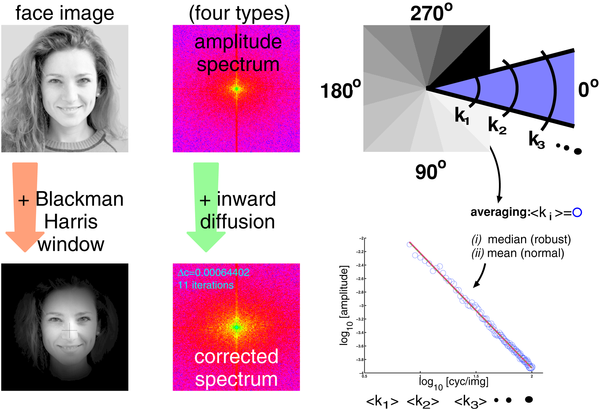
A study by the University of Barcelona (UB) has analysed which facial features our brain examines to identify faces. Our brain adapts in order to obtain the maximum amount of information possible from each face and according to the study the key data for identification come from, in the first place, the eyes and then the shape of the mouth and nose.
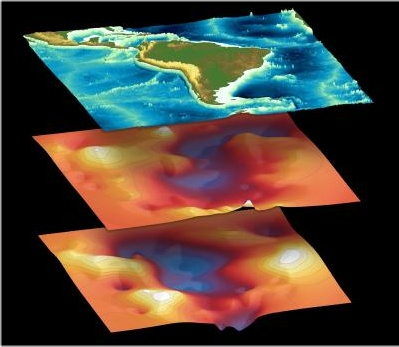
New research at the University of Liverpool says it is possible to develop an 'invisibility cloak' to protect buildings from earthquakes, using concentric rings of plastic which could be fitted to the Earth's surface in order to divert surface waves.
It's not coming to your building any time soon. It's a theory and they're just beginning small-scale experiments.
The seismic waves produced by earthquakes include body waves which travel through the earth and surface waves which travel across it. The new technology controls the path of surface waves which are the most damaging and responsible for much of the destruction which follows earthquakes.
British young men aren't regarded as all that even-tempered in the best of circumstances; England, Wales and Scotland are the top three most violent developed countries. Among those, young men who stay at home with their parents are more violent than those who live independently, according to new research at Queen Mary, University of London.
The new study indicates that men still living at home in their early twenties have fewer responsibilities and more disposable income ... and they spend it on alcohol. These young men make up only 4 percent of the UK's male population but they are responsible for 16 percent of all violent injuries in the last five years.
A team of astrophysicists has developed a new explanation for the early composition of our solar system - radioactive nuclei found in the earliest meteorites, dating back billions of years, could have been delivered by a nearby dying giant star of six times the mass of the sun.
If their hypothesis holds water, it could change our current ideas on the origin of the solar system.
Scientists writing in Developmental Cell say they have identified a master regulator gene for early embryonic development of the pancreas and other organs, putting researchers closer to coaxing stem cells into pancreatic cells and then a possible cure for Type 1 Diabetes.
They say this discovery reverses a long standing belief that the biliary system's origin is connected to early embryonic formation of the liver, the researchers said. The pancreas regulates digestion and blood sugar, and the biliary system is vital for digestion. If the organs do not form properly during fetal development, it can be fatal.
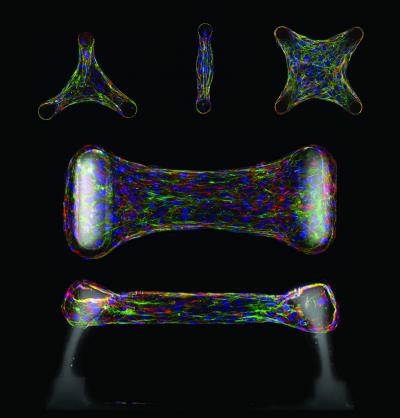
A new micro-tool allows researchers to measure and manipulate cellular forces as assemblies of living cells reorganize themselves into tissues. The new technique allows researchers to gauge how cells' minute mechanical forces affect cellular behavior and cell differentiation in a 3-D, in vivo-like environment. It mimics how tissue actually forms in a living organism.
The push-and-pull of cellular forces drives the deformation, extension and contraction of cells that occur during tissue development and these processes ultimately shape the architecture of tissues so how it is done plays an important role in coordinating cell signaling, gene expression and behavior, and they are essential for wound healing and tissue homeostasis in adult organisms.
"It's not supposed to do that" - Sandia principal investigator Jack Houston.
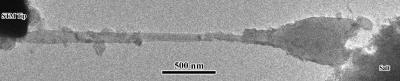
Researchers from Sandia National Laboratories and the University of Pittsburgh have found they can make salt, a solid, physically stretch.
"Unlike, say, gold, which is ductile and deforms under pressure, salt is brittle. Hit it with a hammer, it shatters like glass, " says Houston.
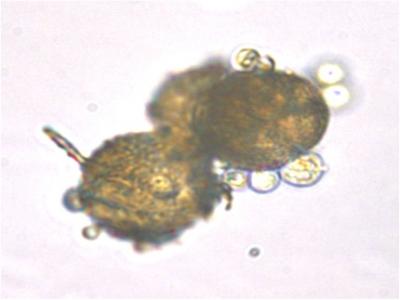
Labyrinthulomycetes, single-celled marine decomposers that eat non-living plant, algal, and animal matter, are ubiquitous and abundant, particularly on dead vegetation and in salt marshes and mangrove swamps.
Although most labyrinthulomycetes species are not pathogens, the organisms responsible for eelgrass wasting disease and QPX disease in hard clams are part of this group.
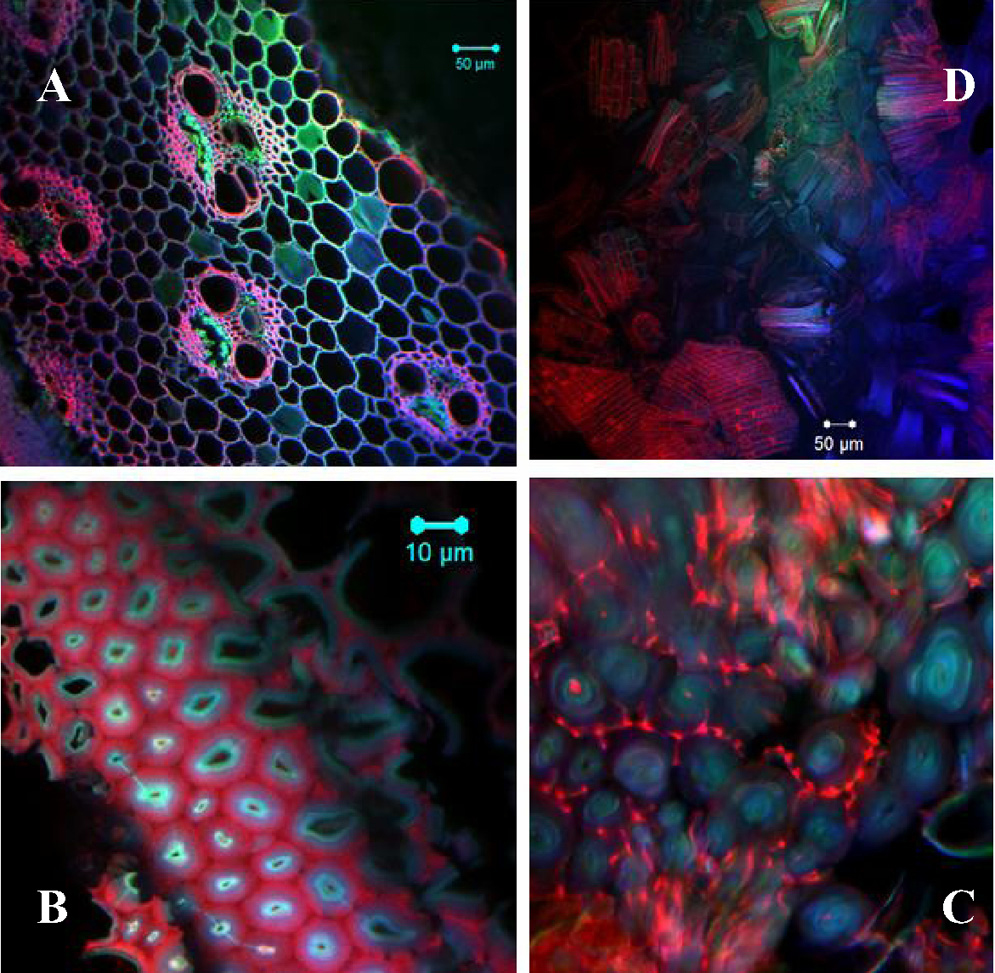
Before we can begin to implement sustainable, carbon-neutral gasoline - "grassoline" - from inedible plant material like fast-growing weeds and agricultural waste, some technology hurdles have to be overcome. Namely, finding better ways to break lignocellulosic biomass down into fermentable sugars.
Over 60 percent of the nearly 5,000 genome projects reported in the Genomes OnLine Database involve microbes. It's no surprise. Microbes are important in everything from bioenergy to agriculture and medicine and are involved in Earth’s biogeochemical cycles.
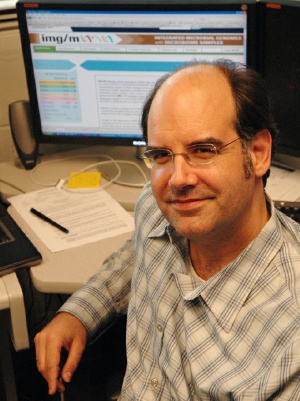
A lot could be done with microbial genomics, says DOE JGI Genome Biology head Nikos Kyrpides writing in Nature Biotechnology, if researchers go beyond the present anthropocentric focus and institute shared standards for genomic data collection and analysis.