BRUSSELS, November 3 /PRNewswire/ -- The International Diabetes Federation (IDF) announced today that Ms Ann Keeling has joined the organization as Chief Executive Officer/Executive Director.
The International Diabetes Federation, headquartered in Brussels, Belgium, is an umbrella organization of over 200 diabetes associations worldwide. It is the global advocate for the more than 250 million people with diabetes, their families, and healthcare providers.
Scientific happenings on this day in history…
But first: today’s quiz. Not all inventions are cold and scientific… some are more on the “delicious” side of the scale. And some inventors don’t even have to create a particular invention, yet can still be the reason behind its fame. Such is the case with the answer to today’s quiz.
John Montagu, born on this day in 1718, was a well-known British politician, inventor, and explorer. What tasty, well-known invention (which he is the namesake of) -- did he make famous?
On to other historic happenings:
EVENTS
1664
By playing it safe and using a two-pronged attack, a novel designer molecule, created and tested by an international team of researchers, fights malignant melanoma. The substance is similar to components of viruses in that they alert the immune system so the body's own defenses are also strengthened against cancer cells in the process. But it also puts pressure on the tumor in a different way; it switches off a specific gene in the malignant cells, driving them to suicide. With mice suffering from cancer, the researchers have thus been able to fight metastases in the lung, they report in Nature Medicine's November issue.
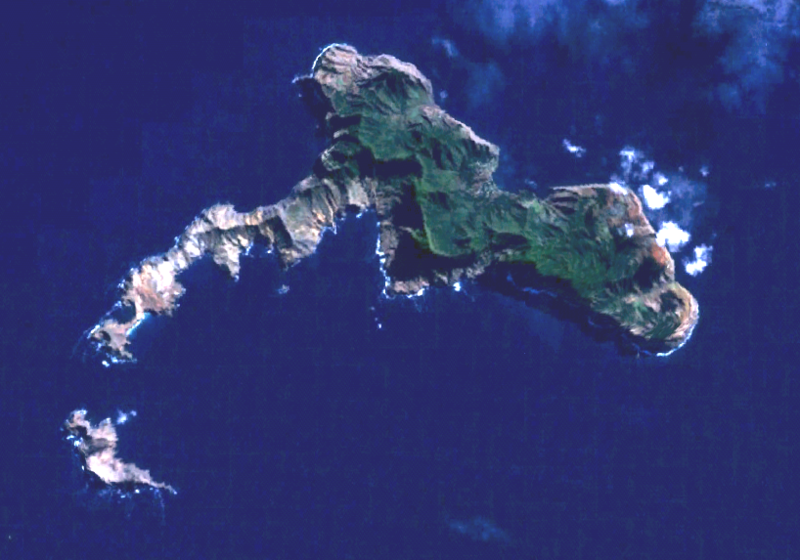
Cast away on a desert island, surviving on what nature alone can provide, praying for rescue but fearing the sight of a boat on the horizon. Just the imaginative creations of Daniel Defoe in his famous novel "Robinson Crusoe?" There has long been a theory that it was based on the real-life experience of sailor Alexander Selkirk, marooned in 1704 on a small tropical island in the Pacific for more than four years, and now archaeological evidence has been found to support contemporary records of his existence on the island.
Scientists in Italy have found bacteria in the root of a tropical grass whose oils have been used in the cosmetic and perfumery industries. These bacteria seem to promote the production of essential oils, but also they change the molecular structure of the oil, giving it different flavours and properties: termicidal, insecticidal, antimicrobial and antioxidant.
A research study carried out by the Universidad Complutense de Madrid (UCM) proves that administering natural antioxidants can reduce the effects of lead poisoning in animals during the gestation and lactation periods. The study suggests that it could also be effective in humans.
In this study, published in the magazine Food and Chemical Toxicology, the researchers aimed to prove that since the principal toxicity mechanism of lead poisoning is that it creates free radicals that lead to cellular destruction; administrating natural antioxidants could reverse this process and re-establish the organism's lost balance. The results of the study are preliminary but they could be the beginning of a possible therapeutic treatment to cure the disease.
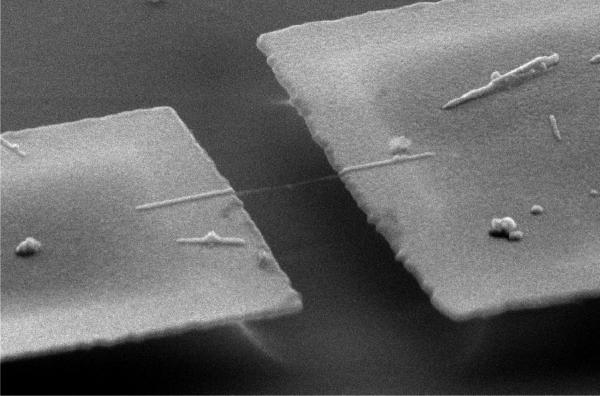
A group of researchers led by Adrian Bachtold of the CIN2 laboratory in Spain has developed an ultrasensitive mass sensor, which can measure tiny amounts of mass with atomic precision, and with an unprecedented resolution to date.
The CIN2 (Research Center for Nanoscience and Nanotechnology), is a joint centre belonging to the Spanish National Council for Scientific Research (CSIC) and the Nanotechnology Catalonian Institute (ICN).
Consuming foods rich in polyphenols from grapes, including red wine, helps reduce the risk of heart disease, according to a review article in the November issue of Nutrition Research.
The authors review the accumulating evidence that grape polyphenols work in many different ways to prevent cardiovascular and other "inflammatory-mediated" diseases. Polyphenols are natural antioxidants found in grapes and some other plant foods. Their types and actions vary, depending on where in the grape they are found. Grape seeds, grape skin, and grape juice contain several types of polyphenols, including resveratrol, phenolic acids, anthocyanins, and flavonoids.
A group of researchers have created a biodegradable 'scaffold' and living heart cells or stem cells seeded onto such a scaffold could develop into a patch of cardiac tissue to treat congenital heart defects, or aid the recovery of tissue damaged by a heart attack. The biodegradable scaffold would be gradually absorbed into the body, leaving behind new tissue.
The accordion-like honeycomb scaffold, to be reported in the Nov. 2 online edition of Nature Materials, is the first to be explicitly designed to match the structural and mechanical properties of native heart tissue. As a result, it has several advantages over previous cardiac tissue engineering scaffolds.
Industry analysts suggest that the recent financial crisis is starting to have an effect on the growth of the biotechnology industry, once thought to be a recession-proof sector. They contend that the lack of available institutional cash and venture money is causing extant biotechnology companies to “tighten their belts.” And, if the trend continues, this lack of capital will stifle innovation, which in turn, will threaten and undermine the stability and future of the entire biotechnology sector. While times are certainly tough, the biotechnology industry, in my opinion, is alive and well and will continue to expand well into the 21st century.