



A new species of large predatory fish named Laccognathus embryi that prowled ancient North American waterways during the Devonian Period, before backboned animals existed on land, has been announced.

The Devonian Period (415 to 360 million years ago) is often described as the Age of Fishes because of the rich variety of aquatic forms that populated the ancient seas, lagoons and streams. Laccognathus embryi is a lobe-finned fish whose closest living relative is the lungfish. The creature probably grew to about 5 or 6 feet long and had a wide head with small eyes and robust jaws lined with large piercing teeth.

With a ban on incandescent bulbs looming in the US, the race is on to try and replace them - unfortunately the ban was used to artificially force innovation, which isn't how things work in science and technology, and CFL bulbs have mercury risk while concerns linger about LEDs and melatonin. 

A genome-based immunization strategy may 'illuminate' ways to combat AIDS and other diseases. 

Feline immunodeficiency virus (FIV) causes AIDS in cats as the human immunodeficiency virus (HIV) does in people, by depleting the body's infection-fighting T-cells. The feline and human versions of key proteins that potently defend mammals against virus invasion, termed restriction factors, are ineffective against FIV and HIV respectively. A Mayo Clinic team along with collaborators in Japan write in Nature Methods of their efforts to mimic the way evolution normally gives rise over vast time spans to protective protein versions. They devised a way to insert effective monkey versions of them into the cat genome. 

Optofluidic solar lighting systems could mean a real boost in solar energy - they capture sunlight from a roof using a light concentrating system that follows the sun's path by changing the angle of the water's refraction, and then distribute the sunlight throughout the building through light pipes or fiber optic cables to the ceilings of office spaces, indoor solar panels, or even microfluidic air filters.

The female orgasm has been a topic of debate among evolutionary biologists (and among many other people as well, of course). Is it adaptive, or a by-product of the male orgasm? Does it suck sperm into the uterus, or strengthens the pair bond? Or did it ‘tag along’ with the development of the male orgasm?

A new study, published in Animal Behaviour, takes a look at the question. The authors argue that, if the female orgasm is an evolutionary by-product, similar genes would lie at the root of orgasmic function in both sexes. Consequentially, opposite-sex twins and siblings would share more similarities in their susceptibility to orgasm.

Mark, a graduate student in bio-engineering with a history of depression, registers for a scientific conference on evolution, which attracts no suspicion at all; why should it. He takes potassium ferrocyanide, a yellow salt easily available in gardening supply stores, and boils it with automotive battery acid. Over a few weeks, Mark distills a few liters of highly toxic prussic acid, enough to kill thousands.

An interesting fellow is doing an interesting thing. Scott Cassell aims to "raise awareness around the detrimental state of the ocean along the Southern California coastline" with a specific focus on the decline of sharks. Says Cassell,
If we lose an apex predator from the food chain it causes other species to then have population explosions. For example, Sharks and Tuna are the natural predators of the Humboldt squid. If you kill off all the sharks, the squid population (each female can potentially have 20 million "babies") will begin to overpower the part of the food chain below them. They will eat anything and everything.
Every three hours, NASA's Fermi Gamma-ray Space Telescope scans the entire sky. Every year, the satellite's scientists reanalyze all of the data it has collected about the high energy universe.
The Sheriff of Nottingham will be pleased. It only took 800 years, but poachers can now be tracked down through tests for human DNA on deer remains, according to research led by scientists at the University of Strathclyde.

Aside from being silly, since most 'poachers' are actually just poor people feeding a family, just like they were in Robin Hood's day, identifying deer poachers can be problematic because these 'crimes' are not discovered until long after the event - and no one cares.  These 'poachers' also field dress the deer carcass (hunters wear gloves) so little human DNA is left behind.

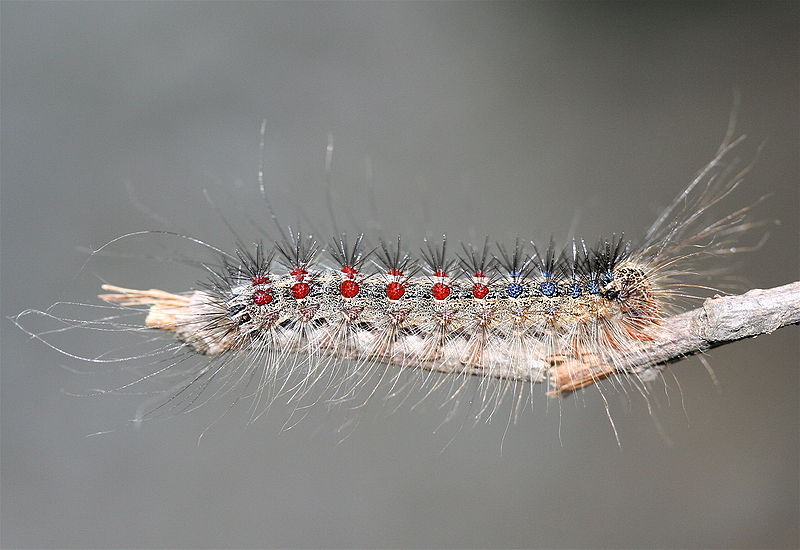
Some viruses change the behavior of their host, notable examples being the zombie ants and cat-loving rodents. Another example of such a ‘mind-controlling’ virus is the baculovirus, controlling its host, the gypsy moth caterpillar. A new study has identified a single gene that enforces this control on its host.

