

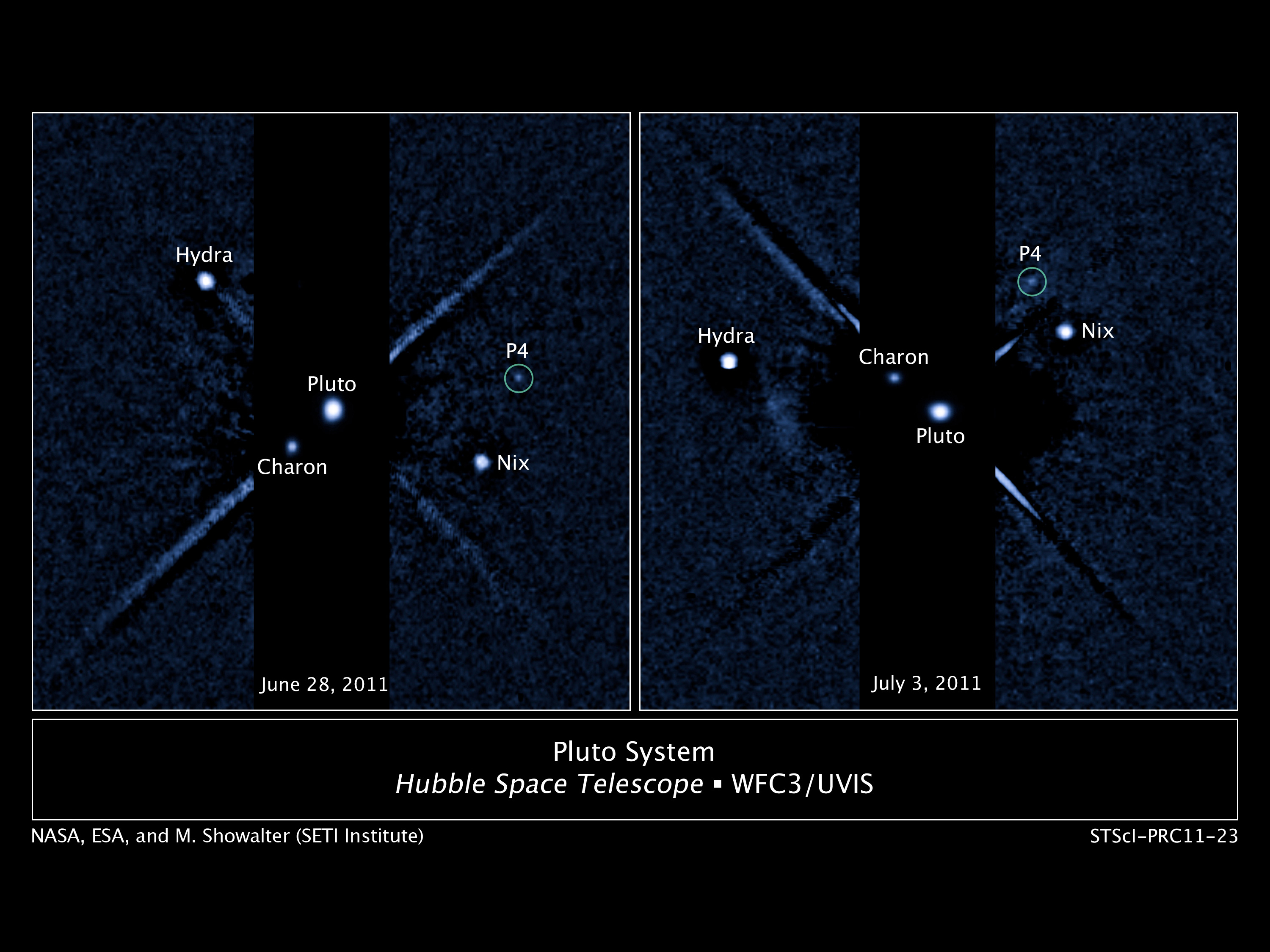
Though 2 percent of astronomers declared Pluto was no longer a planet, for not being a planet, it sure has a lot of moons.   Four so far.

The Hubble Space Telescope discovered this fourth moon, cleverly designated P4, and astronomers say this newest, smallest one has an estimated diameter of 8 to 21 miles.  By comparison, Charon, Pluto's largest moon, is 648 miles (1,043 km) across, and the other moons, Nix and Hydra, are in the range of 20 to 70 miles in diameter (32 to 113 km).

Distance: 3 billion miles.
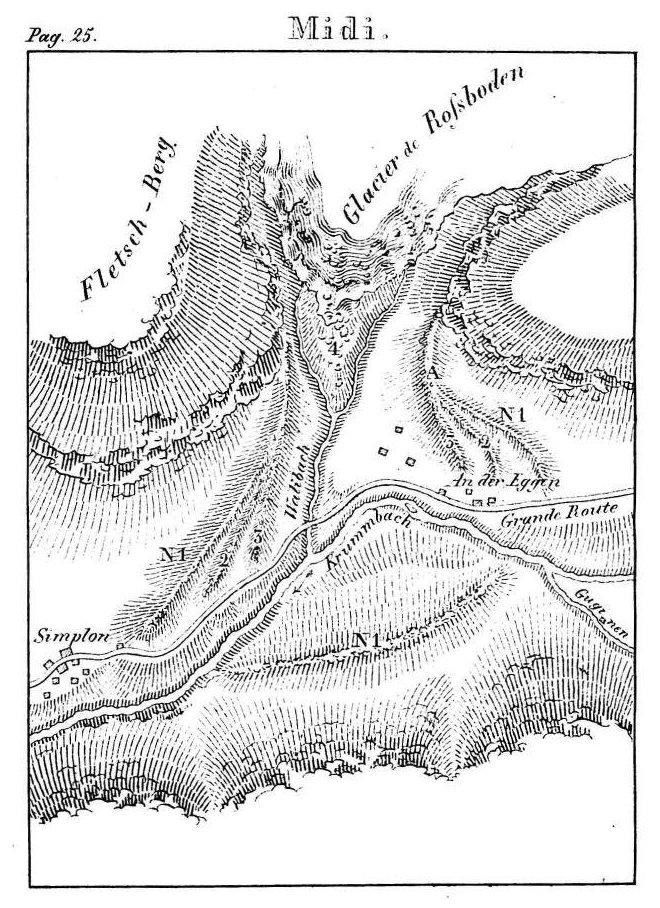
Ignaz Venetz - Climate Change Pioneer - #2


Ignaz Venetz was, in 1821, awarded a prize of 300 francs for his memoire by the Schweizerische Naturforschende Gesellschaft - the Swiss Natural Science Society.  It is my firm opinion that, accordingly, the date of publication should be cited as 1821: the date of the award of the prize, and not 1833 which was the date of its re-publication in a bound archive of science papers.

‘Tut! I have the best armour in the world. Would it were day!(W. Shakespeare, Henry V, 1599) 

In Medieval Europe, soldiers wore steel plate armor for protection during warfare. Heavier armor would provide greater protection, but would also make it harder for soldiers to move around during the fight. In 1415, Henry V’s lightly-armored men-at-arms defeated the French knights in the battle of Agincourt; would the French have had a better chance in lighter armor? To what extent did Medieval armor limit soldiers’ performance?

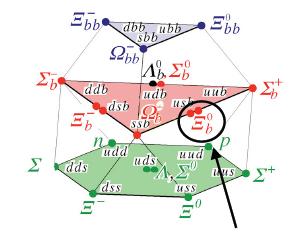
This afternoon (2.30 PM Chicago time) Pat Lukens, an old-timer of the CDF experiment, will give a "wine and cheese" seminar at Fermilab on the new observation of a heavy baryon, of the family of baryons containing bottom quarks, which was still at large.

The new particle, called "Xi_b^0", fits a hole in the group representation graph of ground-state baryons with J=1/2. You can see it in the graph on the right. Of all states in the middle level (ones containing one bottom quark) only the Xi_b^0 was still missing. By the way: none of the baryons of the top level have yet been observed.
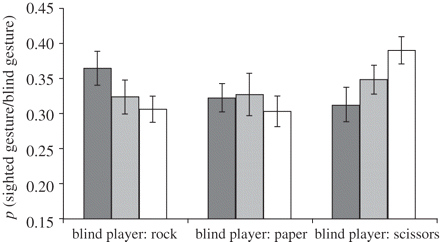


Rock-paper-scissors (henceforth, it shall be known as RPS) is a game, or method to determine who has to do something nobody really wants to do. The rules are pretty well-known. The players simultaneously form a rock, paper or scissors gesture with their hands, and rock beats scissors beats paper beats rock. The same gesture results in a draw. Since one person’s win means the other one’s loss, it can be considered a zero-sum game. Players can only achieve optimal outcomes if they do not imitate each other.

Human-like features of the feet and gait were in existence almost two million years earlier than previously thought, according to recent analysis of ancient footprints in Laetoli, Tanzania.

Earlier studies suggested that the characteristics of the human foot, like the ability to push off the ground with the big toe and a fully upright bipedal gait, emerged in early Homo approximately 1.9 million years-ago but researchers now say that footprints of a human ancestor dating back 3.7 million years ago show features of the foot with more similarities to the gait of modern humans than with the type of bipedal walking used by chimpanzees, orangutans and gorillas.
Some cry that it is daft to make your own satellite (ignoring 40 years of AMSAT history). Others exclaim that, hey, whatever I am doing, they can do better.  To the former, my building Project Calliope is proof that we're entering a new age of private space exploration.

To the latter, I say "yes, yes you can."  And now, O'Reilly Media is launching a DIY Space series.  I'll be writing four eBooks so you, too, can design and launch your own picosatellite, Tubesat, Cubesat, or whatever you wish to build.

1) DIY Satellite Platforms (Realtime eBook #1)
Building a space-ready general base picosatellite for any mission
Adrenalise Me

Adrenalise Me

Jul 19 2011 | comment(s)

(I guess this goes in the "Science&Society" Field, or maybe just "Random Thoughts.")
 
Anyway, there's a short film coming out this summer, a promotional thing for the World Wildlife Fund, called "Astonish Me." It popped up in my news feed because the colossal squid is one of the many animals highlighted by the film. The director, Charles Sturridge, commented:

Last month, Pluto passed in front of a star and cast a small shadow on the Earth - astronomers from Lowell Observatory were among the scientists and crew who observed the rare occultation event from NASA's newest airborne observatory, SOFIA (Stratospheric Observatory for Infrared Astronomy).  

SOFIA has a 100-inch (2.5-meter) telescope aboard a modified 747 SP aircraft, and can fly at an altitude of 45,000 ft., above most of the cloud cover and water vapor in the Earth's atmosphere.

