


OAKLAND, California, February 11 /PRNewswire/ --

- New Tool Will Offer Option of Unbiased Marking Metric for UK Students

iParadigms LLC, makers of Turnitin, today announced that they now offer anonymous marking within its signature GradeMark(R) online feedback tool. The new anonymous marking feature offers TurnitinUK tutors the ability to view and mark students' work without knowing the identity of the author. Anonymous marking of students' work is increasingly a requirement of assessment procedures in UK universities and colleges, and is also endorsed by the Quality Assurance Agency's (QAA) Code of Practice (QAA, 2006), allowing tutors the option of hiding students' names from their assignment inbox, to allow for unbiased marking.

One of the weaknesses of using a surname as a guide in understanding genetic characteristcs has been the belief that 1 in 10 births were the result of infidelity - so the name is not only an incorrect characteristic but could even be deceptive.

Not, so, says a study funded by the Wellcome Trust published this week in the journal Molecular Biology and Evolution, which may help genealogists create more accurate family trees even when records are missing. It suggests that the often quoted "one in ten" figure for children born through infidelity is unlikely to be true.
Sky diving and base jumping are not for everyone. However, for certain people, the more risk and adrenaline involved in an activity, the better! What draws some people to daredevil behavior while others shy away from it? Psychologists Jane E. Joseph, Xun Liu, Yang Jiang and Thomas H. Kelly from the University of Kentucky, along with Donald Lyman of Purdue University were interested in testing how the brains of sensation-seekers differ from those of us who avoid risky behavior.
Scientists have sequenced over seventy strains of yeast, the greatest number of genomes for any species.  The basic machinery of yeast is surprisingly similar to that of humans, and the project is already helping experts to develop the tools necessary for studying human genetic variation. Yeast can also be used to develop and test new drugs, such as for cancer. 

It also gave us a clever way to finagle the title and remind you about Darwin Day tomorrow - the 200th anniversary of his birth.   And, if you are  an American Republican, it's also the 200th birthday of the first Republican President, Abraham Lincoln.    But we're a science site so we'll focus on the yeast.
Roughly 10 million years ago, a major genetic change occurred in a common ancestor of gorillas, chimpanzees, and humans. Segments of DNA in its genome began to form duplicate copies at a greater rate than in the past, creating an instability that persists in the genome of modern humans and contributes to diseases like autism and schizophrenia. But that gene duplication also may be responsible for a genetic flexibility that has resulted in some uniquely human characteristics.
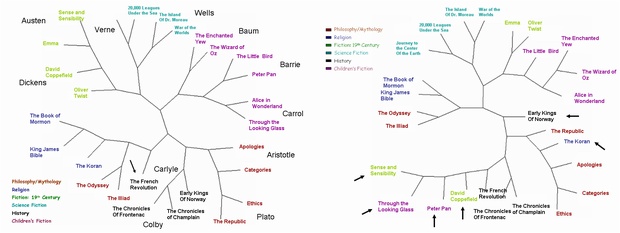
What does uncovering the true authorship of plays attributed to Shakespeare have to do with identifying our genetic ancestors or classifying new life forms? All involve the comparative analysis of long sets of data and all will benefit from a unique new analytical tool developed by researchers at the Lawrence Berkeley National Laboratory.
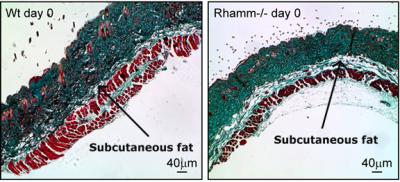
Hollywood stars of a certain age take note: Research at Berkeley Lab suggests that a protein linked to the spread of several major human cancers may also hold great potential for the elimination of wrinkles and the rejuvenation of the skin. If this promise bears fruit, the protein, called RHAMM, could one day replace injections with neurotoxins that carry such unpleasant side-effects as muscle paralysis and loss of facial expressions.
A net with large holes won't catch small fish. Likewise, the microscopic fibers in the protective mucus coatings of the eyes, lungs, stomach or reproductive system naturally bundle together and allow the tiniest disease-causing bugs, allergens or pollutants to slip by. But Johns Hopkins researchers have discovered a way to chemically shrink the holes in the mucus layer's netting so that it will keep out more of the unwanted particles. 

LONDON, February 10 /PRNewswire/ --

The 12 members of the Organization of the Petroleum Exporting Countries (OPEC) pumped an average 28.97 million barrels per day (b/d) of crude oil in January, according to a Platts survey of OPEC, oil industry officials and analysts just released. This is a decline of 930,000 b/d from the December level of 29.9 million b/d.

Excluding Iraq, production from the 11 members bound by output agreements fell by 970,000 b/d to 26.54 million b/d from the December estimate of 27.51 million b/d, the survey showed.

This leaves the OPEC-11 some 1.695 million b/d above its 24.845 million b/d target, agreed to at OPEC's December 17 meeting in Oran, Algeria, and which came into effect at the beginning of January.

With pressures hundreds of times that at sea level and temperatures nearly freezing, it's amazing that anything can survive in the deep ocean. The vast amount of space and correspondingly sparse distribution of living organisms simply adds to the seeming impossibility that anything could survive in such an environment. However, many spots in the deep ocean contain life highly adapted to the specific harsh environment, and manage to find food and reproduce despite the odds against it.

