Have you ever wondered why it seems like the littlest things make people angry? University of Minnesota marketing professor Vladas Griskevicius says he can explain in three words why people may be inclined to make a mountain out of molehill: aggression, status and sex. He makes an unfortunate correlation-causation jump to the colloquial term 'evolution' too, but let's forget that for a moment, because we'd never get any articles written if we stopped every time a non-biologist calls something Evolution.
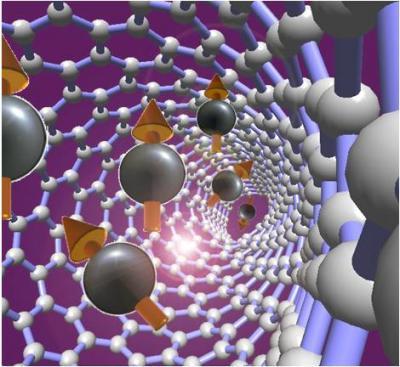
A key challenge of nanotechnology research is investigating how different materials behave at lengths of merely one-billionth of a meter. When shrunk to such tiny sizes, many everyday materials exhibit interesting and potentially beneficial new properties.
Magnetic behavior is one such phenomenon that can change significantly depending on the size of the material. However, the sheer challenge of observing the magnetic properties of nanoscale material has impeded further study of the topic.
Bling, foreclosures, rising credit card debt, bank and auto bailouts, upside down mortgages and perhaps a mid-life crisis new Corvette---all symptoms of compulsive overspending. University of Michigan researcher Daniel Kruger says the answer lies in evolution and mating. He theorizes that men overspend to attract mates.
It all boils down, as it has for hundreds of thousands of years, to making babies.
Kruger, an assistant research scientist in the School of Public Health, tested his hypothesis in a community sample of adults aged 18-45 and found that the degree of financial consumption was directly related to future mating intentions and past mating success for men but not for women.
In the rainforests of equatorial Asia, a link between drought and deforestation is fueling global warming, finds an international study that includes a UC Irvine scientist.
The study, analyzing six years of climate and fire observations from satellites, shows that in dry years, the practice of using fire to clear forests and remove organic soil increases substantially, releasing huge amounts of climate-warming carbon dioxide into the atmosphere.
In 2006, the climate on the fast-developing islands of Borneo and Sumatra and in New Guinea and other parts of equatorial Asia was three times drier than in 2000, but carbon emissions from deforestation were 30 times greater – exceeding emissions from fossil fuel burning.
When it comes to the world of the very, very small —
nanotechnology — we may have a big problem: Nano and its capacity to alter the fundamentals of nature could be failing the moral litmus test of religion.
In a report published today in
Nature Nanotechnology, survey results reveal some sharp contrasts in the perception that nanotechnology is morally acceptable. Those views, according to the report, correlate directly with aggregate levels of religious views in each country surveyed.
Scientists from Monash University, Melbourne have shown that infants born prematurely have lower blood pressure during sleep in the first six months of life, compared to healthy, full-term infants.
Scientists at the Ritchie Centre for Baby Health Research, Monash Institute of Medical Research, believe this may be one reason premature infants are at an increased risk of Sudden Infant Death Syndrome (SIDS), which causes about 2,500 deaths per year in the United States and thousands more throughout the world..
In the search for life beyond Earth, scientists 'follow the water' to find places that might be hospitable. However, every home gardener knows that plants need more than water, or even sunshine. They also need fertilizer – a mixture of chemical elements that are the building blocks of the molecules of life. Scientists at Arizona State University are studying how the distribution of these elements on Earth – or beyond – shapes the distribution of life, the state of the environment and the course of evolution.
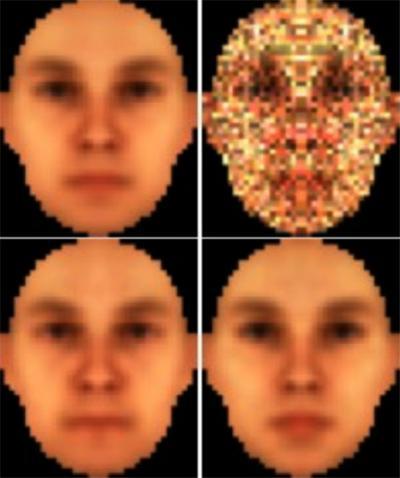
It's always fun science when we can say researchers from Brown have discovered that men have more red in their skin and women more green - but Michael J. Tarr and graduate student Adrian Nestor say they have discovered this color difference in an analysis of dozens of faces and it's a key issue in cognitive science research and face perception. This information may also have a number industry or consumer applications in areas such as facial recognition technology, advertising, and studies of how and why women apply makeup.
Cells are filled with membrane-bound organelles like the nucleus, mitochondria and endoplasmic reticula. Over the years, scientists have made much progress in understanding the biomolecular details of how these organelles function within cells, but understanding the actual physical forces that maintain the structures of these organelles' membranes continues to be a challenge.
Now, UCLA Henry Samueli School of Engineering and Applied Science researcher William Klug and colleagues from the California Institute of Technology and the Whitehead Institute for Biomedical Research in Massachusetts have devised a mathematical procedure for accurately predicting the three-dimensional forces involved in creating and maintaining certain organelle membranes.
Eating saturated fats from butter, cream and meat, as well as trans fats found in hydrogenated oils can boost our risk of cardiovascular disease, while consuming mono-unsaturated fat can be good for our heart.
Yet what's the effect of all these fats on our weight? Are some better than others?
"Research on animals and some clinical trials show that not all fats have the same effect on weight," says Nadiah Moussavi, a Master's student from the Université de Montréal Department of Nutrition. "Few epidemiological studies exist on the subject and the results of those are contradictory."