




Jennifer Saul, a philosopher at the University of Sheffield, published an article in Salon entitled  “Philosophy has a sexual harassment problem.” While there is much substance and nuance in the body of the article, I sincerely hope that Prof. Saul did not actually choose the title herself (editors often do that sort of thing), because the message it sends is anything but nuanced, and if taken at face value also not particularly constructive.
A common technique of activists and people who generally distrust science and want to undermine it is to clog up the discourse with sophistry, like "it depends on how you define X", or they claim that their personal belief means science is not science, but rather morality. 
It's often been said that violent video games such as ‘Mortal Kombat,’ ‘Halo’ and ‘Grand Theft Auto’ trigger teenagers with symptoms of depression or attention deficit disorder to become aggressive bullies or delinquents.

Media has power, that is why marketing is a multi-billion dollar industry and cigarette and alcohol companies can't advertise on cartoon shows. It makes sense that long-term exposure to violence could trigger violence, especially in young people with psychological conditions.
The ancient closest relatives of mammals, the cynodont therapsids, not only survived the greatest mass extinction of all time 252 million years ago, they thrived in the aftermath.

The first mammals arose in the Triassic period, more than 225 million years ago. These early fur balls include small shrew-like animals such as Morganucodon from England, Megazostrodon from South Africa and Bienotherium from China.  They had differentiated teeth - incisors, canines, molars - and large brains and were probably warm-blooded and covered in fur; all characteristics that stand them apart from their reptile ancestors, and which contribute to their huge success today.

High-functioning autistic children appear able to outgrow a critical social communication disability. Younger children with autism have trouble integrating the auditory and visual cues associated with speech, but the researchers found that the problem clears up in adolescence.

How do you know when your brand has captured the latest wave in popular culture?

When it gets mentioned a lot in popular music. Though companies are scrambling to try and get Twitter mentions and Facebook likes, they should instead be paying musical artists to be seen with their products - or at least sing about it. Alcohol is responsible for at least 4,700 deaths per year among young people under the age of 21 in the U.S. and more than 70 percent of high school students have consumed alcohol while about 22 percent engage in heavy episodic drinking. If companies want to get a piece of that action, they need to be more proactive.

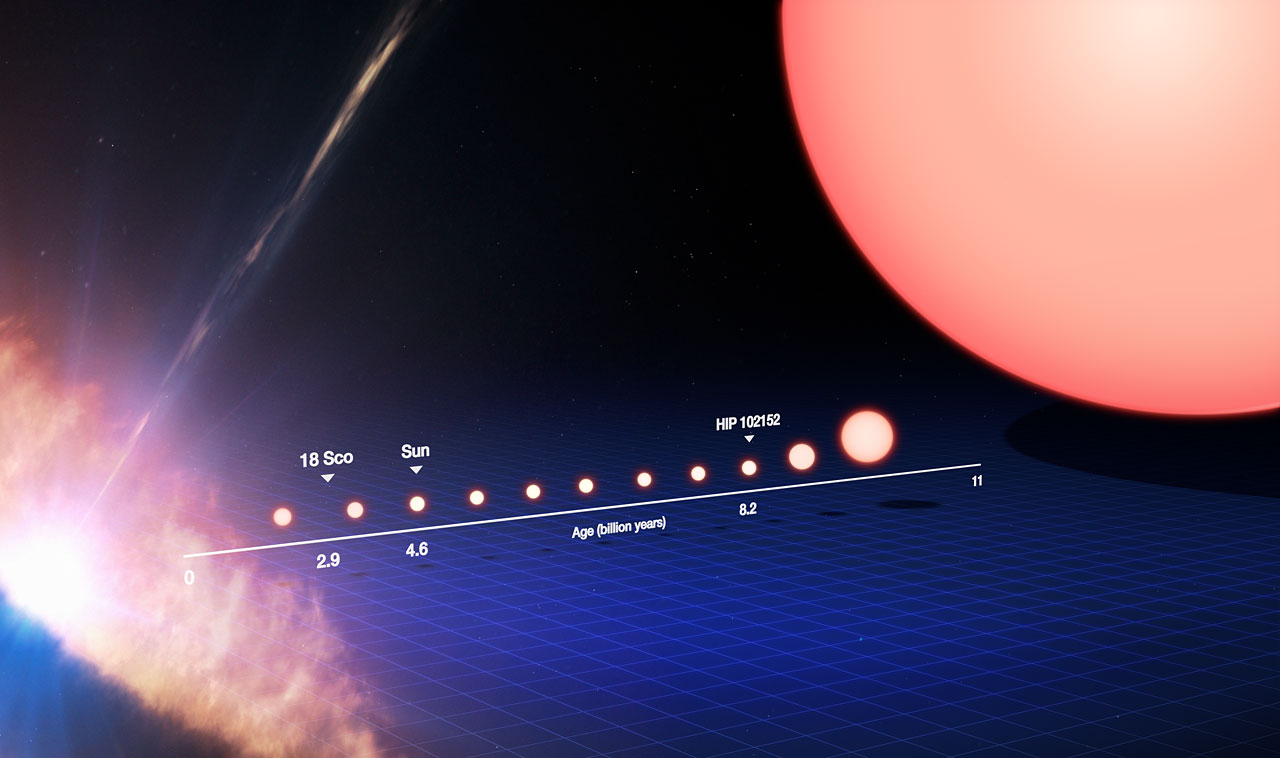
When you have only had telescopes for a few hundred years, it can be difficult to determine the history of our Sun and figure out what it was like billions of years ago. One way to do that, and to predict the future of our star, is to find those rare stars that are almost exactly like our own, but at different stages of their lives.

Astronomers have identified a star that is essentially an identical twin to our Sun, but 4 billion years older — almost like seeing a real version of the twin paradox in action.[1]

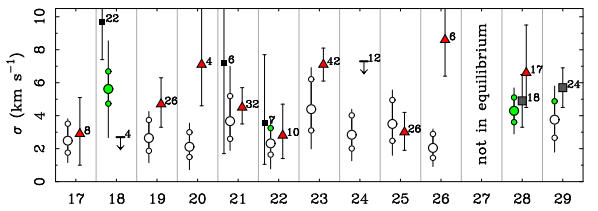
Stacy McGaugh, professor of astronomy at Case Western Reserve, and Mordehai Milgrom, the father of Modified Newtonian Dynamics (MOND) and professor of physics at Weizmann Institute in Israel, say the MOND modified law of gravity correctly predicted, in advance of the observations, the velocity dispersion - the average speed of stars within a galaxy relative to each other - in 10 dwarf satellite galaxies of the Milky Way's giant neighbor Andromeda.

The relatively large velocity dispersions observed in these types of dwarf galaxies is usually attributed to dark matter. Modified Newtonian Dynamics (MOND) is an alternative hypothesis to dark matter and succeeded in anticipating the observations.

The radioactive ocean plume from the 2011 Fukushima nuclear incident will reach the shores of the US within three years from the date of the incident - but it will be harmless, according to a new paper.

Atmospheric radiation was detected quickly even in the US but radioactive particles in the ocean plume take considerably longer to travel the same distance so, in the paper, researchers outline a range of ocean simulations they use to track and predict the path of the radiation from the Fukushima incident.

The models identified where it would likely travel through the world's oceans for the next 10 years.


