



Usually, the Einstein-Podolsky-Rosen paradox is presented as if it potentially conflicts with the theory of relativity. This is because the correlation between Alice’s and Bob’s measurements seems to travel with superluminal speeds in one real world. The solution [1] of the EPR paradox shows that this view is upside-down, which is the reason it took so long to solve it satisfactorily.


Scientists and philosophers where trying to understand the quantum mechanics involved without bothering with relativity, because the problematic seems to conflict with relativity. However, in that way, the actual solution looks suspect:

“What do you think we’ll fight World War III over?”

It was an interesting question for a third date, and the first thing my (now ex-) boyfriend and I disagreed on.  I said “cheap oil” and he answered “water.”

Our difference of opinion was largely a product of our upbringings.  I was raised on thunderstorms and flooded basements back East, while he grew up amid droughts and “water wars” in California.

Months after we parted ways, I was reminded of that conversation as I drove through California’s Central Valley, past billboards plastered with water propaganda and tractors shadowed by dust clouds.

Because it is substantially easier, in a globally connected Internet world, to leverage someone else's names, likenesses and trademarks, American courts have expanded the legal rights regarded their uses. University at Buffalo Law School professor Mark Bartholomew is questioning whether these courts have gone too far.  

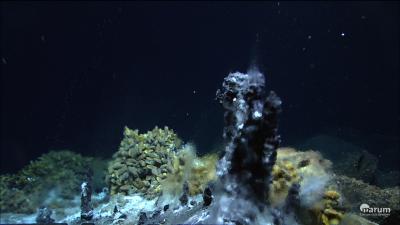
Researchers searching for new ways to make hydrogen a viable part of our energy future have a new place to look; a natural example of a living hydrogen-powered 'fuel cell'.

During a recent expedition to hydrothermal vents in the deep sea, researchers from the Max Planck Institute of Marine Microbiology and the Cluster of Excellence MARUM discovered mussels that have their own on-board fuel cells in the form of symbiotic bacteria that use hydrogen as an energy source. Their results suggest that the ability to use hydrogen as a source of energy is widespread in hydrothermal vent symbioses.

Golf is a good walk spoiled, according to both proponents and detractors.  It isn't just the outrageously fickle game that takes abuse, the golf courses, known for their calm scenic views and precise grass patterns, get hammered every day as well.  

Divots created by golf strokes are common  and can be a costly problem for golf course maintenance operations. Although previous research has identified differences in divot recovery across species of bermudagrass and zoysiagrass, little has been developed about actual divot resistance.

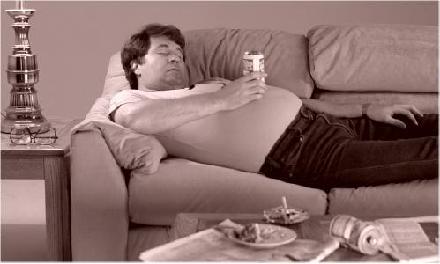
Stop eating all of that junk food.  Why?  So, you can live longer, of course.  Get off the La-Z-Boy and go run five miles.  Why?!  So, you can enjoy your old age.  No more drinking and smoking.  Why?!!  So, you can live to be 100 years old.

The rationale often given for converting to healthy habits has been to give you a longer life.  Who better to know about long lives than those that are closing in on the big 100.  The U.S. Census Bureau estimates there were nearly 425,000 people aged 95 and older living in the U.S. in 2010 − still only a small percentage of the 40 million U.S. adults 65 and over.
Greater virtual realism is always shown in television shows like "Star Trek: The Next Generation" as people who act out an alternate life as a farmer or solve mysteries in the 1800s, and that may happen, but long before that any technology like that will be used by young people to shoot each other.
A Frael of Figs
 - or -
A Handful of History


If history consisted only in lists of the dates when "important people" did earth-shattering things such as kicking the bucket from a surfeit of lampreys, then I would agree with Henry Ford that history is bunk.

However, history at large can run from the present day all the way back to the big bang - assuming there ever was a big bang.
Science 2.0 is all about making a difference in a positive way, bringing lots of people in the world together to talk with each other about science.    We're the only open science site of decent size, meaning you don't have to be famous or bring a large audience to get invited, you just sign up and write science, so participation and communication are key to the Science 2.0 concept.
The Posthumous Memoir of Ignaz Venetz #3

... the voice of a faithful disciple of science is entitled to be heard.
My continuing researches on the discovery of climate change show that prior to Ignaz Venetz's 1821 prize-winning paper, the most commonly held views on the earth's climate were either that it had changed once, briefly, as a result of the noachain flood, or that the earth has been continually cooling since it was formed.  It was also held by most geologists that all rocks which were not obviously of volcanic origin were formed in or by water.

