





"We have the habit, as humans, of only thinking that what we see is real", began Neil Tyson.  Our job as astronomers is to 'turn something invisible and make it real'.  His premise: space weather is important to study, but scientists also have to step up their game in communicating why this is important.


Dr. Neil deGrasse Tyson spoke at the 3rd Space Weather Enterprise Forum today.  As an astrophysicist and director of the Hayden Planetarium, part of his job is "when the universe flinches and the reporters come to knock on my door" it's "because there is a hunger" for science.

Georg, over at Lattice Points noted a piece about open science in Physics World:

The adoption and growth of scientific journals has created a body of shared knowledge for our civilization, a collective long-term memory that is the basis for much of human progress. This system has changed surprisingly little in the last 300 years. Today, the Internet offers us the first major opportunity to improve this collective long-term memory, and to create a collective short-term working memory — a conversational commons for the rapid collaborative development of ideas.

In the previous post we introduced the idea that indifference was the primary action at work at the biochemical and cellular levels.


At this level, it would be hard to express any survival strategy beyond probabilistic, since reproduction is asexual with those cells that have the proper attributes, being able to dominate an environment in a short period of time. Similarly, it is also an environment that is subject to genetic “plagiarism” whereby novel combinations or sources of genetic information may be acquired directly through mechanisms like conjugation. The process of conjugation results in the transfer of genetic materials from a donor cell to that of the recipient.


Female birds often choose their mates based on fancy feathers. Female mammals, on the other hand, may be more likely to follow their noses to the right mate. That's one conclusion of Cambridge zoologist Tim Clutton-Brock and Harvard researcher Katherine McAuliffe, whose review of evidence for female mate choice is published in the March 2009 issue of The Quarterly Review of Biology.

Historically, most examples of female mate choice and its evolutionary consequences are found in birds. The classic case is the peacock's tail. The ornate tails do nothing to help peacocks survive. Rather, they emerged because peahens prefer to mate with males that have showy plumage.

WASHINGTON – Romance does not have to fizzle out in long-term relationships and progress into a companionship/friendship-type love, a new study has found. Romantic love can last a lifetime and lead to happier, healthier relationships.

"Many believe that romantic love is the same as passionate love," said lead researcher Bianca P. Acevedo, PhD, then at Stony Brook University (currently at University of California, Santa Barbara). "It isn't. Romantic love has the intensity, engagement and sexual chemistry that passionate love has, minus the obsessive component. Passionate or obsessive love includes feelings of uncertainty and anxiety. This kind of love helps drive the shorter relationships but not the longer ones."

I could write a book refuting the nonsense regularly expounded by New York Time’s columnist Stanley Fish. Oh, wait, I almost have written a book about it!
The “Holy Grail of Climate Change" press release about biomaterial found in Wyoming clouds has been making its way across the internet like a steady front. 
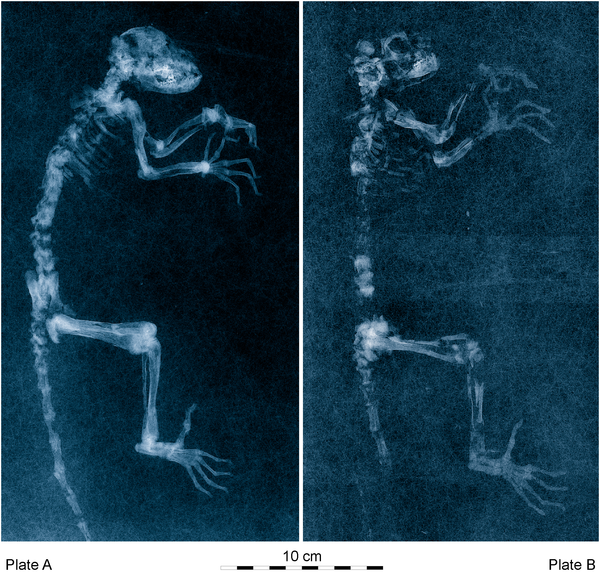
It's always best not to go overboard but the discovery of Darwinius masillae is pretty darn exciting, because it represents the most complete fossil primate ever found;  the skeleton, soft body outline and even the stomach contents.   It is phylogenetically terrific. Or not.  In any new claim like this, there will be doubts.
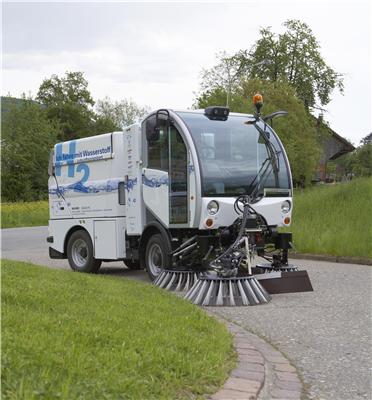
Empa and the Paul Scherrer Institute (PSI) have, together with Bucher Schoerling, Proton Motor, BRUSA Elektronik AG und Messer Schweiz, developed a hydrogen powered municipal street cleaning vehicle which was presented to the public last week in Basel. The vehicle is named the "Bucher CityCat H2"  and is the first municipal utility vehicle in the world powered by fuel cell technology.   For the next 18 months it will be tested in everyday usage.
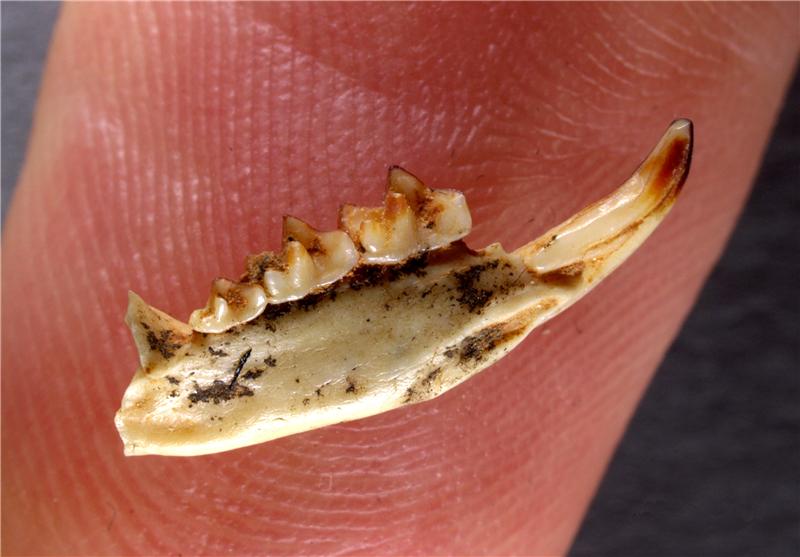
Morphometric and phylogenetic analyses of the fossilised remains of the jaws and teeth of a shrew discovered in a deposit in Gran Dolina de Atapuerca, in Burgos, a city of northern Spain at the edge of the central plateau, have shown this to be a new species (Dolinasorex glyphodon) that has not previously been described. The extinct animal had red teeth, was large in size compared with mammals of the same family, and was more closely related to Asian than European shrews.

