



A newly discovered protein plays a central role in promoting immunity to viruses and cancer, according to experiments in mice and human cells.

 The hitherto unknown protein, which the researchers named lymphocyte expansion molecule, or LEM, modulates the proliferation of human T cells as well as in mice, by promoting the proliferation of cytotoxic T cells, which kill cancer cells and cells infected with viruses.

The discovery was unexpected because the new protein had no known function and doesn't resemble any other protein. Researchers from Imperial College London who led the study are now developing a gene therapy designed to boost the infection-fighting cells, and hope to begin human trials in three years. 
In 2014, there were almost 200 health awareness days, weeks or months on the 2014 U.S. Department of Health and Human Services' National Health Observances calendar.  

Since there are only 250 days in a working year, that means one day each week was not given over to some kind of health awareness effort. H.H.S. says their mission is to advocate for "evidence-based" interventions for health problems, so what evidence did they use that 200 health "awareness" campaigns were making a difference? Are they really helping anyone, or is it just less-successful attempts to get people to dump water on their own heads?

A research team has created a prototype video camera that is fully self-powered.

Solar panels and digital cameras obviously have different purposes - one converts light to power while the other simply measures it - but both are constructed from essentially the same components. At the heart of any digital camera is an image sensor, a chip with millions of pixels. The key enabling device in a pixel is the photodiode, which produces an electric current when exposed to light. This mechanism enables each pixel to measure the intensity of light falling on it. The same photodiode is also used in solar panels to convert incident light to electric power. 

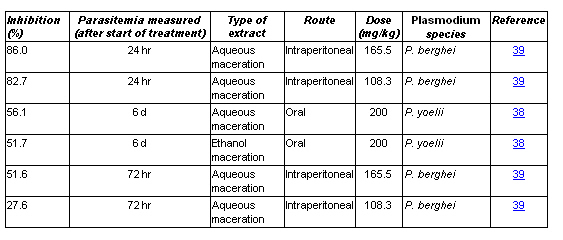
Malaria is a critical health problem in West Africa, 11 percent of deaths are related to it, but for a variety of reasons they have more confidence in alternative medicine than they do modern health care practices. 

However, some herbal medicines work and an analysis of the pharmacological properties of an herbal medication derived from Cochlospermum planchonii (a shrubby weed known as N'Dribala), Phyllanthus amarus and Cassia alata shows that it may be the case with SAYE, which means “jaundice” in the Dioula language. 

It is estimated that 5% of women experience two clinical miscarriages and approximately 1% suffer three or more losses. 

Researchers at the University of Warwick and University Hospitals Coventry and Warwickshire (UHCW) NHS Trust have found that body clock genes could affect women's ability to have children. The study pinpoints how body clock genes are temporarily switched off in the lining of the womb to allow an embryo to implant. Timing of this event is critical for pregnancy. 

While a debate was raging between scientists and government regulators on how best to explain to patients the risks of participating in clinical research studies that compare standardized treatments, a team of bioethicists boldly went where no experts had gone before -- to the public.

The response? Keep it simple, but always ask permission, even when the research only involves gathering data from anonymized medical records. 

A liquid form of marijuana shows promise as a treatment for children with severe epilepsy, according to a study released today which involved 213 people, ranging from toddlers to adults, with a median age of 11 who had severe epilepsy that did not respond to other treatments.

Participants had Dravet syndrome and Lennox-Gastaut syndrome, epilepsy types that can lead to intellectual disability and lifelong seizures, as well as 10 other types of severe epilepsy. 

A real-world analysis of human behavior finds that men treat online giving as a competitive enterprise: Men will donate four times more money to an attractive female fundraiser if they feel like they are in competition with another male, which evolutionary psychologists contend is a subconscious sexual mandate based on biology.
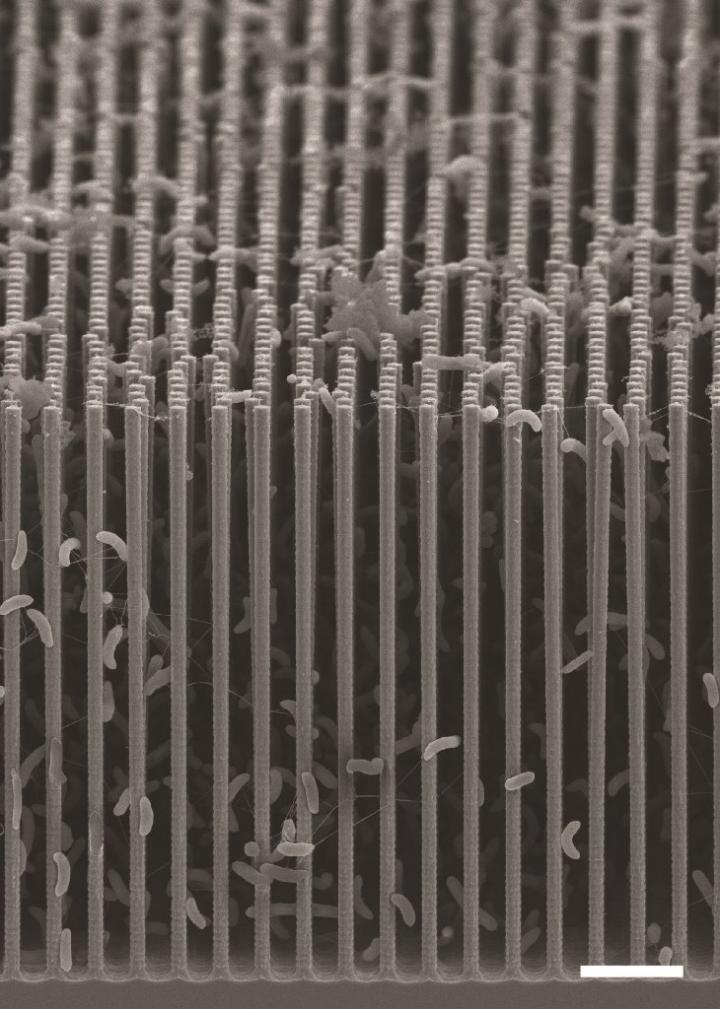
A breakthrough in artificial photosynthesis has been achieved with the development of  a hybrid system of semiconducting nanowires and bacteria that can capture carbon dioxide emissions before they are vented into the atmosphere and then, powered by solar energy, convert that carbon dioxide into valuable chemical products, including biodegradable plastics, pharmaceutical drugs and liquid fuels. 

The system mimics the natural photosynthetic process by which plants use the energy in sunlight to synthesize carbohydrates from carbon dioxide and water but this artificial photosynthetic system synthesizes the combination of carbon dioxide and water into acetate, the most common building block today for biosynthesis.

The humanities are considered the least discriminatory academic discipline - known cases of discrimination do not reach statistical significance - but women and minorities are still collectively ignored at 1.4 times the rate of Caucasian males when seeking guidance about their futures.

