The Hubble space telescope has snapped a spectacular image of Messier 66, the largest "player" of the Leo Triplet, and a galaxy with an unusual anatomy: it displays asymmetric spiral arms and an apparently displaced core. The peculiar anatomy is most likely caused by the gravitational pull of the other two members of the trio.
The unusual spiral galaxy, Messier 66, is located at a distance of about 35 million light-years in the constellation of Leo. Together with Messier 65 and NGC 3628, Messier 66 is one third of the Leo Triplet, a trio of interacting spiral galaxies, part of the larger Messier 66 group. Messier 66 wins out in size over its fellow triplets — it is about 100 000 light-years across.
Researchers have drastically increased the toughness of a T-shirt by combining the carbon in the shirt’s cotton with boron – the third hardest material on earth. The result is a lightweight shirt reinforced with boron carbide, the same material used to protect tanks.
Scientists dipped plain, white T-shirts that were cut into thin strips into a boron solution. The strips were later removed from the solution and heated in an oven. The heat changed the cotton fibers into carbon fibers, which reacted with the boron solution and produced boron carbide.
Europe's first mission dedicated to studying the Earth's ice, CryoSat-2, was launched today from Kazakhstan. From its polar orbit, the satellite will send back data leading to new insights into how ice is responding to climate change and the role it plays in our 'Earth system'.
CryoSat-2 replaces the original CryoSat satellite that was lost in 2005 owing to a launch failure. The mission objectives, however, remain the same: to measure changes in the thickness of the vast ice sheets that overlie Antarctica and Greenland, as well as variations in the thickness of the relatively thin ice floating in the polar oceans.
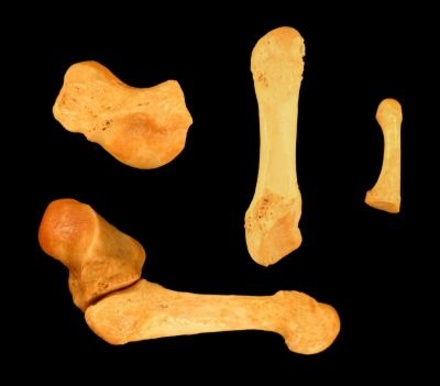
The new species of hominid discovered 40 kilometers outside of Johannesburg, South Africa,
the first missing link of 2010, has been dubbed
Australopithecus sediba by its discoverers
. Researchers believe the new species might be the link between the southern African ape-man
Australopithecus africanus and either Homo habilis or a direct ancestor of
Homo erectus. The research is detailed in this week's issue of
Science.
A comprehensive review of national opinion polls taken before and after Congressional voting and when President Obama signed into law a major healthcare reform bill last month has found that the law's signing did not change Americans' opinions of the legislation.
The analysis of 33 independent opinion polls revealed that partisan disagreements over the reforms are stark. These political differences have implications for the implementation of the legislation and for the 2010 Congressional elections as many potential voters want the law to be scaled back while many others want the law changed to expand government's future role.
The analysis appears in this week's New England Journal of Medicine.
There is no link between a lack of musical ability and dyslexia, and attempts to treat dyslexia with music therapy are unwarranted, according to a study in the International Journal of Arts and Technology.
Research into dyslexia has pointed to a problem with how the brain processes sounds and how dyslexic readers manipulate the sounds from which words are composed, the phonemes, consciously and intentionally.
For many researchers, it was a relatively short step between the notion that dyslexia is an issue of phonological processing and how this might also be associated with poor musical skills – amusia – that has led to approaches to treating the condition using therapy to improve a dyslexic reader's musical skills.
A 34 year-long study of 10,000 civil servants suggests that a happy marriage may help prevent fatal strokes in men.
Researchers found a correlation between reported "happiness" in marriage and the likelihood that a man will die from stroke. The study was presented at the American Stroke Association's International Conference earlier this year.
Men were surveyed about their happiness levels and marital status; 34 years later, a follow-up study determined how many of the men died from stroke. Single men were found to have a 64% higher risk of a fatal stroke than married men. The quality of the marriage appeared to matter as well ― men in an unhappy union had a 64% higher risk of a fatal stroke than those who reported being happy in their marriage.
Archaeologists have unearthed a cache of cuneiform tablets found to contain a largely intact Assyrian treaty from the early 7th century BCE.
The 43 by 28 centimeter tablet — known as the Vassal Treaties of Esarhaddon — contains about 650 lines and is in a very fragile state. "It will take months of further work before the document will be fully legible," said Timothy Harrison, professor of near eastern archaeology in the Department of Near&Middle Eastern Civilizations at the University of Toronto.
"These tablets are like a very complex puzzle, involving hundreds of pieces, some missing. It is not just a matter of pulling the tablet out, sitting down and reading. We expect to learn much more as we restore and analyze the document."
Researchers writing in Antimicrobial Agents and Chemotherapy have found a chemical compound that, when used in conjunction with conventional antibiotics, effectively destroys biofilms produced by antibiotic-resistant strains of the Staphylococcus strain MRSA and Acinetobacter. The compound also re-sentsitizes those bacteria to antibiotics.
Infections from antibiotic-resistant bacteria such as MRSA are especially difficult to get rid of because the bacteria can attach to surfaces and then create biofilms, sticky layers of cells that act as a shield and prevent antibiotics from destroying the bacteria underneath.